

“Those who don’t believe in magic will never find it.” – Roald Dahl, The Minpins
Today is Roald Dahl Day, in honor of Dahl’s birthday. His darkly comic tales, which often pit kindhearted children against nefarious adults, have delighted generations of young readers (yours truly included). His books have sold more than 250 million copies worldwide and inspired countless artists such as Tim Burton, Lemony Snicket, and the TERF who shall not be named.

Roald Dahl was born on September 13, 1916, in Cardiff, Wales. The son of Norwegian immigrants, Dahl was named for the famed explorer Roald Amundsen. His father Harald, who passed away when Dahl was just three years old, insisted Dahl attend school in Britain. Dahl enrolled at St. Peter’s in Weston, across the Bristol Channel from the family’s home in Cardiff, when he was eight. His time at St. Peter’s was marked by isolation and homesickness. From 1929 to 1934 (ages 13-18), Dahl attended Repton School in Derbyshire, where he was subjected to hazing by the older students and corporal punishment from the headmaster.


Upon graduating, Dahl spent several years working for Shell Petroleum Company in Kenya and Tanganyika (now Tanzania). In 1939, with World War II looming, Dahl enlisted in the Royal Air Force and later served as a diplomat with the British Embassy in Washington, D.C. It was there that he made the acquaintance of novelist C.S. Forester, who persuaded Dahl to write about his experience in the RAF. “A Piece of Cake” (originally titled “Shot Down Over Libya”) was Dahl’s first published work; it appeared in the August 1, 1942 issue of The Saturday Evening Post. His diplomatic work ultimately led to some low-level spying, with Dahl supplying intelligence to Winston Churchill from his post in D.C. One of his fellow spies, future James Bond author Ian Fleming, became Dahl’s lifelong friend.
The following year, Dahl’s first children’s book, The Gremlins, was released in conjunction with Walt Disney (the studio eventually abandoned a planned film adaptation). Dahl continued to write short stories for adults as well as scripts like You Only Live Twice and Chitty Chitty Bang Bang and television series such as Alfred Hitchcock Presents and Tales of the Unexpected. But his primary talents were his ability to write sympathetic children who triumph over vile and corrupt adults and his innovative use of language (Dahl invented more than 500 words and names over the course of his career, including Oompa-Loompa, whangdoodle, whizzpopping, and snozzberry).
Dahl died from myelodysplastic syndrome, a rare cancer of the blood, on November 23, 1990. He was 74 years old. He left behind a lasting legacy that we still celebrate today (in fact, Dahl was the top-earning dead celebrity in 2021 due to Netflix’s acquisition of the Roald Dahl Story Company for around $680 million).
To commemorate Roald Dahl Day, here is a list of some of Dahl’s most beloved and iconic works.
- The Gremlins
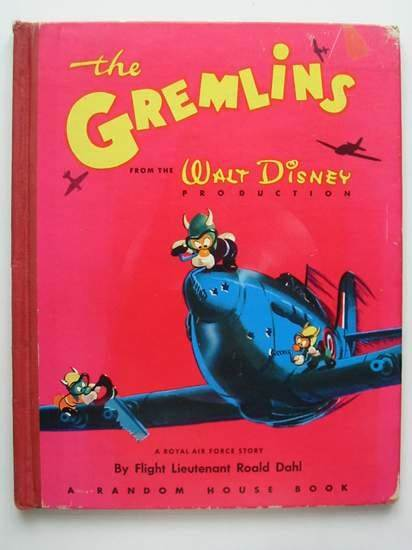
Inspired by his time in the Royal Air Force, The Gremlins features the impish mythical creatures that WWII airmen blamed for everything from mechanical failure to pilot error. The book was an instant hit – among its fans was Eleanor Roosevelt, who loved to read The Gremlins to her grandchildren – and Dahl’s writing career was off to the races.
Fun fact: The Gremlins inspired Joe Dante’s anarchic 1984 film, the iconic Twilight Zone episode “Nightmare at 20,000 Feet”, and The Simpsons‘ “Treehouse of Horror IV” segment “Terror at 5 1⁄2 Feet”.
- Alfred Hitchcock Presents: “Lamb to the Slaughter”
Dahl’s short story “Lamb to the Slaughter”, originally published in Harper’s magazine in 1954, was adapted into this excellent episode of Alfred Hitchcock Presents in 1958. Mary Maloney (Barbara Bel Geddes) bludgeons her husband to death with a frozen leg of lamb, then serves the murder weapon to the investigating officers, one of whom says “For all we know, it might be right under our very noses”.
Fun fact: In 2009, TV Guide ranked “Lamb to the Slaughter” #59 on its list of the top 100 television episodes of all time.
- Kiss Kiss
One of Dahl’s most macabre works, Kiss Kiss (published in 1960) was my introduction to Dahl’s adult fiction. The collected short stories include Edgar Award winner “The Landlady”, “Royal Jelly”, and “Pig”, a personal favorite. Kiss Kiss also contains “The Champion of the World”, which Dahl later adapted into the 1975 children’s novel Danny, the Champion of the World.
Fun fact: Several of the stories – including “The Landlady”, “The Way Up to Heaven”, and “Georgy Porgy” – were later adapted into episodes of Dahl’s anthology series Tales of the Unexpected. You can watch complete episodes of the series on YouTube; it’s campy good fun, with delicious narration from Dahl.
- James and the Giant Peach
Dahl’s second children’s book, published eighteen years after The Gremlins, is one of the most beloved. Dahl’s initial idea for the story involved a giant cherry, but he eventually decided that a “prettier, bigger and squishier” peach was more appropriate.
Fun fact: Henry Selick, best known for The Nightmare Before Christmas, directed a 1996 musical adaptation. Co-starring the absolutely fabulous Joanna Lumley and Miriam Margolyes as James’ sadistic aunts Spiker and Sponge, James and the Giant Peach was a live-action and stop-motion animation hybrid. Critically acclaimed but a box office flop, it went on to become a cult classic.
- Charlie and the Chocolate Factory and Charlie and the Great Glass Elevator
While a student at Repton, Dahl and his schoolmates were taste testers for Cadbury; Dahl dreamed of concocting a chocolate bar that would earn him Mr. Cadbury’s praise. The experience made such an impression on Dahl, it served as the impetus for his third children’s novel, Charlie and the Chocolate Factory (and its fantastical sequel).
Fun fact: Dahl famously hated Willy Wonka and the Chocolate Factory. He hated how far the plot deviated from the novel, he hated the “saccharine, sappy, and sentimental” music, and he hated Gene Wilder’s performance. Dahl hated Willy Wonka and the Chocolate Factory so much, he stopped selling the movie rights to his books. There wouldn’t be another live-action adaptation of one of Dahl’s books for almost twenty years.
- You Only Live Twice
Dahl’s first foray into screenwriting, You Only Live Twice was the fifth film in the James Bond series and the first to feature Bond’s nemesis, Ernst Stavro Blofeld.
Fun fact: Dahl met Bond author Ian Fleming during his espionage days, and the two became lifelong friends. Dahl referred to You Only Live Twice as “Fleming’s worst book, with no plot in it which would even make a movie”, and he promptly discarded most of the novel’s story.

- Chitty Chitty Bang Bang
Chitty Chitty Bang Bang, about an eccentric inventor (is there any other kind?) and his magical car, was the second Ian Fleming novel that Dahl adapted for the big screen. The film, which gets its title from the distinctive sound the car makes (onomatopoeia alert!), reunited Dick Van Dyke with Mary Poppins songwriters the Sherman brothers. Chitty Chitty Bang Bang, while decidedly a children’s film, contains many of Dahl’s trademarks, including guileless children, wicked adults, and enchanting confections.
Fun fact: At a 2011 auction, film director Peter Jackson bought the Chitty Chitty Bang Bang car for $800,000.
- Fantastic Mr. Fox
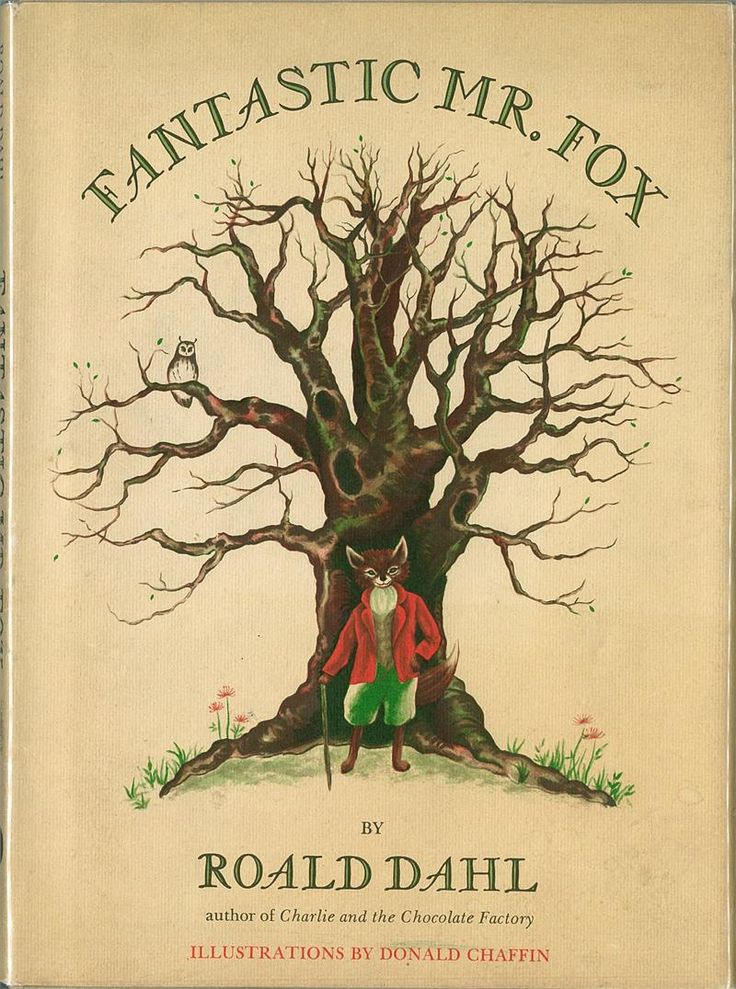
Dahl’s fifth children’s book, Fantastic Mr. Fox, is one of my personal favorites. The book pits a wily, anthropomorphic fox against a trio of cruel, dim-witted farmers (Boggis, Bunce, and Bean). A gorgeous 2009 stop-motion animated adaptation, directed by Wes Anderson and featuring the voices of George Clooney, Meryl Streep, and Bill Murray, was nominated for two Oscars, Best Original Score and Best Animated Feature Film (it lost both to Pixar’s Up).
Fun fact: The first edition of Fantastic Mr. Fox featured iconic illustrations by Donald Chaffin. When the movie adaptation went into production, director Wes Anderson enlisted Chaffin’s help with the animation.

- Danny, the Champion of the World
Danny began life as a short story, “The Champion of the World”, which was initially published in The New Yorker and included in Dahl’s compilation Kiss Kiss. Unlike “The Champion of the World”, which tells the story from the adult point of view, the novel shifts the perspective to nine-year-old Danny. Danny lives with his dad in an old caravan; his dad runs a service station and poaches pheasants from the local fat cat, Victor Hazell. The pair fly kites and ride go-karts. But mostly, Danny loves to listen to his dad’s stories. A 1989 British made-for-television movie (starring Jeremy Irons and his son Samuel) is the only adaptation of the book, and it doesn’t seem to be available for streaming.
Fun fact: One of Danny’s father’s stories is about a “Big Friendly Giant”; that story-within-a-story was the basis for Dahl’s The BFG, published in 1982 and dedicated to Dahl’s late daughter Olivia, who died in 1962 of measles-related encephalitis.
- The Witches
The Witches, published in 1983, is one of Dahl’s most autobiographical novels, with the book’s grandmother representing Dahl’s own mother, Sofie. It’s also one of his darkest, with a secret society of witches who wish to turn all of England’s children into mice. There are several adaptations of The Witches, including a 1990 feature film starring Anjelica Huston, a stage play, a 2008 opera by Norwegian composers Marcus and Ole Paus, and a 2020 movie co-written and directed by Robert Zemeckis.
Fun fact: According to the American Library Association, The Witches was the 22nd-most-banned book of the 1990s. Critics have cited the novel’s more frightening passages or Dahl’s misogynistic tendencies; others have expressed concern that the novel’s ending might inadvertently promote suicide. As a former child, I can tell you that nothing in this book is scarier than actual childhood, a fact many adults can’t or won’t acknowledge.
- Boy: Tales of Childhood and Going Solo
Boy: Tales of Childhood and Going Solo form a two-part autobiography; the former covers his childhood and early adulthood and the latter primarily encompasses his travels to Africa with Shell Oil and his WWII service in the RAF.

Fun fact: One of the most memorable stories from Boy is the “Great Mouse Plot of 1924”, which occurred while Dahl was enrolled at Llandaff Cathedral School in Cardiff. Dahl and a few of his friends disliked the unpleasant (and apparently unhygienic) elderly owner of the local sweet shop; while one boy distracted Mrs. Pratchett by buying candy, the other boys put a dead mouse in a jar of gobstoppers. Mrs. Pratchett identified the boys to Llandaff’s headmaster, who caned them while Pratchett egged him on.
- Matilda
I was in college by the time Matilda was published – but it’s a Millennial favorite. The novel pits precocious Matilda Wormwood against one of Dahl’s most terrifying creations, the tyrannical Miss Trunchbull. Matilda has been adapted numerous times, including a 1996 feature film (directed by Danny DeVito and starring the darling Mara Wilson), a 2010 musical, and a 2022 film version of the musical featuring the incomparable Emma Thompson as Trunchbull.
Fun fact: Matilda’s name was inspired by Hilaire Belloc’s poem “Matilda, who told lies and was burned to death”.
 PB & Julie + Julie C. Trivia