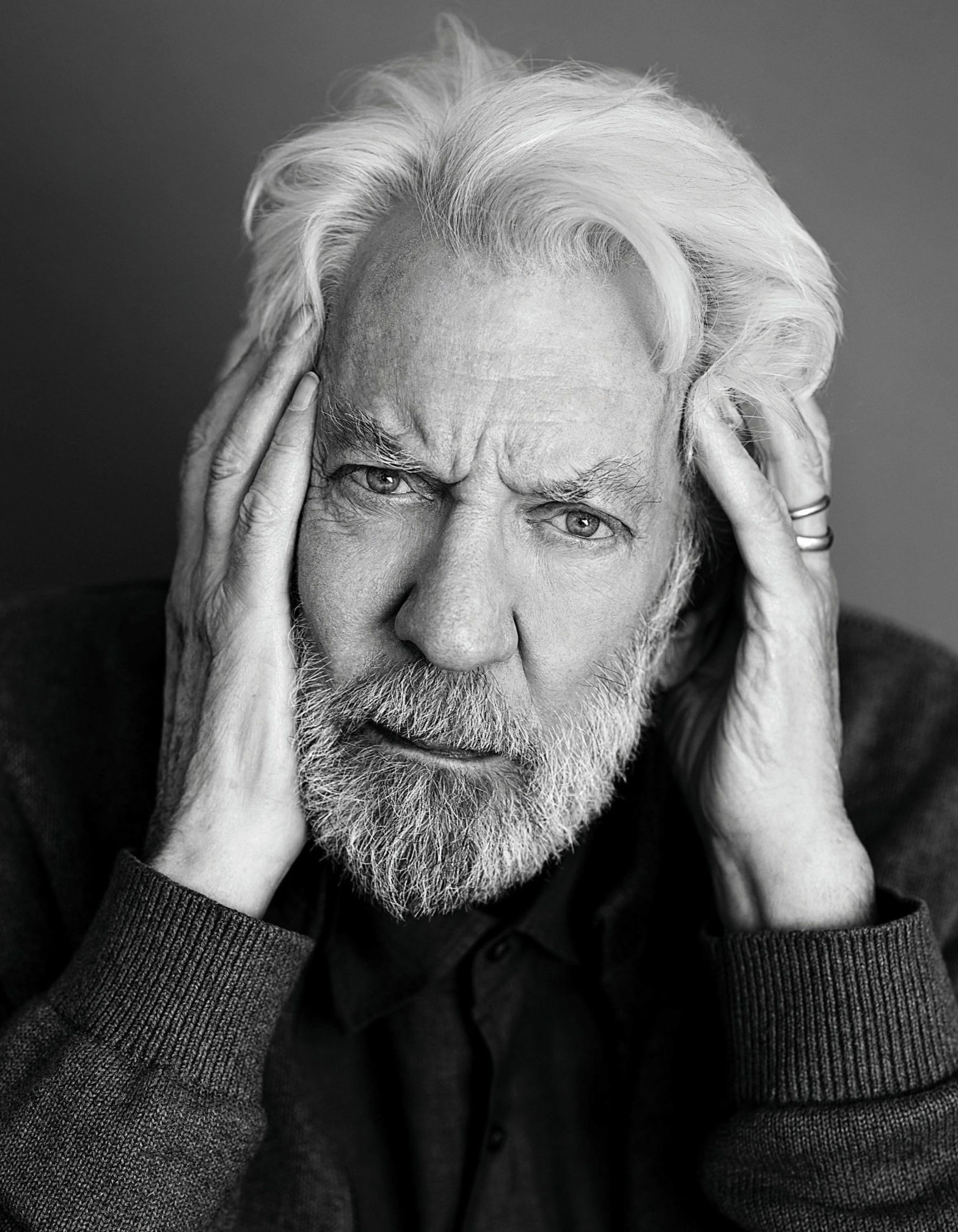
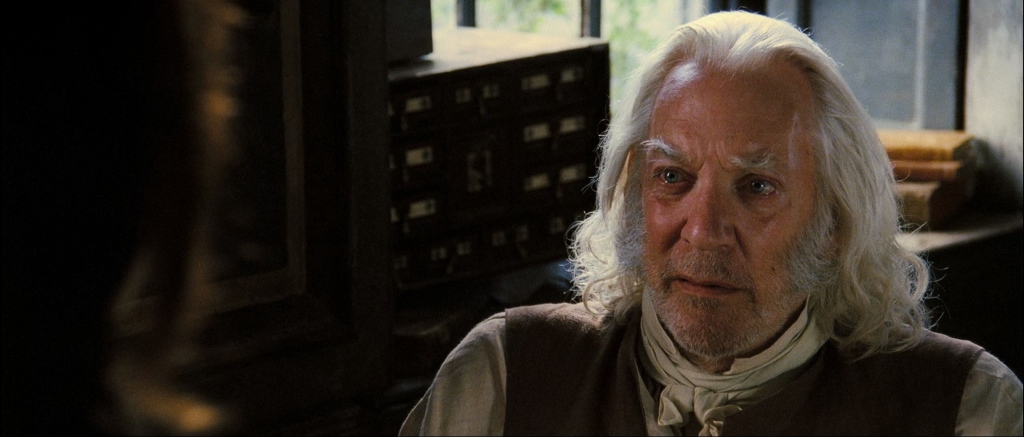
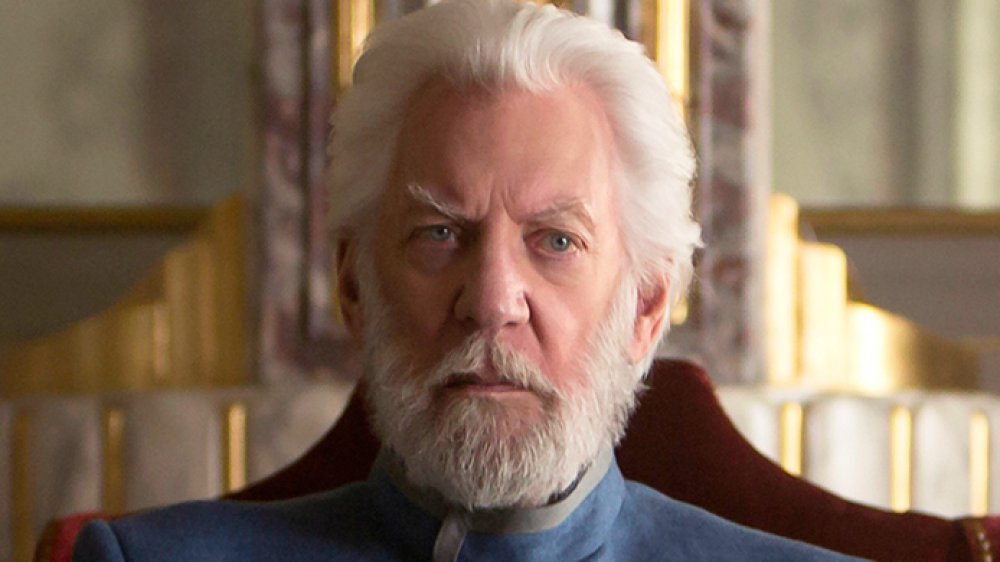
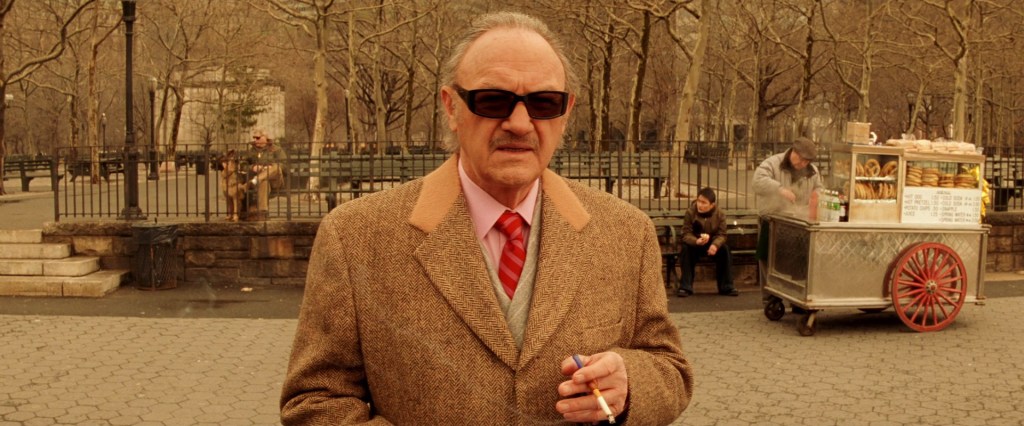
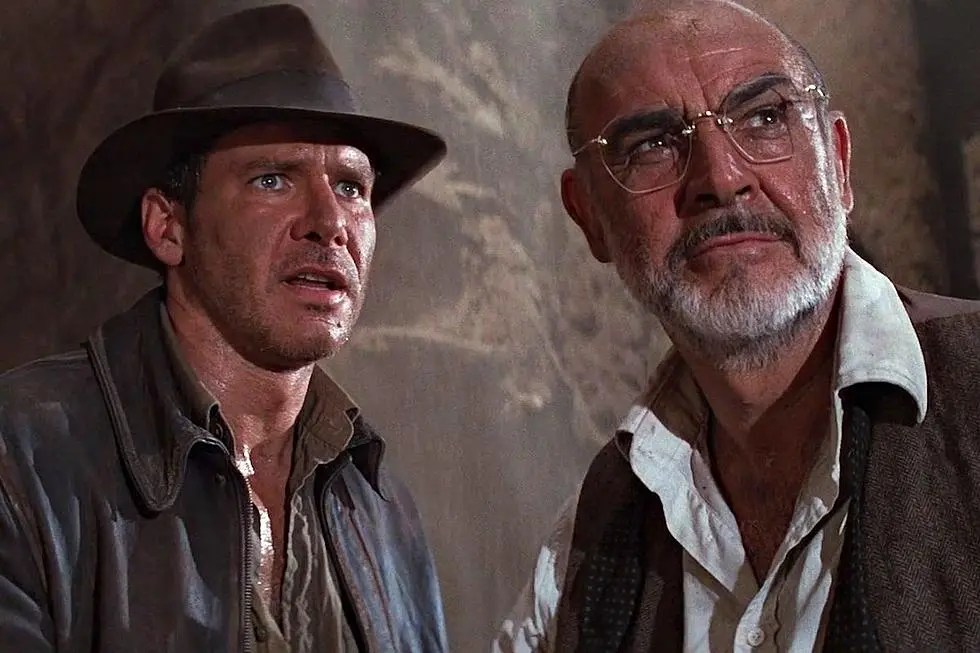
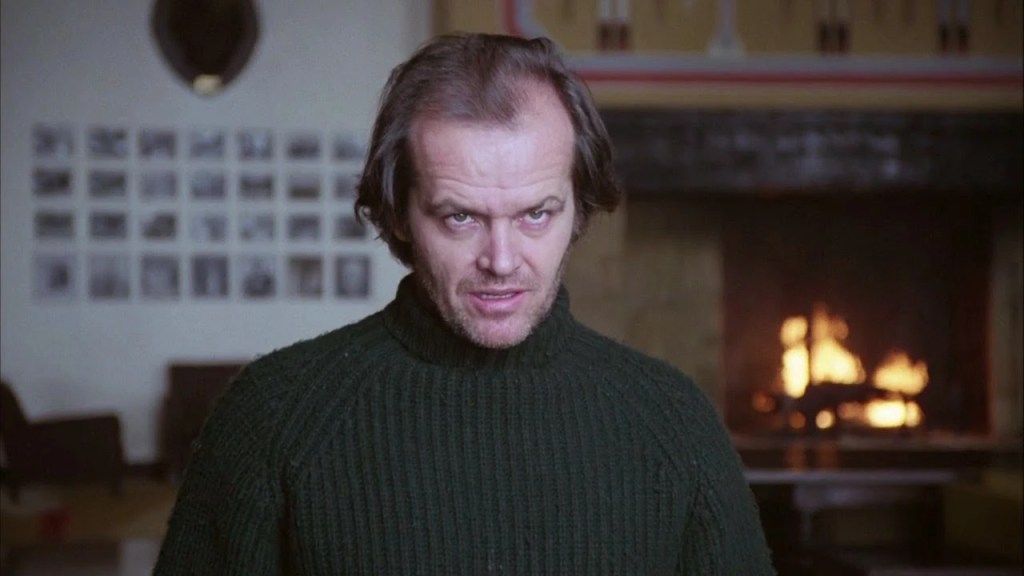
Golden Globe and Emmy-winning actor, activist, and all-around badass Donald Sutherland has passed away at the age of 88.
Born in Saint John, New Brunswick on July 17, 1935, Donald McNichol Sutherland attended Victoria University in Toronto. After earning degrees in engineering and theater, Sutherland left for London, where he studied at the prestigious London Academy of Music and Dramatic Art. While in the UK, Sutherland found work in theater and television. In 1964, he made his feature film debut in Castle of the Living Dead, which starred the legendary Christopher Lee and was directed by Warren Kiefer (he would later name his eldest son after the latter). After his breakthrough role, as the twelfth member of The Dirty Dozen (the fifth-most-popular film of 1967), Sutherland headed for Hollywood.
Over the next five decades, Sutherland would amass two hundred credits in film and television. Here is a selection of his most iconic roles, along with a few of my personal favorites.
The Dirty Dozen
The original script called for Clint Walker’s character Samson Posey to impersonate a general, but Walker felt the scene was demeaning to his Native American character. Director Robert Aldrich chose Sutherland to replace Walker in the sequence – and a star was born.
M*A*S*H
One of two war films Sutherland made in 1970 (the other was Kelly’s Heroes), M*A*S*H cemented his star status. His role as Benjamin Franklin “Hawkeye” Pierce earned the actor his first of nine Golden Globe nominations (he and co-star Elliott Gould both lost to Scrooge‘s Albert Finney).
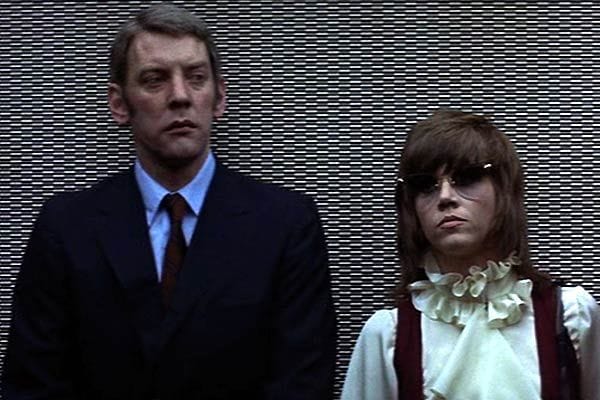
Klute
Though Jane Fonda received the lion’s share of the acclaim for Klute – as well as that year’s Best Actress Oscar – don’t overlook Sutherland’s turn as the title detective (or his chemistry with Fonda, with whom he had a two-year affair).
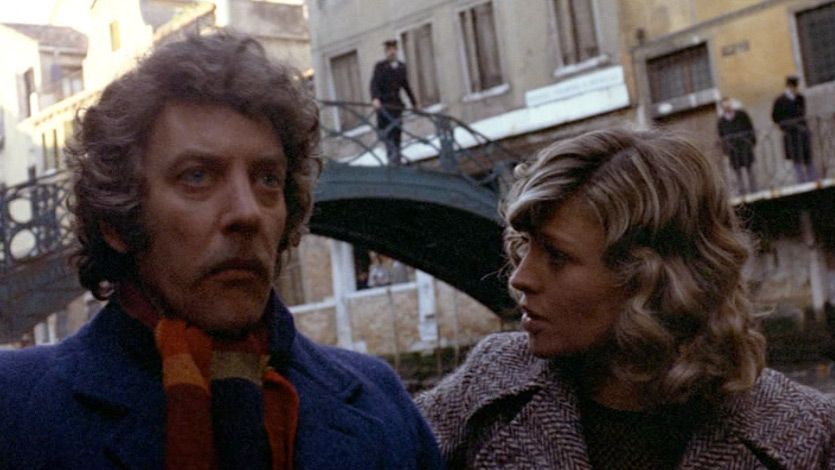
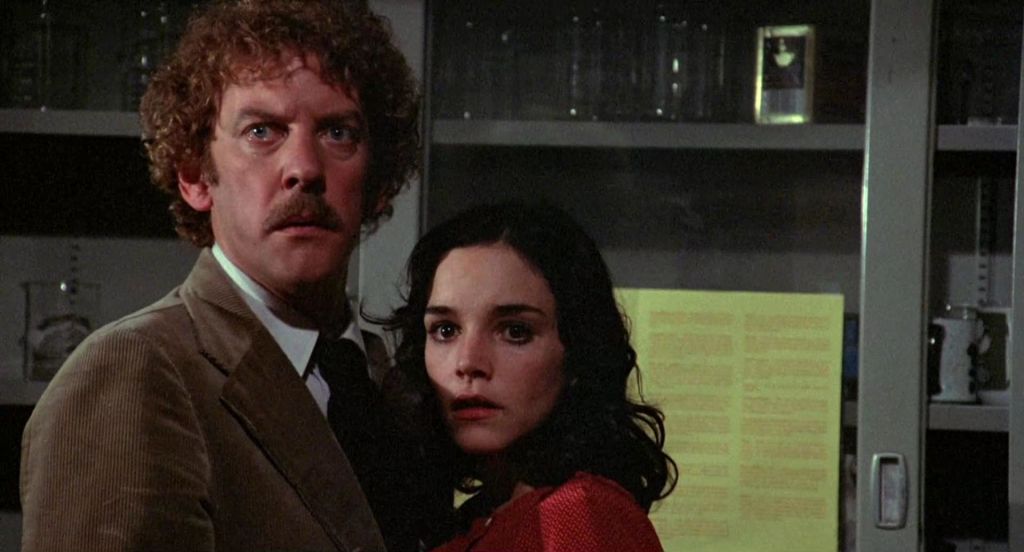
Don’t Look Now
For his unnerving, atmospheric meditation on grief and guilt, director Nicholas Roeg knew from the start he wanted to cast Donald Sutherland. A landmark in gothic horror, Don’t Look Now is one of many films that should have earned Sutherland an Academy Award nomination; his lack of a competitive nomination is one of the biggest oversights in Oscar history (he received an honorary award in 2017).
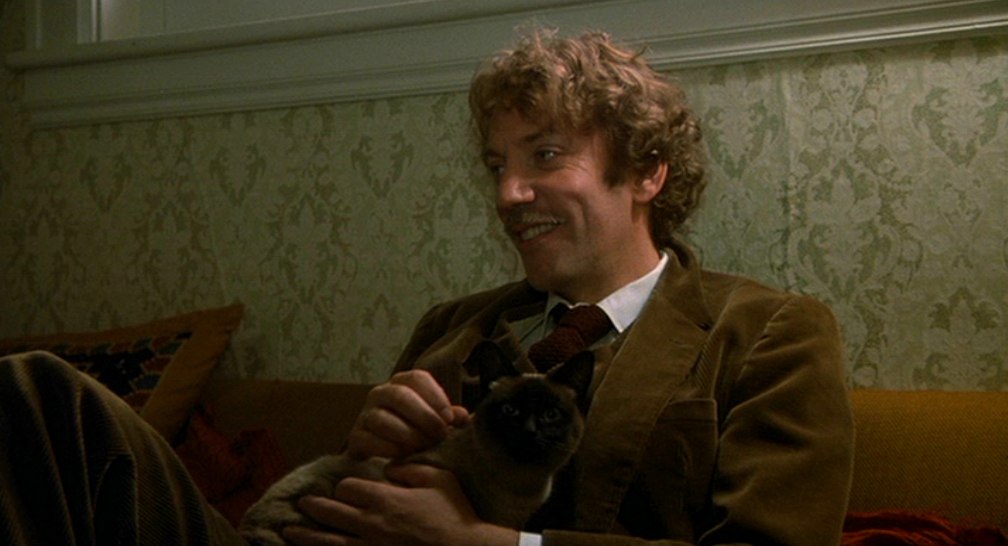
National Lampoon’s Animal House
For his role as pot-smoking prof Dave Jennings, Sutherland had the choice of $40,000 OR 2% of the film’s profits. Assuming Animal House would tank at the box office, he took the $40K. The film has grossed over $141 million worldwide; if he’d accepted the 2%, Sutherland would have earned about $3 million.
Invasion of the Body Snatchers
One of the most highly-rated entries in Sutherland’s filmography, Invasion of the Body Snatchers is a sci-fi horror masterpiece (with one of the greatest twist endings of all time) and one of Sutherland’s most indelible performances.
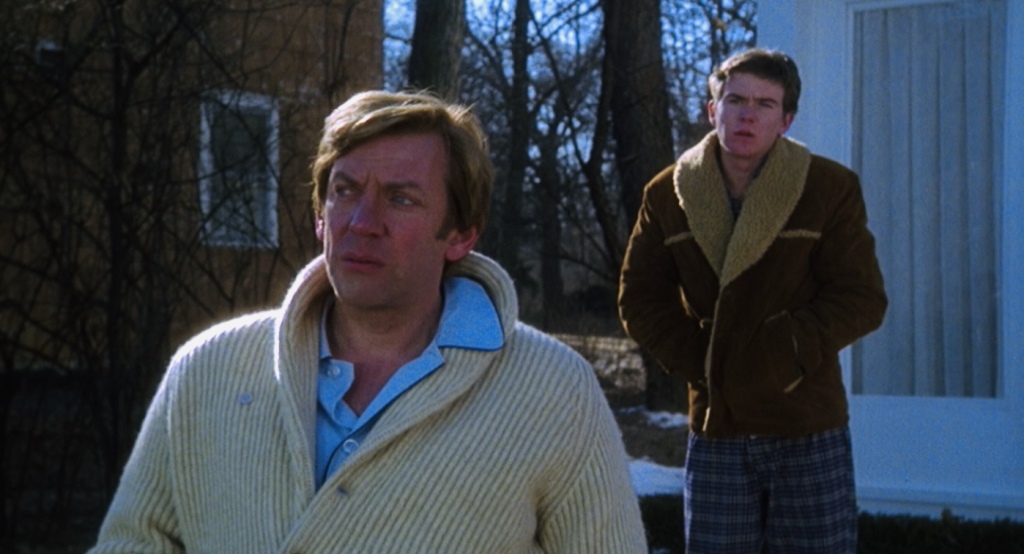
Ordinary People
We could argue all day about whether Ordinary People was the actual best picture of 1980 (it wasn’t), but there’s no denying the emotional power of this gut-punch of a movie. Once more, Sutherland’s subtler efforts failed to impress the Academy, which instead nominated his two male co-stars, Judd Hirsch and Timothy Hutton (who ultimately took home the Best Supporting Actor prize).
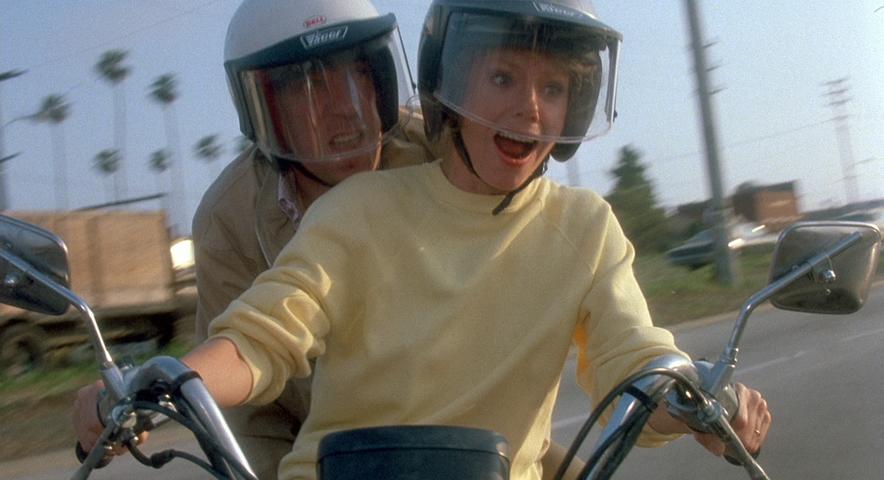
Max Dugan Returns
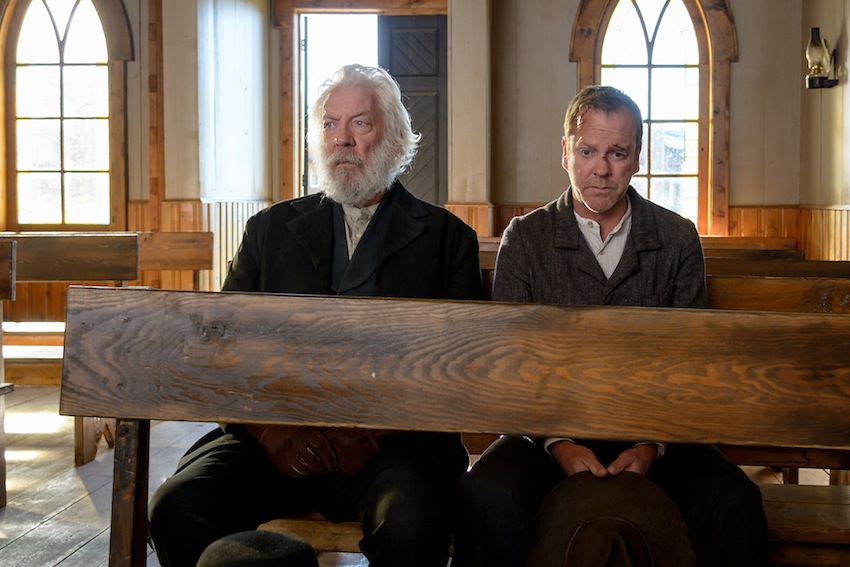
Max Dugan Returns, also starring Marsha Mason and Jason Robards, was the feature debut for Matthew Broderick and Sutherland’s 16-year-old son Kiefer. Donald and Kiefer would appear onscreen together twice more, in 1996’s A Time to Kill and 2015’s Forsaken, in which the lookalikes finally portrayed father and son.
Forsaken
“Cloudbusting”
The music video for “Cloudbusting”, the second single from Kate Bush’s 1985 sonic masterpiece Hounds of Love, stars Sutherland as Austrian psychiatrist and researcher Wilhelm Reich (more on him here: https://en.wikipedia.org/wiki/Wilhelm_Reich) and Bush as his young son Peter. Due to an issue obtaining a last-minute work visa for Sutherland, he offered to appear in the video for free.
JFK
In a sprawling cast that includes greats like Tommy Lee Jones, Gary Oldman, Sissy Spacek, Joe Pesci, Jack Lemmon, and Walter Matthau, Sutherland manages to give one of JFK‘s most memorable performances. As Mr. X, inspired by L. Fletcher Prouty (who served as Chief of Special Operations for the Joint Chiefs of Staff for the Kennedy administration), Sutherland has a small but key role. Once again, Sutherland was overlooked in favor of one of his showier co-stars (in this case, Jones) come awards season.
Pride & Prejudice
In 2005, Sutherland took on the role of the wry, cynical patriarch of the Bennet family. As usual, he knocked it out of the park.
The Hunger Games franchise
It’s a testament to Sutherland’s talent that he could give even a murderous, fascist dictator a sense of humanity. Sutherland, who had a history of left-wing activism, sought out the part, hoping it would radicalize the movie’s young viewers. After Sutherland secured the role, President Snow was given additional dialogue to fully exploit the actor’s prodigious talents.
These albums are all turning forty this year. This list is in chronological order by release date and covers albums released between January and April of 1984.
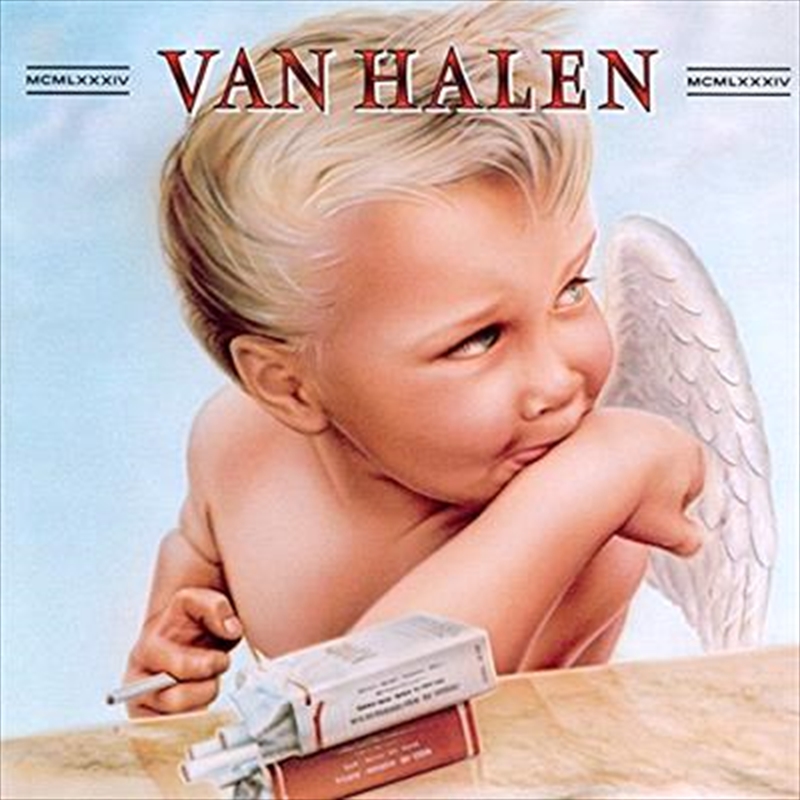
1984 – Van Halen
CHART POSITION: #2 in the US, #1 in Canada, #15 in the UK, #11 in Australia, top 15 in ten more countries
SINGLES: “Jump”, “I’ll Wait”, “Panama”, “Hot for Teacher”
MY FAVORITE TRACKS: All of the above, particularly “I’ll Wait” and “Panama”, plus “Drop Dead Legs”
FUN FACT: I was today years old when I learned that Michael McDonald co-wrote “I’ll Wait”. It seems that David Lee Roth was struggling to finish the song’s lyrics and melody; producer Ted Templeman, who had previously collaborated with The Doobie Brothers, brought McDonald in to help Roth complete the tune. “I’ll Wait”, my favorite track off the album, made it to #13 on the Billboard Hot 100 despite no music video accompanying the single.
The “Jump” video is the perfect showcase for Van Halen’s flamboyant and acrobatic lead singer, David Lee Roth. The four members of the band seemed to be having a blast but underlying creative tensions between Roth and Eddie Van Halen – along with the success of Roth’s first solo album, Crazy from the Heat – contributed to Roth’s departure from the band the following year.
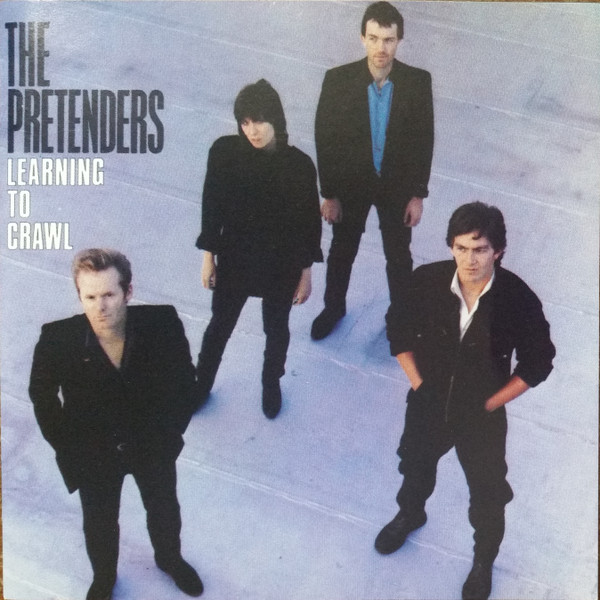
Learning to Crawl – The Pretenders
CHART POSITION: #5 in the US, #11 in the UK, #18 in Australia
SINGLES: “Back on the Chain Gang”, “2000 Miles”, “Middle of the Road”, “Show Me”, “Thin Line Between Love and Hate”
MY FAVORITE TRACKS: All of the above, plus “My City Was Gone”
FUN FACT: “My City Was Gone”, one of the album’s most popular tracks despite never having been released as a single, is a scathing indictment of Chrissie Hynde’s home state of Ohio:
I went back to Ohio But my pretty countryside Had been paved down the middle By a government that had no pride
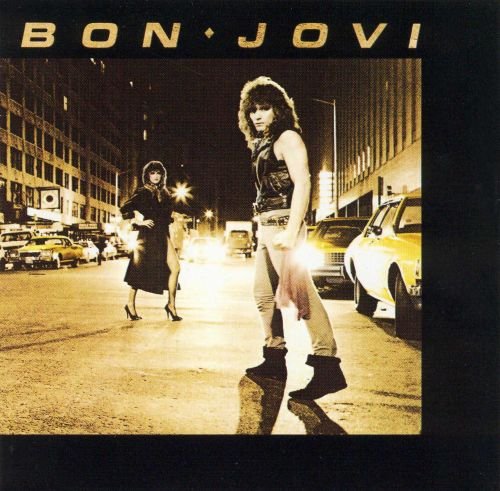
Bon Jovi – Bon Jovi
CHART POSITION: #43 in the US, #71 in the UK
SINGLES: “Runaway”, “She Don’t Know Me”, “Burning for Love”
MY FAVORITE TRACK: “Runaway”
FUN FACT: “Shot Through the Heart” should not be confused with the opening refrain of Bon Jovi’s 1986 smash hit “You Give Love a Bad Name”.
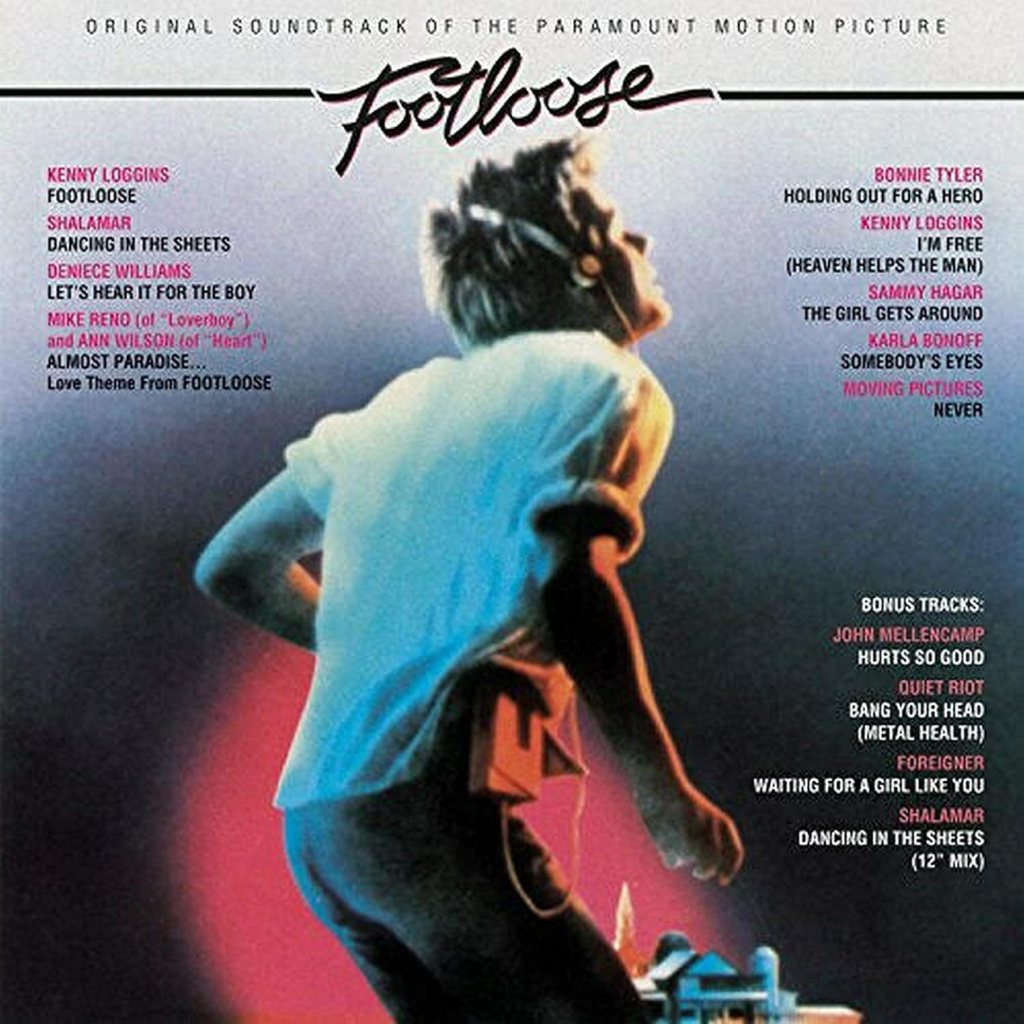
Footloose: Original Soundtrack of the Paramount Motion Picture – Various Artists
CHART POSITION: #1 in the US and Canada, #7 in the UK, top 10 in ten more countries
SINGLES: “Footloose”, “Holding Out for a Hero”, “Dancing in the Sheets”, “Let’s Hear It for the Boy”, “Almost Paradise”, “I’m Free (Heaven Helps the Man)”, “Somebody’s Eyes”
MY FAVORITE TRACKS: All of the above, plus “The Girl Gets Around” by Sammy Hagar (which, disappointingly, is not available on Spotify) and “Never” by Moving Pictures – literally the entire album
FUN FACT #1: Footloose was nothing short of a juggernaut. “Footloose”, the first single released from the album, was an international smash and went to #1 in the US, where it was also the fourth-most popular song of the year. Six of the album’s seven singles made it to the Billboard Top 40, and the soundtrack was the ninth-most popular album of 1984.
FUN FACT #2: A 1998 re-release of the album included four songs that were used in the film but not included on the original soundtrack – John (Cougar) Mellencamp’s “Hurts So Good”, Foreigner’s “Waiting for a Girl Like You”, Quiet Riot’s “Bang Your Head (Metal Health)” and a remix of Shalamar’s “Dancing in the Sheets”.
One of my favorite scenes from Footloose is set to “Let’s Hear It for the Boy”. Chris Penn didn’t know how to dance, so the sequence was added to the film so that Chris and Willard could both learn.
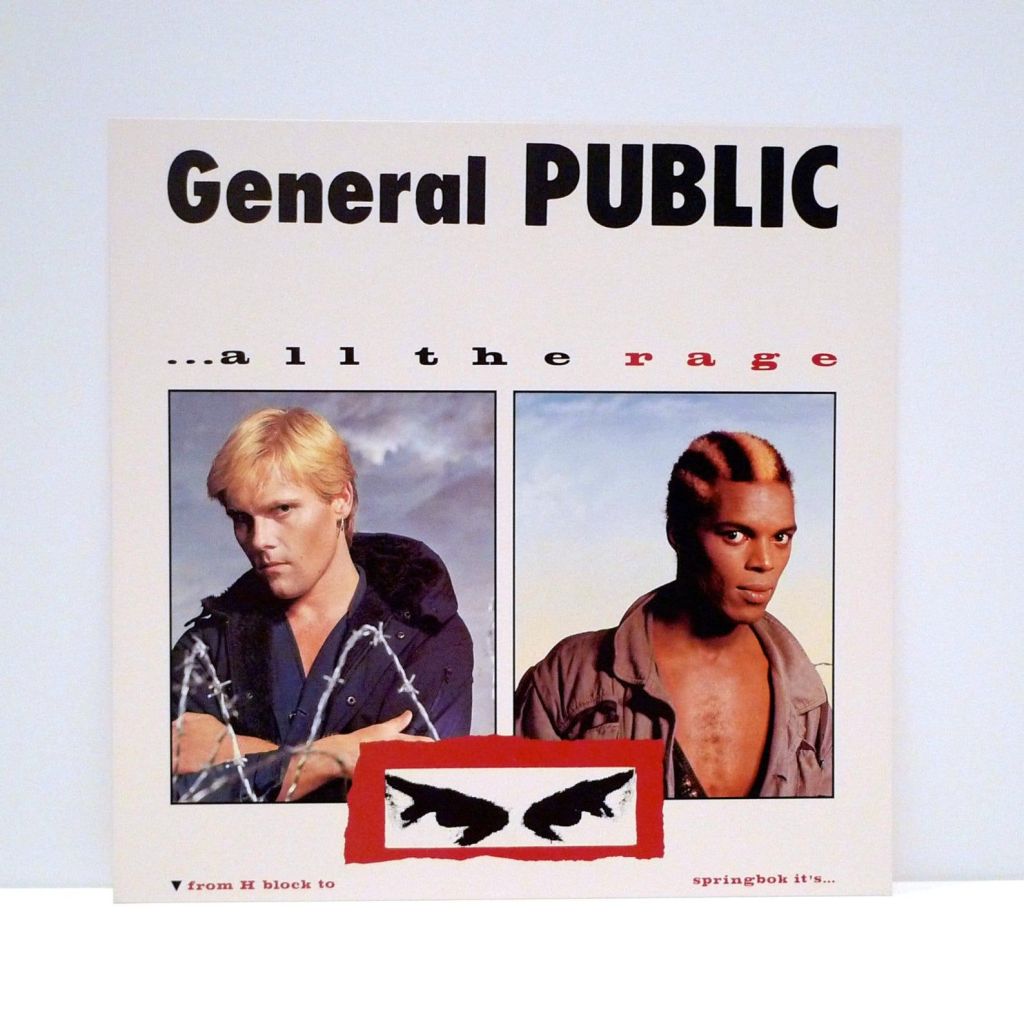
MY FAVORITE TRACKS: All of the above, plus “Anxious”
FUN FACT #1: General Public was something of a British new wave supergroup, which included members of The Beat (known as The English Beat in the US), The Specials, Dexy’s Midnight Runners, and The Clash. Mick Jones, recently booted from the latter by Joe Strummer and Paul Simonon, left midway through production on All the Rage and was replaced by Kevin White. Though White appears on the back cover, Jones actually performed most of the guitar work heard on the album.
FUN FACT #2: “Tenderness”, General Public’s biggest hit by far, is the band’s only single to make the Billboard Hot 100, peaking at #27. “Tenderness” has remained in the public consciousness for forty years thanks to appearances in Sixteen Candles, Weird Science, Clueless, The Goldbergs, and The Deuce.
Sparkle in the Rain – Simple Minds
CHART POSITION: #64 in the US, #1 in the UK and New Zealand
SINGLES: “Waterfront”, “Speed Your Love to Me”, “Up on the Catwalk”
MY FAVORITE TRACKS: All of the above, plus “White Hot Day”
FUN FACT: In 1984, Simple Minds were a year away from their US breakthrough but wildly successful in their UK home (the band is Scottish). Around this same time, I was introduced to Simple Minds by my nephew’s dad; I’ve been a fan ever since.
It’s My Life – Talk Talk
CHART POSITION: #42 in the US, #35 in the UK
SINGLES: “It’s My Life”, “Such a Shame”, “Dum Dum Girl”
MY FAVORITE TRACKS: All of the above
FUN FACT: “It’s My Life”, Talk Talk’s highest-charting single in the US, failed to make much of an impact in the band’s native UK until a 1990 reissue. A 2003 cover by No Doubt achieved even greater success than the original, reaching the top 10 in 23 countries.
Declaration – The Alarm
CHART POSITION: #50 in the US, #6 in the UK
SINGLES: “Marching On”, “The Stand”, Sixty Eight Guns”, “Where Were You Hiding When the Storm Broke”, “The Deceiver”
MY FAVORITE TRACKS: All of the above, plus “Blaze of Glory”
FUN FACT: In 1984, I was already a big fan of the arena rock coming out of the UK at the time – U2, Simple Minds, and Big Country, to name a few – so The Alarm was right up my alley. It helped that I was also a fan of the I.R.S. label, whose artists included R.E.M. and The Go-Go’s (more on both of them later). While The Alarm was never as successful in the US as in their native UK (Wales, to be precise), I adored them.
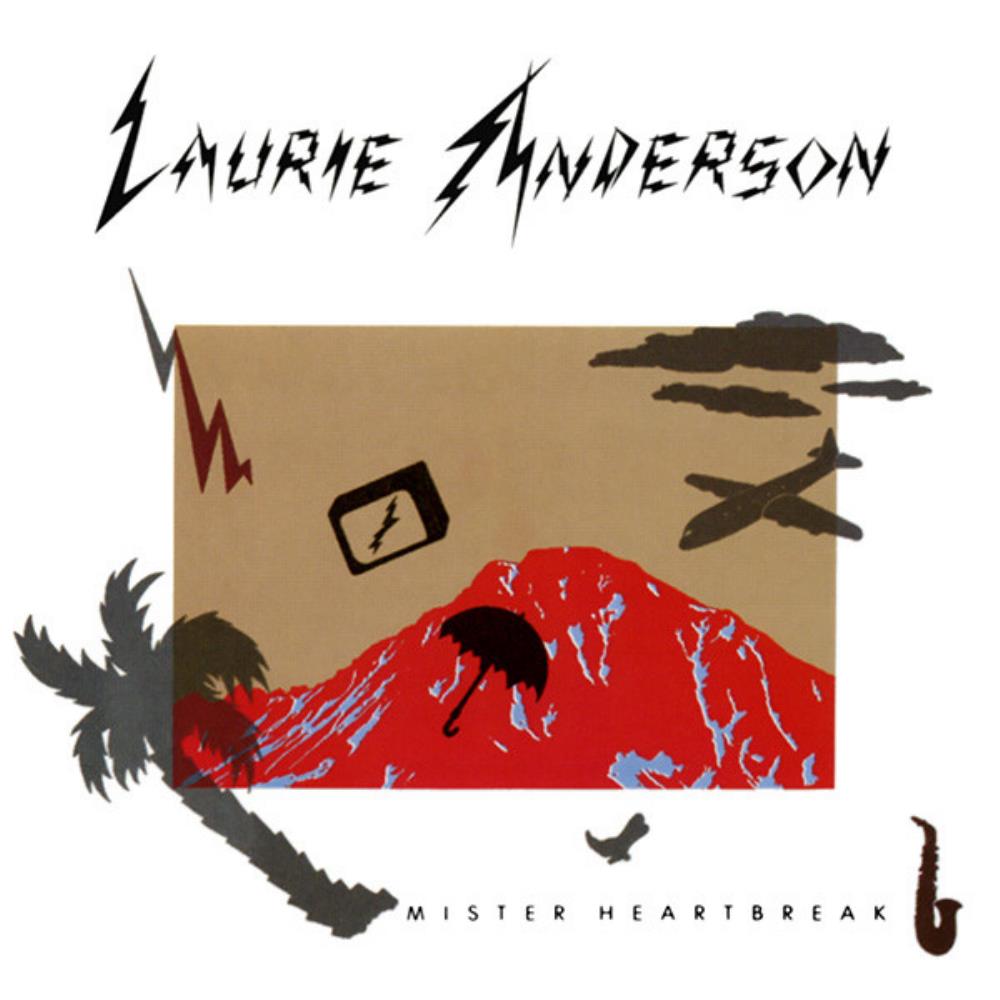
Mister Heartbreak – Laurie Anderson
CHART POSITION: #60 in the US, #93 in the UK
SINGLES: “Sharkey’s Day”
MY FAVORITE TRACKS: “Sharkey’s Day”, “Gravity’s Angel”, “Excellent Birds”
FUN FACT: Mister Heartbreak features appearances by William S. Burroughs (“Sharkey’s Night”) and Peter Gabriel (“Excellent Birds”). A version of the latter, titled “This Is the Picture (Excellent Birds)”, appears on Gabriel’s 1986 masterpiece, So.
Out of the Cellar – Ratt
CHART POSITION: #7 in the US, #12 in Canada
SINGLES: “Round and Round”, “Wanted Man”, “Lack of Communication”
MY FAVORITE TRACKS: I was never a huge fan of the glam metal genre, but “Round and Round” is such a banger.
FUN FACT #1: Tawny Kitaen, the model on the Out of the Cellar album cover, was in a relationship with Ratt guitarist Robbin Crosby for six years. She went on to famously (infamously?) star in the video for Whitesnake’s “Here I Go Again”, as well as marry (and divorce) its lead singer, David Coverdale.
FUN FACT #2: The video for “Round and Round”, which stars the legendary Milton Berle (uncle of Ratt manager Marshall Berle), was in regular rotation on MTV that summer (the clip also features Lisa Dean, who would later appear in Michael Jackson’s “Dirty Diana”). The song charted again in 2020 after the band appeared in a GEICO commercial. “Round and Round” has been used in a number of films and television series, including Supernatural, Stranger Things (a PBandJulie fave), Cobra Kai, and The Wrestler.
Into the Gap – Thompson Twins
CHART POSITION: #10 in the US, #1 in the UK (where it was the twelfth-most popular album of the year), top 10 in seven more countries
SINGLES: “Hold Me Now”, “Doctor Doctor”, “You Take Me Up”, “Sister of Mercy”, “The Gap”
MY FAVORITE TRACKS: All of the above, plus “Day After Day”
FUN FACT: After experiencing their breakthrough in 1983 with Quick Step & Side Kick (simply titled Side Kicks in the US) – and with synth-pop’s popularity at a peak – Thompson Twins were poised for chart success with the release of Into the Gap. The band – whose name was inspired by bumbling detectives Thompson and Thompson in the English language version of The Adventures of Tintin – achieved their greatest chart success with Into the Gap, selling five million copies and yielding three UK Top 5 singles.
For more on Quick Step & Side Kick – and other great albums from 1983 – click here:
CHART POSITION: #150 in the US, #2 in the UK, #77 in Australia
SINGLES: “What Difference Does It Make?”
MY FAVORITE TRACKS: “Reel Around the Fountain”, “Pretty Girls Make Graves”, “This Charming Man”, “Hand in Glove”, “What Difference Does It Make?”
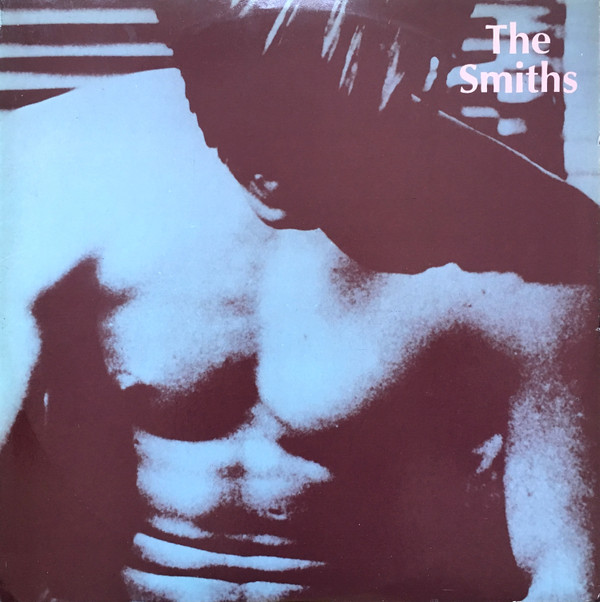
FUN FACT: The Smiths, the band’s debut, was an instant hit in their native UK (they formed in Manchester in 1982). The Smiths achieved only cult status in the US – none of their albums cracked the Billboard Top 50, and none of their singles made the Hot 100 – but my friends and I were among the devotees.
Keep Moving – Madness
CHART POSITION: #109 in the US, #6 in the UK
SINGLES: “Michael Caine” and “One Better Day” (UK), “Wings of a Dove (A Celebratory Song)” and “The Sun and the Rain” (US)
MY FAVORITE TRACKS: All of the above, plus the title track and “Victoria Gardens”
FUN FACT #1: “Michael Caine” features an appearance by the two-time Oscar winner, as well as backing vocals by Afrodiziak. Comprised at the time of Caron Wheeler and Claudia Fontaine, Afrodiziak also provided backing vocals for The Jam’s “Beat Surrender” and Elvis Costello’s “Everyday I Write the Book” (and with the addition later of Naomi Thompson, “Free Nelson Mandela” by The Specials). If Wheeler’s name sounds familiar, it’s because she found success in the late ’80s as a member of Soul II Soul with hits like “Keep on Movin'” and “Back to Life”.
FUN FACT #2: Dave Wakeling and Ranking Roger of General Public, who appeared earlier on this list, provided backing vocals for “Waltz Into Mischief” and “Victoria Gardens”.
Dead Can Dance – Dead Can Dance
CHART POSITION: N/A
SINGLES: None
MY FAVORITE TRACKS: “The Fatal Impact”, “The Trial”, “Ocean”, “Threshold”, “Wild in the Woods”
FUN FACT: Dead Can Dance vocalist Lisa Gerrard, who would later share a Golden Globe win with the legendary Hans Zimmer for their haunting Gladiator score, utilizes a unique vocal style known as glossolalia (literally, speaking in tongues). A talented multi-instrumentalist (her signature instrument is a Yangqin, a Chinese hammered dulcimer), Gerrard and her Dead Can Dance partner Brendan Perry helped usher in a musical style known as neoclassical dark wave or ethereal wave. They were joined in that musical movement by their 4AD labelmates Cocteau Twins; more about them in volume three of this post.
WARNING: The following video contains a strobe effect, in case you’re sensitive to that sort of thing.
Human Racing – Nik Kershaw
CHART POSITION: #70 in the US, #5 in the UK
SINGLES: “I Won’t Let the Sun Go Down on Me”, “Wouldn’t It Be Good”, “Dancing Girl”, “Human Racing”
MY FAVORITE TRACKS: All of the above
FUN FACT: Kershaw, vastly more popular in his native UK, is the definition of a one-hit wonder in the US; “Wouldn’t It Be Good” made it to #46 on the Billboard Hot 100. Two years later, Danny Hutton Hitters performed a cover version of the song for the Pretty in Pink soundtrack. In the UK, “I Won’t Let the Sun Go Down on Me” was the bigger hit, peaking at #2.
The legendary Storm Thorgerson, known for his work with Pink Floyd, Led Zeppelin, Peter Gabriel, and countless more, directed the music video for “Wouldn’t It Be Good”. The clip features a technique known as chroma key compositing (essentially, a layering of images) to achieve the alien suit’s effects.
The Works – Queen
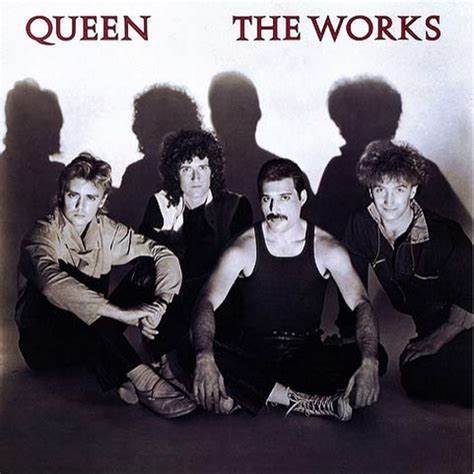
CHART POSITION: #23 in the US, #2 in the UK, top 10 in ten more countries
SINGLES: “Radio Ga Ga”, “I Want to Break Free”, “It’s a Hard Life”, “Hammer to Fall”
MY FAVORITE TRACKS: All of the above, plus “Keep Passing the Open Windows” and “I Go Crazy”
FUN FACT #1: Lady Gaga, whose birth name is Stefani Joanne Angelina Germanotta, took her stage name from “Radio Ga Ga”.
FUN FACT #2: David Mallet, a legend in the music video industry, directed the clips for both “Radio Ga Ga” and “I Want to Break Free”. I could write an entire post about Mallet’s work; among the videos he’s directed are Boomtown Rats’ “I Don’t Like Mondays”, Peter Gabriel’s “Games Without Frontiers”, David Bowie’s “Let’s Dance”, Billy Idol’s “Eyes Without a Face”, and AC/DC’s “Thunderstruck”.
The “Radio Ga Ga” video paid homage to Orson Welles’ 1938 radio broadcast of War of the Worlds and was nominated for Best Art Direction at the inaugural MTV Video Music Awards.
The clip for “I Want to Break Free”, which features the band members in drag, is a parody of popular British soap opera Coronation Street. The single topped out at a disappointing #45 on the Billboard Hot 100, which band members have blamed on MTV’s reluctance to play the video (I’ll give you one guess why).
FUN FACT #3: Stranger Things fans will recognize “Hammer to Fall” from the season two episode “The Spy”.
Queen AND the return of the nail bat!!
“Weird Al” Yankovic in 3-D – “Weird Al” Yankovic
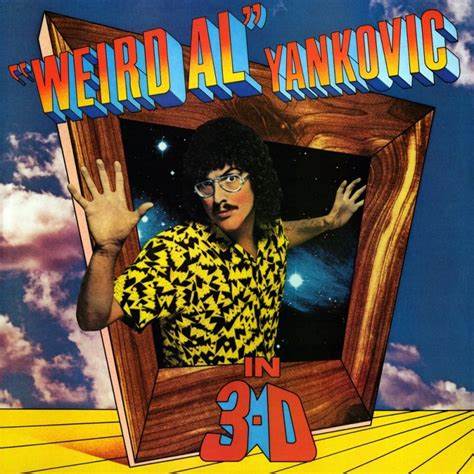
CHART POSITION: #17 in the US, #61 in Australia
SINGLES: “Eat It”, “King of Suede”, “I Lost on Jeopardy”
MY FAVORITE TRACKS: All of the above, plus “The Brady Bunch” (sung to the tune of “Safety Dance”) and “Polkas on 45”
FUN FACT #1: “Theme from Rocky XIII“, a parody of Survivor’s “Eye of the Tiger”, suggested a possible thirteenth film in the Rocky series. He wasn’t that far off; a fourth Creed film (in development now) brings the franchise’s grand total to ten.
FUN FACT #2: “Polkas on 45”, a riff on Stars on 45 (IFKYK), contains snippets of seventeen different songs, including Berlin’s “Sex (I’m a …)”, The Beatles’ “Hey Jude”, The Doors’ “L.A. Woman”, Jimi Hendrix’s “Hey Joe”, Talking Heads’ “Burning Down the House”, and The Police’s “Every Breath You Take”.
This Is Spinal Tap – Spinal Tap
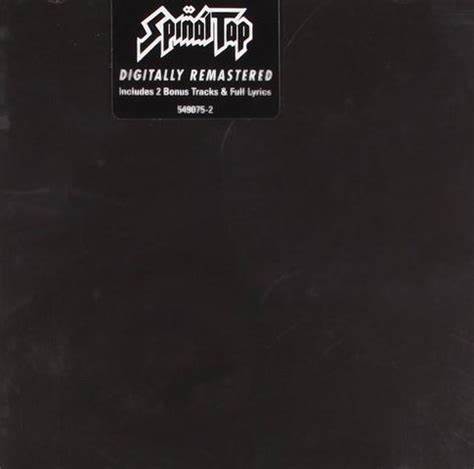
CHART POSITION: N/A
SINGLES: None
MY FAVORITE TRACKS: “Hell Hole”, “Tonight I’m Going to Rock You Tonight”, “Big Bottom”, “Stonehenge”, “Christmas with the Devil”
FUN FACT: Though all the tracks were written by Christopher Guest, Harry Shearer, and Michael McKean (along with director and co-star Rob Reiner), the album is credited to their Spinal Tap alter egos Nigel Tufnel, Derek Smalls, and David St. Hubbins.
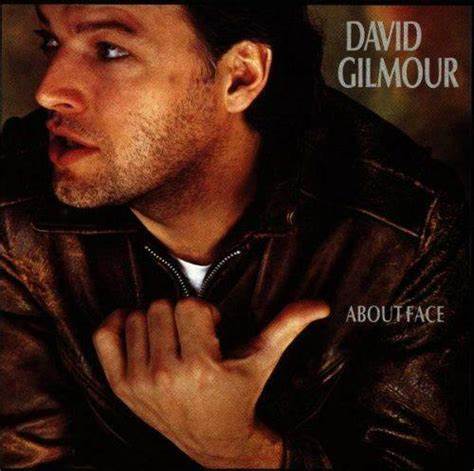
About Face – David Gilmour
CHART POSITION: #32 in the US
SINGLES: “Blue Light”, “Love on the Air”
MY FAVORITE TRACKS: “Murder”, “Love on the Air”, “Blue Light”, “All Lovers Are Deranged”, “You Know I’m Right”
FUN FACT: “Love on the Air” and “All Lovers Are Deranged” were co-written with The Who’s Pete Townshend, whose version of the latter appeared on his 2001 solo album Scoop 3. Among the musicians who performed on About Face are Steve Winwood, TOTO’s Jeff Porcaro, and classical pianist Anne Dudley. Dudley, who won an Oscar in 1998 for her The Full Monty score, has worked extensively as a session musician and was also a member of the art-rock outfit Art of Noise (more on them in volume two of this post).
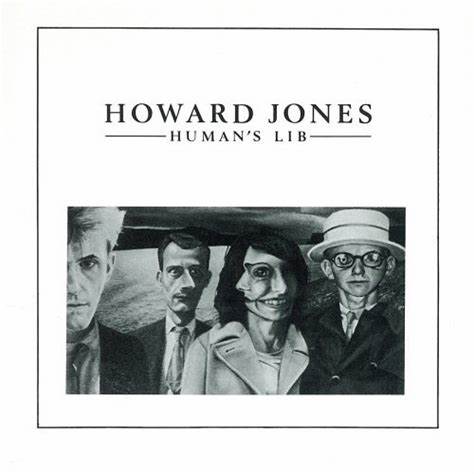
Human’s Lib – Howard Jones
CHART POSITION: #59 in the US, #1 in the UK (where it was the sixteenth-most popular album of the year)
SINGLES: “New Song”, “What Is Love?”, “Hide and Seek”, “Pearl in the Shell”
MY FAVORITE TRACKS: All of the above, plus “Conditioning”
FUN FACT: I bought this album the same day I saw Sixteen Candles in the theater, so the two are inextricably linked in my mind.
Love Life – Berlin
CHART POSITION: #23 in the US
SINGLES: “No More Words”, “Now It’s My Turn”, “Dancing in Berlin”, “Touch”
MY FAVORITE TRACKS: All of the above, plus “Beg, Steal or Borrow” and “Pictures of You”
FUN FACT: “No More Words,” co-produced by the legendary Giorgio Moroder and supported by a Bonnie and Clyde-inspired music video, was Berlin’s first Top 40 hit, peaking at #23 on the Billboard Hot 100. I was mildly obsessed with Terri Nunn; I thought she was the sexiest, most confident woman I’d ever seen, and my little fourteen-year-old mind was blown.
Heartbeat City – The Cars
CHART POSITION: #3 in the US, #25 in the UK, #5 in Canada
SINGLES: “You Might Think”, “Magic”, “Drive”, “Hello Again”, “Why Can’t I Have You” (UK only), “Heartbeat City”
MY FAVORITE TRACKS: All of the above
FUN FACT #1: Driven by the album’s six singles, Heartbeat City is the band’s best-selling album. Accompanied by a music video directed by actor Timothy Hutton and starring Ric Ocasek’s future wife Paulina Porizkova, “Drive” was the album’s biggest hit.
Paulina was just 19 when she starred in the “Drive” video (and met the 40-year-old – and married – Ric Ocasek)
FUN FACT #2: The video for “You Might Think,” which utilized (for the time) cutting-edge computer graphics, won five awards at the inaugural VMAs, including Video of the Year. The clip was parodied, along with David Lee Roth’s “California Girls”, Elton John’s “I’m Still Standing”, and The Police’s “Every Breath You Take”, in the video for “Don’t Lose My Number” by Phil Collins.
FUN FACT #3: Andy Warhol directed the video for “Hello Again”. It’s…something.
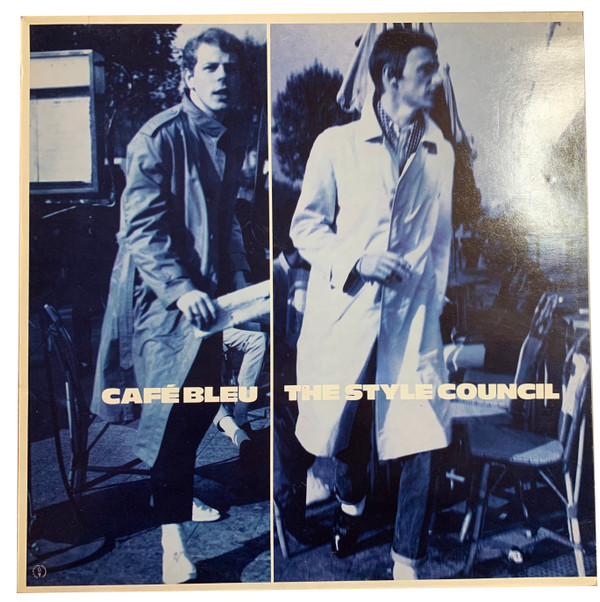
Café Bleu – The Style Council
CHART POSITION: #56 in the US, #2 in the UK
SINGLES: “My Ever Changing Moods”, “You’re the Best Thing”
MY FAVORITE TRACKS: “The Whole Point of No Return”, “The Paris Match”, “My Ever Changing Moods”, “You’re the Best Thing”
FUN FACT: Café Bleu (which was retitled My Ever Changing Moods in the US to capitalize on the single of the same name) was the studio debut for The Style Council, which was co-founded in 1982 by The Jam’s Paul Weller and Dexy’s Midnight Runners’ Mick Talbot. “The Paris Match” features guest musicians Tracey Thorn and Ben Watt of the English pop duo Everything But the Girl.
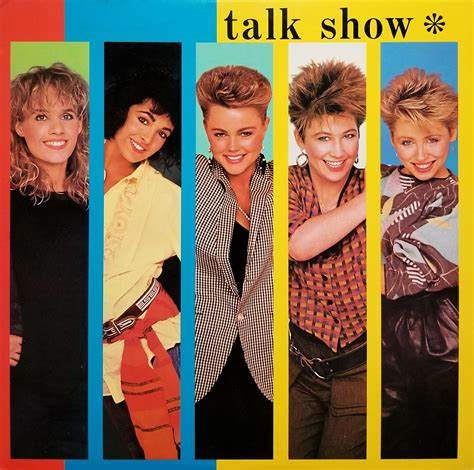
Talk Show – The Go-Go’s
CHART POSITION: #18 in the US
SINGLES: “Head Over Heels”, “Turn to You”, “Yes or No”
MY FAVORITE TRACKS: All of the above, plus “You Thought”, “Beneath the Blue Sky”, “I’m the Only One”
FUN FACT: Talk Show was The Go-Go’s’ final album until a 2001 reunion. Simmering tensions over royalties, personal conflicts, and creative differences led to Jane Wiedlin’s departure in October 1984 and the band’s breakup the following May.
The video for “Turn to You”, co-directed by future Pet Sematary helmer Mary Lambert, stars an absurdly young Rob Lowe
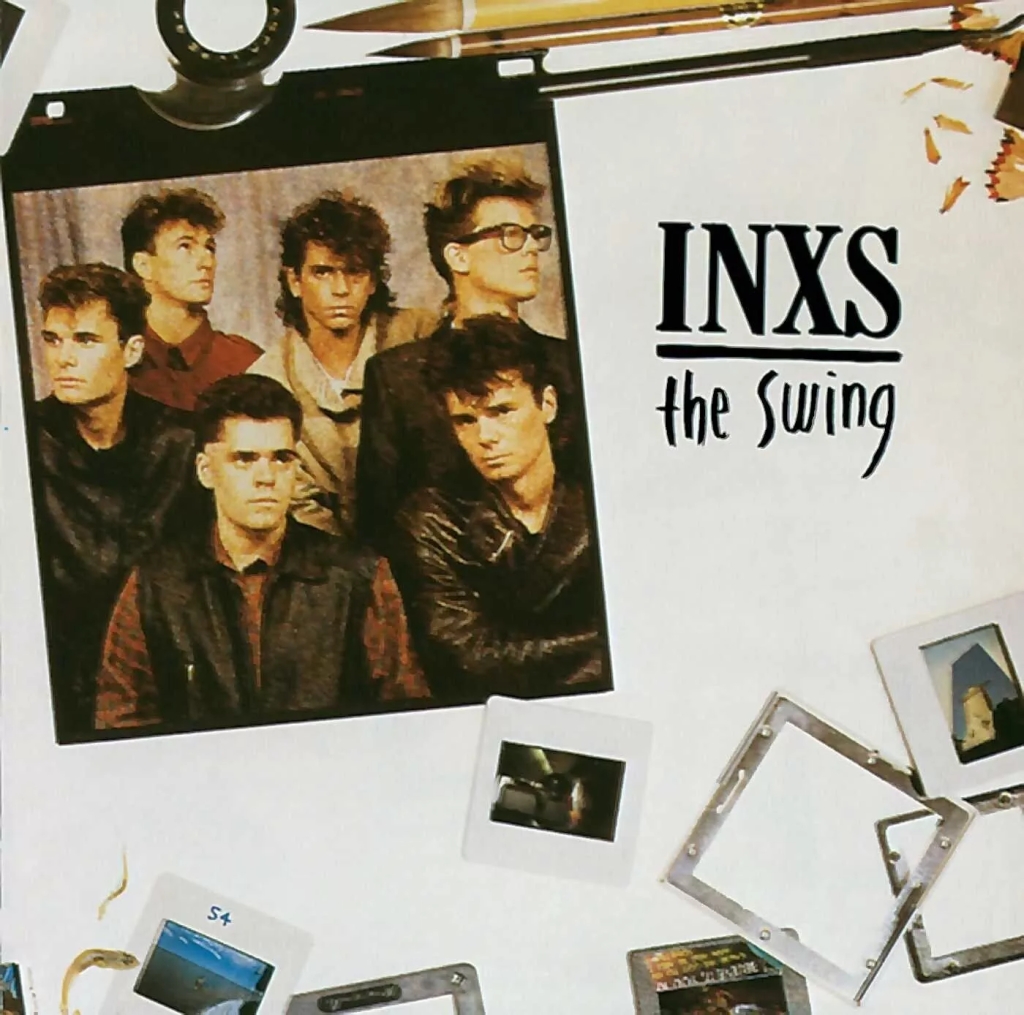
The Swing – INXS
CHART POSITION: #52 in the US, #1 in Australia
SINGLES: “Original Sin”, “I Send a Message”, “Burn for You”, “Dancing on the Jetty”
MY FAVORITE TRACKS: All of the above, plus “Melting in the Sun”, “Love Is (What I Say)”, “Face the Change”, “All the Voices”
FUN FACT #1: INXS didn’t achieve their commercial breakthrough in the US until 1985’s Listen Like Thieves, but thanks to their 1982 album Shabooh Shoobah and a slot as the opening act on Men at Work’s 1983 Cargo tour, I had already fallen for the Ozzie sextet.
FUN FACT #2: “Original Sin”, the band’s first (and only) #1 in their native Australia, was produced by the iconic Nile Rodgers and features Daryl Hall on backing vocals.
FUN FACT #3: With over 15 million copies sold, INXS is the third-best-selling Australian artist in US history behind AC/DC and Bee Gees. That’s pretty great company.
The Icicle Works – The Icicle Works
CHART POSITION: #40 in the US, #24 in the UK, #20 in Canada
SINGLES: “Birds Fly (Whisper to a Scream”, “Love is a Wonderful Colour”
MY FAVORITE TRACKS: All of the above
FUN FACT: In the US, The Icicle Works (named for Frederik Pohl’s sci-fi short story “The Day the Icicle Works Closed”) is a legitimate one-hit-wonder; “Birds Fly (Whisper to a Scream)” is their only appearance on the Billboard Hot 100 (it topped out at #37).
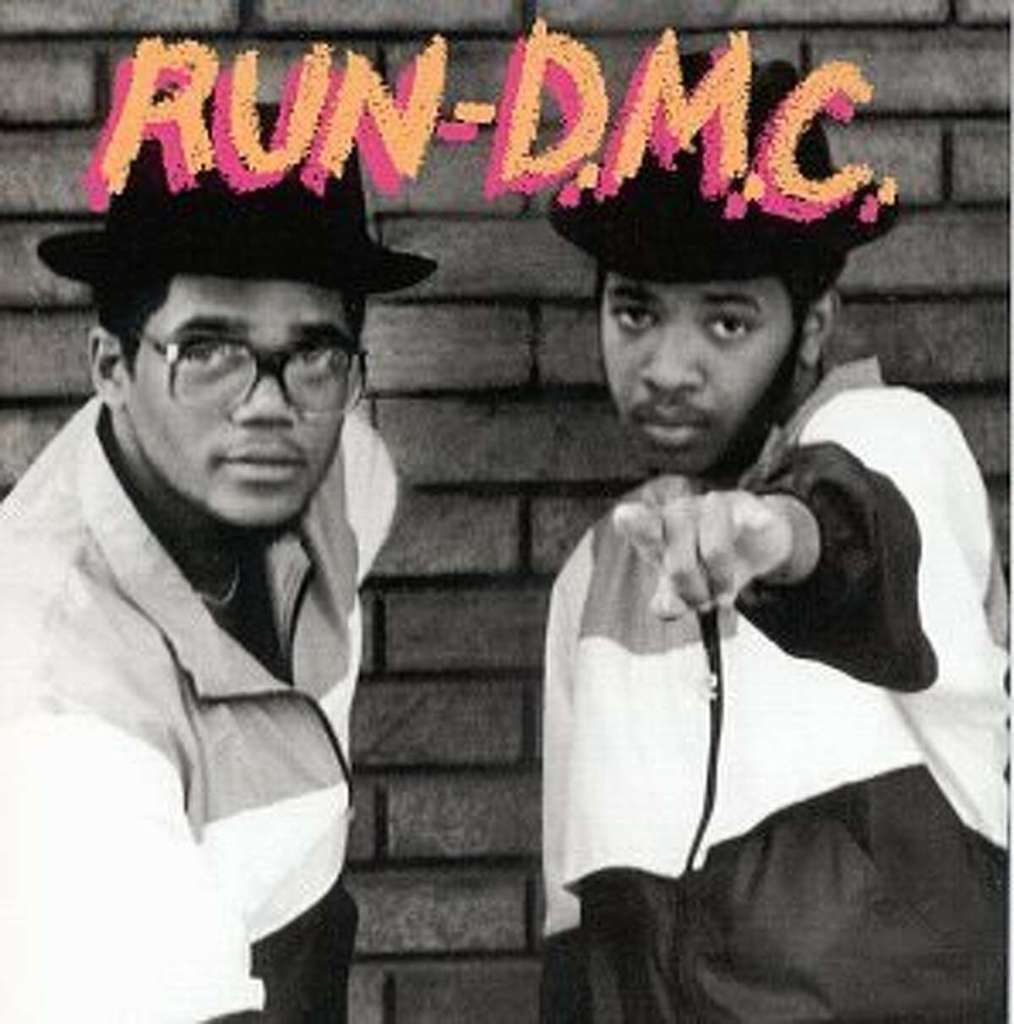
MY FAVORITE TRACKS: All of the above, plus “Sucker M.C.’s (Krush Groove 1)
FUN FACT: The hugely influential “Rock Box” is considered to be the first song in the rap-rock genre. The single features session musician Eddie Martinez on guitar; in 2015, his contribution to “Rock Box” topped Guitar World’s list of “The Top 10 Uses of Guitar in Hip-Hop” (https://www.guitarworld.com/features/top-10-uses-guitar-hip-hop).
Love at First Sting – Scorpions
The original Love at First Bite album cover (left), with photography by the legendary Helmut Newton, and the “clean” version (right) put together by PolyGraph Records after Walmart filed a complaint about the original cover
CHART POSITION: #6 in the US, #17 in the UK, #6 in the band’s native Germany
SINGLES: “Rock You Like a Hurricane”, “Still Loving You”, “Big City Nights”, “I’m Leaving You”
MY FAVORITE TRACKS: All of the above
FUN FACT: “Rock You Like a Hurricane” is somehow both completely of its time and utterly timeless. It rocks times infinity. Appearances in film and television – Stranger Things, It’s Always Sunny inPhiladelphia, and Scouts Guide to the Zombie Apocalypse, to name a few – have kept the song in the limelight for forty years.
Here’s the 1984 playlist, which will be updated for volumes 2 and 3:
Originally posted in 2021; edited for content and clarity.
Happy Thanksgiving, everyone! Most of us have our Thanksgiving viewing favorites, and while football and Planes, Trains and Automobiles are classic staples (as is my dad’s personal fave, watching the backs of his eyelids), here are some not-so-traditional suggestions:
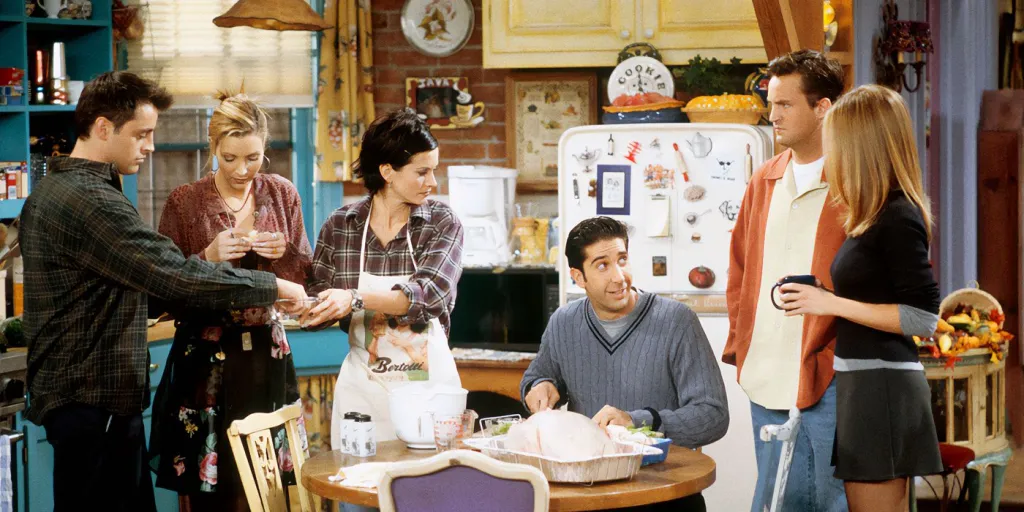
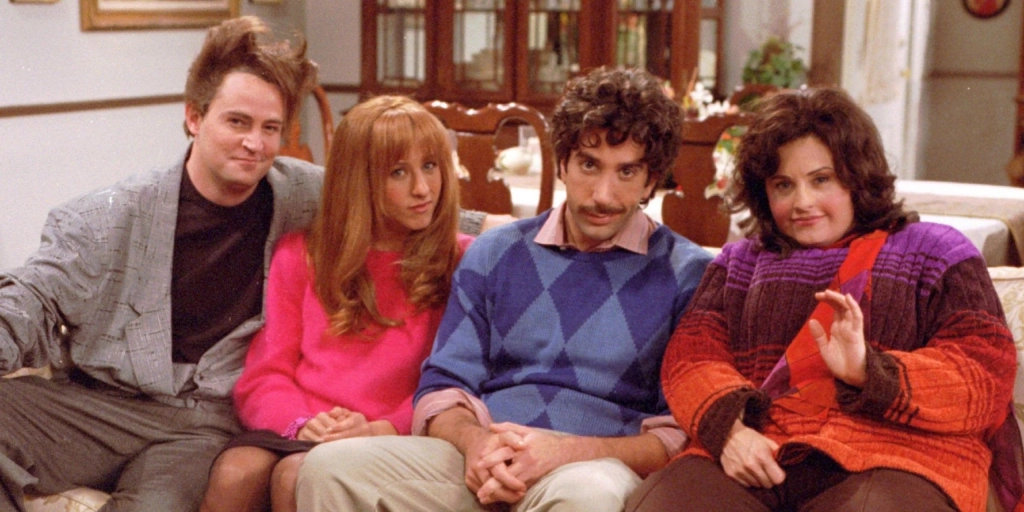
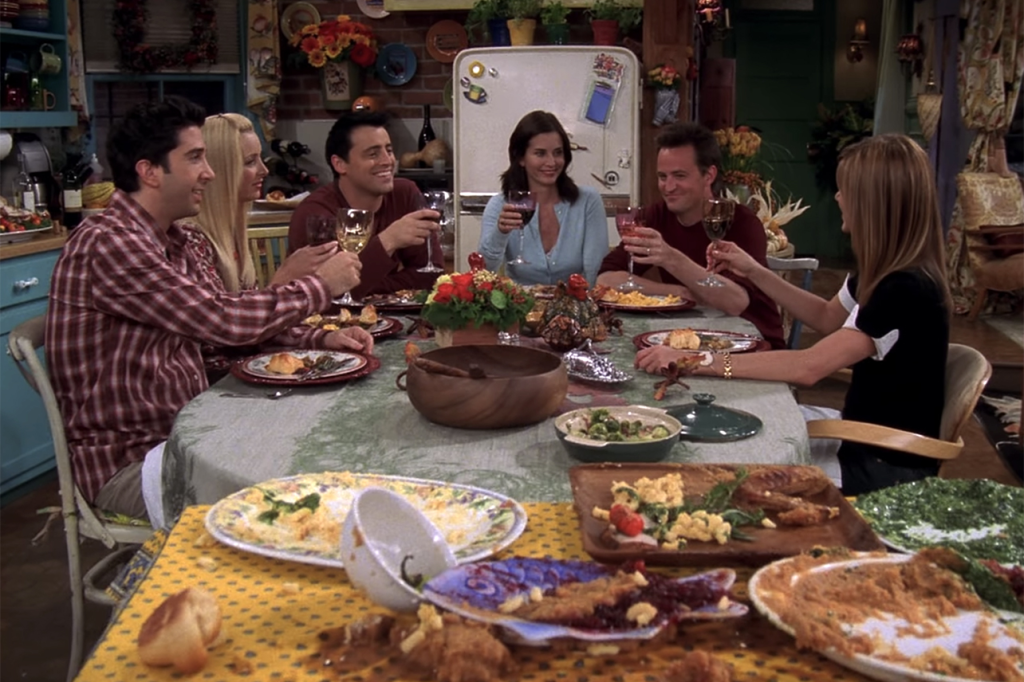
Friends, “The One Where Ross Got High”
“The One with Chandler in a Box” (season four)“The One with All the Thanksgivings” (season five)“The One with the Late Thanksgiving” (season ten)
Everyone has their favorite Friends Thanksgiving episode. My informal poll on Twitter yielded a clear winner, “The One with All the Thanksgivings”, which is my runner-up. My personal fave? “The One Where Ross Got High”, because of this scene…
…and this scene:
You can stream Friends on Max.
Dan in Real Life
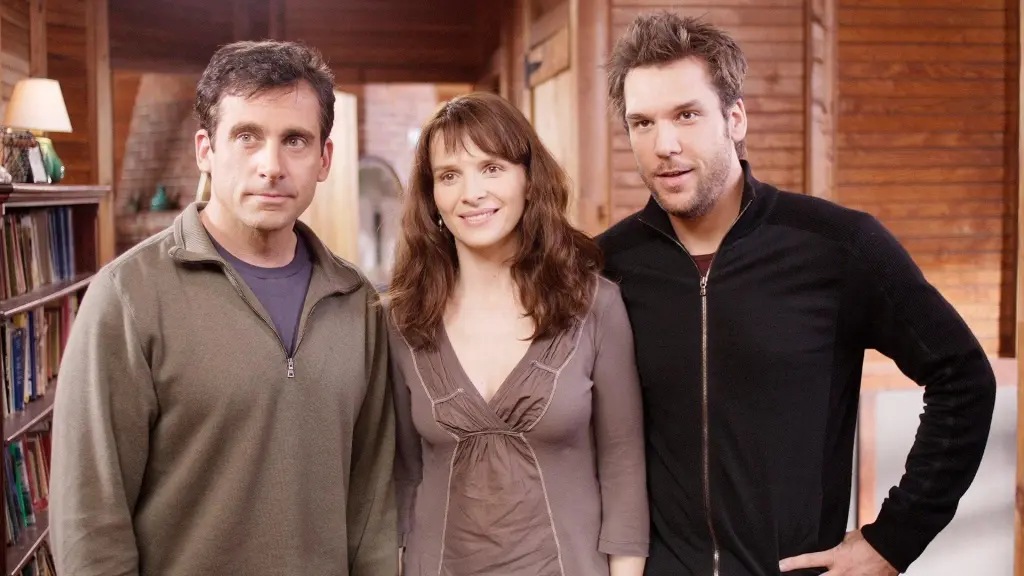
L-R: Steve Carell, Juliette Binoche, Dane Cook
The supporting cast of this charming romantic comedy is to die for – John Mahoney, Dianne Wiest, Allison Pill, Amy Ryan, Emily Blunt, and Jessica Hecht, among others – but at its core is the delightful Steve Carell. Carell’s Dan is a widower with three daughters, spending Thanksgiving weekend at his family’s oceanside house. On a trip to town, Dan meets Marie (the lovely Juliette Binoche) and finds himself attracted to her, only to return home and discover that Marie is his brother’s girlfriend.
You can stream Dan in Real Life on Disney+.
How I Met Your Mother, “Slapsgiving”
Marshall has promised Barney the third slap in their ongoing slap bet before sundown on Thanksgiving, and the entire affair is très awkward because exes Robin and Ted slept together the night before. Oh, and Robin’s new beau Bob is in attendance. Slap bet commissioner Lily, hosting her first Thanksgiving, finally breaks the tension by allowing the slap, and the results are hilarious. My favorite part? Marshall’s post-slap serenade.
You can stream How I Met Your Mother on Hulu.
Addams Family Values
Best. Thanksgiving. Pagent. EVER.
Addams Family Values is available to stream on Paramount+.
WKRP in Cincinnati, “Turkeys Away”
The plot is simple: bumbling station manager Arthur Carlson intends to pull off the biggest promotion in the history of WKRP by dropping live turkeys out of a helicopter. Fortunately for the viewer, it doesn’t go well, leading to one of the funniest lines in television history: “As God is my witness, I thought turkeys could fly!”
WKRP in Cincinnati is available to rent or buy on Apple TV.
The Ice Storm
Based on Rick Moody’s novel, Ang Lee’s gorgeous ode to 1970s suburban dysfunction is set over the long holiday weekend, culminating in the titular weather event the day after Thanksgiving. The cast – headlined by Kevin Kline, Joan Allen, and BAFTA winner Sigourney Weaver – is divine. The Ice Storm isn’t an easy watch, but if you’re in the mood for a tragedy, this could be the perfect option.
The Ice Storm is available to rent or buy on Prime and Apple TV.
Cheers, “Thanksgiving Orphans”
“Thanksgiving Orphans”, which originally aired on November 27, 1986, was ranked seventh by TV Guide on their list of the 100 Greatest Episodes of All Time. It is best remembered for its climactic food fight and the long-awaited appearance of Norm Peterson’s oft-heard but previously unseen wife Vera.
Fun fact: Everything after Sam throwing the cranberry sauce in Diane’s face was unscripted
Cheers is available to stream on Hulu and Paramount+.
Home for the Holidays
Home for the Holidays, the second feature film from director Jodie Foster, stars Holly Hunter as Claudia, whose personal and professional lives are a mess. When her teenage daughter decides to spend Thanksgiving with her boyfriend, Claudia opts to visit her dysfunctional family. The supporting cast (Anne Bancroft, Charles Durning, Geraldine Chaplin, Robert Downey Jr, Dylan McDermott, Steve Guttenberg, Cynthia Stevenson, Claire Danes, Austin Pendleton, and David Strathairn) is an absolute embarrassment of riches.
You can stream Home for the Holidays on Paramount+.
A Charlie Brown Thanksgiving
Although it’s not quite as iconic as its Christmas counterpart, A Charlie Brown Thanksgiving is a delight nonetheless. The special, which earned Charles M. Schulz a Primetime Emmy Award for Outstanding Individual Achievement in Children’s Programming, features the music of Vince Guaraldi and a storyline where children are inexplicably responsible for preparing Thanksgiving dinner. In 2024, the pro-Pilgrim message feels terribly dated, but I still love the interplay between BFF’s Snoopy and Woodstock.
A Charlie Brown Thanksgiving is available for streaming on Apple TV.
***** CONTENT WARNING: THIS POST CONTAINS REFERENCES TO SUBSTANCE ABUSE AND ADDICTION-RELATED ISSUES *****
Matthew Perry is dead at the age of 54. A five-time Emmy nominee, Perry starred in films like The Whole Nine Yards and 17 Again, as well as series such as Studio 60 on the SunsetStrip and Mr. Sunshine. He also made several notable guest appearances on dramas like TheWestWing and TheGoodWife. But he will always be best remembered for his iconic performance as Chandler Bing on Friends. 1
Matthew Langford Perry was born on August 19, 1969, in Williamstown, Massachusetts, to Canadian journalist (and Pierre Trudeau press secretary) Suzanne Marie Morrison and American actor John Bennett Perry (fun fact: the elder Perry appeared as Joshua’s dad on the Friends episode “The One with Rachel’s New Dress”). His parents divorced before his first birthday and he was raised primarily by his mother, who remarried in 1981 (his stepdad is journalist and DatelineNBC correspondent Keith Morrison). Perry attended Rockcliffe Park Public School alongside future Canadian PM Justin Trudeau. At the age of 14, he began consuming alcohol; he was drinking alcohol daily by the time he was 18.
Perry with his dad (L) and with his mom and maternal half-siblings (R)
At the age of fifteen, Perry moved from Ottawa to Los Angeles to live with his father and pursue an acting career. He graduated from the Buckley School in Sherman Oaks in 1987 and almost immediately got his first starring role, in the FOX sitcom SecondChance. The following year, Perry made his film debut in the River Phoenix-led A Night in the Life ofJimmyReardon. More TV work followed, including a three episode arc on GrowingPains, the Valerie Bertinelli sitcom Sydney, and a guest spot on BeverlyHills, 90120.
Perry with River Phoenix in A Night in the Life ofJimmyReardon (L) and with Jason Priestley on BeverlyHills, 90120 (fun fact: Perry was a top-ranked tennis player in Canada and at one point contemplated a career as a professional tennis player)
Perry’s biggest break came in 1994 when he was cast as Chandler Bing in a pilot called SixofOne (later renamed Friends). But he almost missed out on the series that would make him a household name. Perry was committed to another pilot, LAX2194, about baggage handlers at LAX in the year 2194 (no, I’m not making that up). Fortunately – and not terribly surprisingly – that pilot didn’t get picked up, leaving Perry available for Friends. The rest, as they say, is history.
Over the next ten years, Perry and his castmates became superstars and millionaires. It’s impossible to overstate how completely Friends dominated the pop culture landscape in the mid-1990s. In this era of endless streaming options, a network series rarely makes that kind of impact anymore. Amongst the six main characters, Chandler was absolutely my favorite. Smart, sarcastic and self-deprecating, Chandler hated his job and was unlucky in love (that is, until the end of season four, when he figured out that the love of his life lived right across the hall). In front of the camera, Perry often provided the comic relief, but behind the scenes, he was battling several addictions. In 1997, he became addicted to Vicodin after a jet ski accident (he lost a ton of weight during this time, which was evident during season three of Friends). In 2000, Perry was admitted to Cedars-Sinai Medical Center for alcohol-induced pancreatitis. In early 2001, he entered rehab for multiple addictions, including alcohol and amphetamines. Perry has admitted that he doesn’t remember much about the filming of seasons three through six
After ten seasons and 236 episodes, Friends went off the air in 2004. Perry continued to act in films and television, and continued to battle his demons. In 2018, he was given a 2% chance of survival after his colon burst due to his opioid use. More recently, while taking Oxycontin and ketamine, Perry was given propofol for a surgery and his heart stopped beating for five minutes. The CPR done to revive his heart broke eight of his ribs.
On October 28, Perry was found unresponsive in the hot tub of his Pacific Palisades home. No cause of death has been established; autopsy results could take months. Police found no proof of drug use at the scene, but there’s little doubt his decades of substance abuse could have contributed to his death. Perry once estimated that his addiction cost him roughly $9 million, including fourteen stomach surgeries and fifteen rehab stays. And in the end, it may have cost him his life.
In the end, we’ll always have our favorite Friend. In Perry’s memory, here is a selection of my favorite Chandler-centric Friends episodes.
“The One with the Blackout”
The lights go out in NYC and five of the six friends spend the blackout together in Monica’s apartment. Chandler, on the other hand, is trapped in an ATM vestibule with Jill Goodacre. The encounter begins awkwardly, as is typical for Chandler, but things get a lot more intimate after Jill (credited as Jill Connick) administers the Heimlich maneuver on a choking Chandler. They part ways sweetly, with a kiss on the cheek, after which Chandler hilariously requests “a copy of the tape” from the bank.
*
“The One with the Candy Hearts”
Chandler once again finds himself linked to Janice, his ex- and future-girlfriend, this time through an inadvertent blind date. When Joey and Janice’s friend Lorraine leave to go lick chocolate mousse off each other, Joey leaves behind his credit card (this is literally the only time Joey ever paid for anything). Chandler and Janice order a bottle of champagne each – and inevitably wind up in bed together. The series got a lot of mileage out of the Chandler & Janice relationship, and this episode is my favorite of the bunch.
“OH MY GOD!”
“The One Where Heckles Dies”
Perry got to show his sentimental side in this season two standout. Monica and Rachel’s annoying upstairs neighbor Mr. Heckles passes away unexpectedly. As the gang clears out Heckles’ apartment, Chandler is dismayed by the similarities between himself and the hermit-like Heckles. Worried he’ll die alone too, Chandler resorts to drastic (and hilarious) measures. But it’s the end – “Goodbye, Mr. Heckles. We’ll try to keep it down” – that tugs at your heartstrings.
“The One After the Superbowl, Part 2”
In January of 1996, the cast of Friends were among the biggest stars on the planet and Perry was dating fellow A-lister Julia Roberts. Roberts was cast on the post-Super Bowl episode, the imaginatively titled “The One After the Superbowl”. Roberts plays Susie “Underpants” Moss, a former classmate of Chandler’s with a longstanding score to settle. More than 52 million people tuned in to “The One After the Superbowl”; it remains the highest rated Super Bowl lead-out of all time.
“The One Where Eddie Won’t Go”
Joey has gotten a role on DaysofOurLives and with his newfound financial freedom, his own place. Chandler finds a roommate, Eddie (Adam Goldberg), who seems a little eccentric at first but ultimately reveals his true (cuckoo) nature. Chandler tries to kick Eddie out, but he proves difficult to get rid of. When Joey is written off DaysofOurLives, Chandler hatches a plan to bring Joey back and rid himself of Eddie once and for all.
Fun fact: Adam Goldberg isn’t the only DazedandConfused star to guest on Friends. Nicky Katt appears on the season two episode “The One with the Bullies” and Marissa Ribisi plays one of Rachel’s friends in season three’s “The One with the Flashback”. Marissa’s twin Giovanni also had a pivotal role in the series, appearing in eight episodes as Phoebe’s brother Frank Jr.
“The One Where No One’s Ready”
Friends took a cue from Seinfeld for this season three standout, with the episode playing out in real time as the gang gets ready for a museum benefit. The episode’s funniest subplot involves Chandler and Joey one-upping each other over a coveted chair cushion. Perry and Matt LeBlanc seized the opportunity to show off both their comedic skills and their sparking chemistry.
“The One Where Chandler Can’t Remember Which Sister”
The occasion is Joey’s birthday and Chandler, still lamenting the end of his relationship with Janice, makes out with one of Joey’s seven sisters. To make matters worse, he can’t remember which sister. Chandler attempts to repair the situation without Joey finding out, but c’mon, this is a sitcom so of COURSE Joey is going to find out, and all the better for the audience.
“The One with the ‘Cuffs”
Rarely do we get a Chandler-Rachel subplot, but when it happens, it’s pure gold. Perry and Jennifer Aniston bring out the best in each other; he also has a chance to show off his physical comedy chops. This episode also contains one of my favorite unscripted moments ever, as the cabinet drawer Chandler is handcuffed to hits his head; Perry and Aniston, like the professionals they are, stayed in character and the take made the final cut.
“The One with Chandler in a Box”
Chandler has fallen in love with Joey’s new girlfriend Kathy (the lovely Paget Brewster) and vice versa; in the previous episode, “The One Where Chandler Crosses the Line”, the two shared a kiss. Joey forces Chandler to atone for his sin by spending Thanksgiving in a box. Perry manages to somehow be both funny and poignant using only his fingers, demonstrating his substantial gift for physical comedy.
“The One with the Embryos”
Arguably the best episode of Friends, “The One with the Embryos” is a fantastic showcase for what makes the series so beloved – the chemistry amongst the cast. Everyone has the chance to shine here, as Phoebe embarks on her surrogate journey and the remainder of the gang participate in an increasingly hilarious quiz that will determine who gets the ladies’ apartment. The situation devolves into chaos before Phoebe delivers the happy news – she’s pregnant with Alice and Frank’s baby – and the fighting turns into a celebration.
“The One with the All the Rugby”
Chandler, getting over his breakup with Kathy, runs into Janice and finally sees what his friends find so annoying about her. He never could break up with Janice, so to extricate himself, he tells her he’s being transferred to Yemen. After giving Janice a fake address (“15 Yemen Road, Yemen”), Chandler literally gets on a plane to the middle east and finally leaves Janice in his past (and in a matter of weeks, he’ll be off the market for good – see next entry).
“The One with Ross’s Wedding, Part 2”
In the season four finale, the Friends writers threw us a doozy of a twist when, halfway through the episode, it’s revealed that Monica and Chandler spent the previous night together. We don’t see the lead-up until the season seven episode “The One with the Truth About London”, but frankly, we didn’t need to see it. The reveal led to some of the funniest episodes in the series’ history, as the pair attempted to hide their burgeoning relationship from the rest of the gang.
“The One with All the Thanksgivings”
The Thanksgiving episodes are a favorite amongst Friends fans, and this season five standout is no exception. As the six share their worst Thanksgiving memories, we learn more about how Monica and Chandler first met – and Chandler finally learns the truth about how he lost his little toe.
Fun fact: “The One with All the Thanksgivings” earned costume designer Debra McGuire an Emmy for Oustanding Costume Design for a series.
“The One with All the Resolutions”
The gang all make New Years resolutions – Monica is going to take more pictures of the group, Ross will try a new thing each day (including, hilariously, wearing leather pants), Joey will learn to play guitar so something on his resume is true – and Chandler vows to make fun of his friends less. By the end of the week (and the end of the episode), he’s already caved. Meanwhile, Rachel (whose resolution is, inconveniently, to gossip less) overhears a suggestive phone call between Monica and Chandler, setting the stage for the following entry.
“The One Where Everybody Finds Out”
My personal favorite episode, “The One Where Everybody Finds Out” sees the remainder of the group learn about Monica and Chandler’s relationship in the most hilarious way possible. Still not ready to reveal the truth, Chandler pretends to be attracted to Phoebe, who is attempting to seduce him in order to get him to confess. Eventually, she breaks him and the episode ends on a tender note, with Chandler and Monica declaring their love for one another.
“They don’t know that we know that they know” is one of my favorite quotes of all time
“The One on the Last Night”
Chandler is moving in with Monica and doesn’t want to leave Joey in a financial jam, so he offers to give Joey money. When Joey refuses the offer, Chandler attempts to lose at foosball. When that fails, he goes about it another way, inventing a card game called “Cups” and “losing” all his money to his bestie, who chalks his windfall up to beginner’s luck.
“The One with the Proposal”
Chandler, in an effort to throw Monica off his proposal trail, tries to convince her he never wants to get married (it works like a charm). Then, when he’s finally ready to pop the question, the pair runs into Monica’s ex, Richard (Tom Selleck). Richard confesses that he’s still in love with Monica, who now believes she’s in a dead-end relationship with Chandler. It all comes together in the end, and season six ends not with a cliffhanger, but with a proposal.
Courteney Cox, the only member of the cast to never receive an Emmy nomination for her performance, is so freaking good in this scene
“The One with the Halloween Party”
The only Friends Halloween episode, “The One with the Halloween Party” features some fantastic costumes (most memorably, Ross as “Spudnik” AKA “Space doody”). Monica picks out Chandler’s costume, selecting a pink bunny because Chandler loves The Velveteen Rabbit. Chandler points out that the velveteen rabbit was brown and
“No bunny at all, always no bunny at all!”
“The One with the Mugging”
Season nine finds Chandler finally quitting his soul-sucking job in statistical analysis and data reconfiguration (whatever that means) and embarking on a new career in advertising. Feeling ancient next to his fellow interns, Chandler uses his age to his advantage and comes up with the best campaign slogan for this weird sneaker on fire/roller skate hybrid (“Not suitable for adults”).
“The Last One”
Monica and Chandler have packed up the apartment for their move to the ‘burbs. Matthew Perry really wanted the final line in the series and the writers granted his wish. Rachel asks if they should go get coffee and Chandler, ever the smart ass, simply asks, “Where?” Just a perfect sendoff.
1Since I began working on this post, I watched a clip of Perry saying he hopes he is remembered not for Friends but for the help he gave others during their own addiction journeys. I also watched an interview with Perry’s good friend (and frequent Friends guest star) Hank Azaria, who described Perry as having helped him get sober. He was obviously well-loved by people on a personal level and I’m so impressed by his commitment to helping others. My heart goes out to his friends and family, who are mourning a deep personal loss. Peanut Butter and Julie is a pop culture blog and my emphasis will always lie there, but I also want to honor him as, by all accounts, a really great person who genuinely cared for and helped others in need.
“Those who don’t believe in magic will never find it.” – Roald Dahl, The Minpins
Today is Roald Dahl Day, in honor of Dahl’s birthday. His darkly comic tales, which often pit kindhearted children against nefarious adults, have delighted generations of young readers (yours truly included). His books have sold more than 250 million copies worldwide and inspired countless artists such as Tim Burton, Lemony Snicket, and the TERF who shall not be named.
Roald Dahl was born on September 13, 1916, in Cardiff, Wales. The son of Norwegian immigrants, Dahl was named for the famed explorer Roald Amundsen. His father Harald, who passed away when Dahl was just three years old, insisted Dahl attend school in Britain. Dahl enrolled at St. Peter’s in Weston, across the Bristol Channel from the family’s home in Cardiff, when he was eight. His time at St. Peter’s was marked by isolation and homesickness. From 1929 to 1934 (ages 13-18), Dahl attended Repton School in Derbyshire, where he was subjected to hazing by the older students and corporal punishment from the headmaster.
Dahl in 1927 with his younger sisters Alfhild, Else and AstaDahl during his stint with the RAF
Upon graduating, Dahl spent several years working for Shell Petroleum Company in Kenya and Tanganyika (now Tanzania). In 1939, with World War II looming, Dahl enlisted in the Royal Air Force and later served as a diplomat with the British Embassy in Washington, D.C. It was there that he made the acquaintance of novelist C.S. Forester, who persuaded Dahl to write about his experience in the RAF. “A Piece of Cake” (originally titled “Shot Down Over Libya”) was Dahl’s first published work; it appeared in the August 1, 1942 issue of The Saturday Evening Post. His diplomatic work ultimately led to some low-level spying, with Dahl supplying intelligence to Winston Churchill from his post in D.C. One of his fellow spies, future James Bond author Ian Fleming, became Dahl’s lifelong friend.
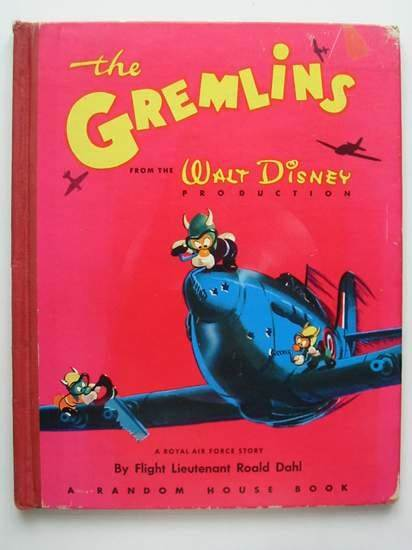
The following year, Dahl’s first children’s book, The Gremlins, was released in conjunction with Walt Disney (the studio eventually abandoned a planned film adaptation). Dahl continued to write short stories for adults as well as scripts like You Only Live Twice and Chitty Chitty Bang Bang and television series such as Alfred Hitchcock Presents and Tales of the Unexpected. But his primary talents were his ability to write sympathetic children who triumph over vile and corrupt adults and his innovative use of language (Dahl invented more than 500 words and names over the course of his career, including Oompa-Loompa, whangdoodle, whizzpopping, and snozzberry).
Dahl died from myelodysplastic syndrome, a rare cancer of the blood, on November 23, 1990. He was 74 years old. He left behind a lasting legacy that we still celebrate today (in fact, Dahl was the top-earning dead celebrity in 2021 due to Netflix’s acquisition of the Roald Dahl Story Company for around $680 million).
To commemorate Roald Dahl Day, here is a list of some of Dahl’s most beloved and iconic works.
The Gremlins
Inspired by his time in the Royal Air Force, The Gremlins features the impish mythical creatures that WWII airmen blamed for everything from mechanical failure to pilot error. The book was an instant hit – among its fans was Eleanor Roosevelt, who loved to read The Gremlins to her grandchildren – and Dahl’s writing career was off to the races.
Fun fact: The Gremlins inspired Joe Dante’s anarchic 1984 film, the iconic Twilight Zone episode “Nightmare at 20,000 Feet”, and The Simpsons‘ “Treehouse of Horror IV” segment “Terror at 5 1⁄2 Feet”.
Alfred Hitchcock Presents: “Lamb to the Slaughter”
Dahl’s short story “Lamb to the Slaughter”, originally published in Harper’s magazine in 1954, was adapted into this excellent episode of Alfred Hitchcock Presents in 1958. Mary Maloney (Barbara Bel Geddes) bludgeons her husband to death with a frozen leg of lamb, then serves the murder weapon to the investigating officers, one of whom says “For all we know, it might be right under our very noses”.
Fun fact: In 2009, TV Guide ranked “Lamb to the Slaughter” #59 on its list of the top 100 television episodes of all time.
Hitchcock himself directed this episode (Barbara Bel Geddes also co-starred in Hitch’s Vertigo, released the same year)
Kiss Kiss
One of Dahl’s most macabre works, Kiss Kiss (published in 1960) was my introduction to Dahl’s adult fiction. The collected short stories include Edgar Award winner “The Landlady”, “Royal Jelly”, and “Pig”, a personal favorite. Kiss Kiss also contains “The Champion of the World”, which Dahl later adapted into the 1975 children’s novel Danny, the Champion of the World.
Fun fact: Several of the stories – including “The Landlady”, “The Way Up to Heaven”, and “Georgy Porgy” – were later adapted into episodes of Dahl’s anthology series Tales of the Unexpected. You can watch complete episodes of the series on YouTube; it’s campy good fun, with delicious narration from Dahl.
“I stuff all my little pets when they pass away” is just <chef’s kiss>
James and the Giant Peach
Dahl’s second children’s book, published eighteen years after The Gremlins, is one of the most beloved. Dahl’s initial idea for the story involved a giant cherry, but he eventually decided that a “prettier, bigger and squishier” peach was more appropriate.
Fun fact: Henry Selick, best known for The Nightmare Before Christmas, directed a 1996 musical adaptation. Co-starring the absolutely fabulous Joanna Lumley and Miriam Margolyes as James’ sadistic aunts Spiker and Sponge, James and the Giant Peach was a live-action and stop-motion animation hybrid. Critically acclaimed but a box office flop, it went on to become a cult classic.
Charlie and the Chocolate Factory and Charlie and the Great Glass Elevator
While a student at Repton, Dahl and his schoolmates were taste testers for Cadbury; Dahl dreamed of concocting a chocolate bar that would earn him Mr. Cadbury’s praise. The experience made such an impression on Dahl, it served as the impetus for his third children’s novel, Charlie and the Chocolate Factory (and its fantastical sequel).
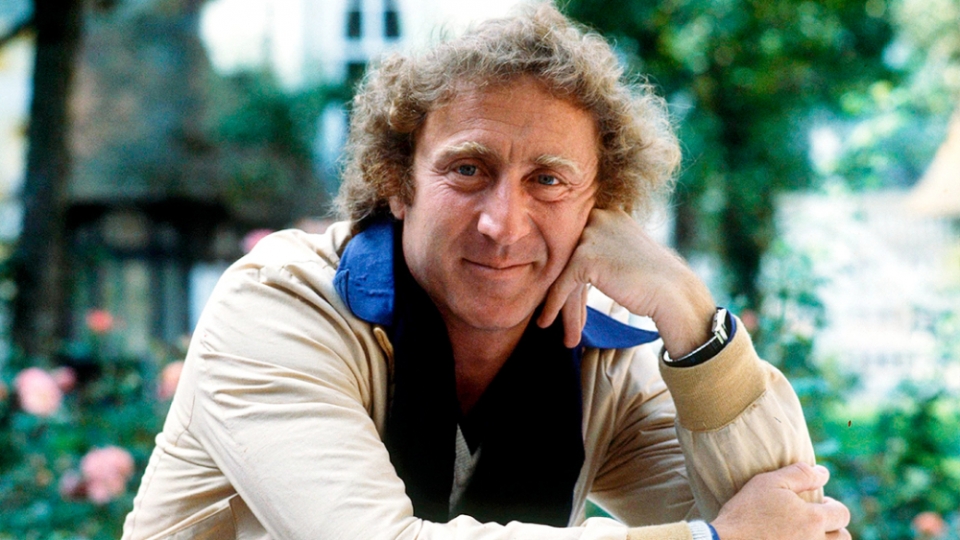
Fun fact: Dahl famously hated Willy Wonka and the Chocolate Factory. He hated how far the plot deviated from the novel, he hated the “saccharine, sappy, and sentimental” music, and he hated Gene Wilder’s performance. Dahl hated Willy Wonka and the Chocolate Factory so much, he stopped selling the movie rights to his books. There wouldn’t be another live-action adaptation of one of Dahl’s books for almost twenty years.
You Only Live Twice
Dahl’s first foray into screenwriting, You Only Live Twice was the fifth film in the James Bond series and the first to feature Bond’s nemesis, Ernst Stavro Blofeld.
Fun fact: Dahl met Bond author Ian Fleming during his espionage days, and the two became lifelong friends. Dahl referred to You Only Live Twice as “Fleming’s worst book, with no plot in it which would even make a movie”, and he promptly discarded most of the novel’s story.
Sean Connery and Donald Pleasance in You Only Live Twice
Chitty Chitty Bang Bang
Chitty Chitty Bang Bang, about an eccentric inventor (is there any other kind?) and his magical car, was the second Ian Fleming novel that Dahl adapted for the big screen. The film, which gets its title from the distinctive sound the car makes (onomatopoeia alert!), reunited Dick Van Dyke with Mary Poppins songwriters the Sherman brothers. Chitty Chitty Bang Bang, while decidedly a children’s film, contains many of Dahl’s trademarks, including guileless children, wicked adults, and enchanting confections.
Fun fact: At a 2011 auction, film director Peter Jackson bought the Chitty Chitty Bang Bang car for $800,000.
The Sherman brothers were nominated for an Oscar for Best Original Song (they lost to “The Windmills of Your Mind” from The Thomas Crown Affair)
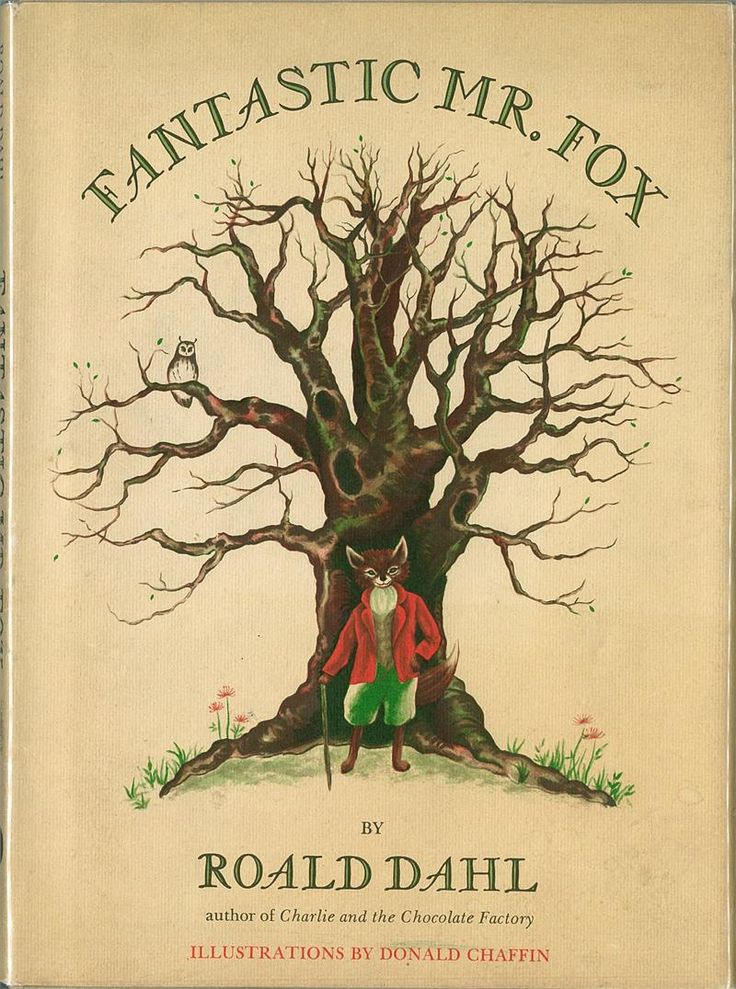
Fantastic Mr. Fox
Dahl’s fifth children’s book, Fantastic Mr. Fox, is one of my personal favorites. The book pits a wily, anthropomorphic fox against a trio of cruel, dim-witted farmers (Boggis, Bunce, and Bean). A gorgeous 2009 stop-motion animated adaptation, directed by Wes Anderson and featuring the voices of George Clooney, Meryl Streep, and Bill Murray, was nominated for two Oscars, Best Original Score and Best Animated Feature Film (it lost both to Pixar’s Up).
Fun fact: The first edition of Fantastic Mr. Fox featured iconic illustrations by Donald Chaffin. When the movie adaptation went into production, director Wes Anderson enlisted Chaffin’s help with the animation.
Danny, the Champion of the World
Danny began life as a short story, “The Champion of the World”, which was initially published in The New Yorker and included in Dahl’s compilation Kiss Kiss. Unlike “The Champion of the World”, which tells the story from the adult point of view, the novel shifts the perspective to nine-year-old Danny. Danny lives with his dad in an old caravan; his dad runs a service station and poaches pheasants from the local fat cat, Victor Hazell. The pair fly kites and ride go-karts. But mostly, Danny loves to listen to his dad’s stories. A 1989 British made-for-television movie (starring Jeremy Irons and his son Samuel) is the only adaptation of the book, and it doesn’t seem to be available for streaming.
Fun fact: One of Danny’s father’s stories is about a “Big Friendly Giant”; that story-within-a-story was the basis for Dahl’s The BFG, published in 1982 and dedicated to Dahl’s late daughter Olivia, who died in 1962 of measles-related encephalitis.
The Witches
The Witches, published in 1983, is one of Dahl’s most autobiographical novels, with the book’s grandmother representing Dahl’s own mother, Sofie. It’s also one of his darkest, with a secret society of witches who wish to turn all of England’s children into mice. There are several adaptations of The Witches, including a 1990 feature film starring Anjelica Huston, a stage play, a 2008 opera by Norwegian composers Marcus and Ole Paus, and a 2020 movie co-written and directed by Robert Zemeckis.
Fun fact: According to the American Library Association, The Witches was the 22nd-most-banned book of the 1990s. Critics have cited the novel’s more frightening passages or Dahl’s misogynistic tendencies; others have expressed concern that the novel’s ending might inadvertently promote suicide. As a former child, I can tell you that nothing in this book is scarier than actual childhood, a fact many adults can’t or won’t acknowledge.
Boy: Tales of Childhood and Going Solo
Boy: Tales of Childhood and Going Solo form a two-part autobiography; the former covers his childhood and early adulthood and the latter primarily encompasses his travels to Africa with Shell Oil and his WWII service in the RAF.
Fun fact: One of the most memorable stories from Boy is the “Great Mouse Plot of 1924”, which occurred while Dahl was enrolled at Llandaff Cathedral School in Cardiff. Dahl and a few of his friends disliked the unpleasant (and apparently unhygienic) elderly owner of the local sweet shop; while one boy distracted Mrs. Pratchett by buying candy, the other boys put a dead mouse in a jar of gobstoppers. Mrs. Pratchett identified the boys to Llandaff’s headmaster, who caned them while Pratchett egged him on.
Matilda
I was in college by the time Matilda was published – but it’s a Millennial favorite. The novel pits precocious Matilda Wormwood against one of Dahl’s most terrifying creations, the tyrannical Miss Trunchbull. Matilda has been adapted numerous times, including a 1996 feature film (directed by Danny DeVito and starring the darling Mara Wilson), a 2010 musical, and a 2022 film version of the musical featuring the incomparable Emma Thompson as Trunchbull.
Fun fact: Matilda’s name was inspired by Hilaire Belloc’s poem “Matilda, who told lies and was burned to death”.
Happy Labor Day, everyone! To commemorate the occasion, I’ve compiled a list of some of my favorite workplace films and television series.
The Office
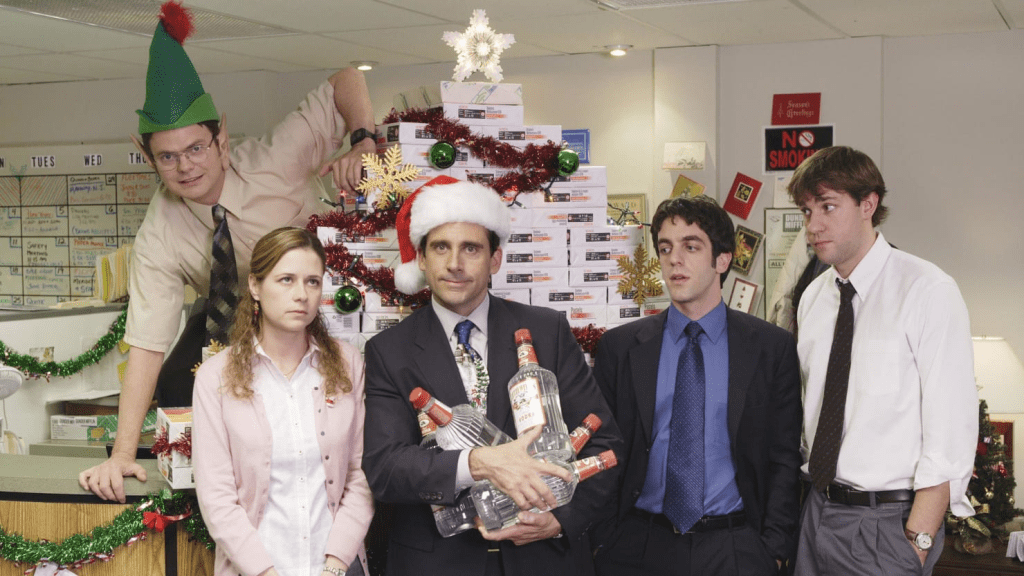
A mockumentary about the day-to-day life of the employees at Dunder-Mifflin Paper Company in Scranton, Pennsylvania. No other series has captured the mundanities and absurdities of modern office work quite like The Office.
My favorite episode: “Stress Relief” (Season 5, episodes 14/15)
Between the fire drill cold open and the first aid training session that goes horrifyingly – and hilariously – wrong, Rainn Wilson’s Dwight takes his workplace antics to a whole new level. I truly don’t think I’ve ever laughed so hard.
“And now Dwight knows not to cut the face off of a real person”
Fun fact: Time magazine ranked “Stress Relief” as the single best television episode of 2009.
9 to 5 (1980)
The underpaid, overworked, and sexually harassed women of Consolidated Companies get the ultimate revenge on their boss, Franklin Hart Jr. (Dabney Coleman).
My favorite scene: the fantasy sequence in which Violet (Lily Tomlin), Judy (Jane Fonda) and Doralee (Dolly Parton, in her film debut) imagine how they would each exact revenge on their pig of a boss. Violet, dressed as Snow White, puts rat poison in Hart’s coffee; Judy hunts Hart down and shoots him; Doralee ties Hart up with a lasso. No quality clip of this scene exists on YouTube, so here’s the Oscar-nominated theme song instead.
Pure pop perfection
Fun fact: Dolly Parton earned two Grammys for the title song, which was also nominated for an Academy Award for Best Original Song (it lost to “Fame”).
The Mary Tyler Moore Show (1970-1977)
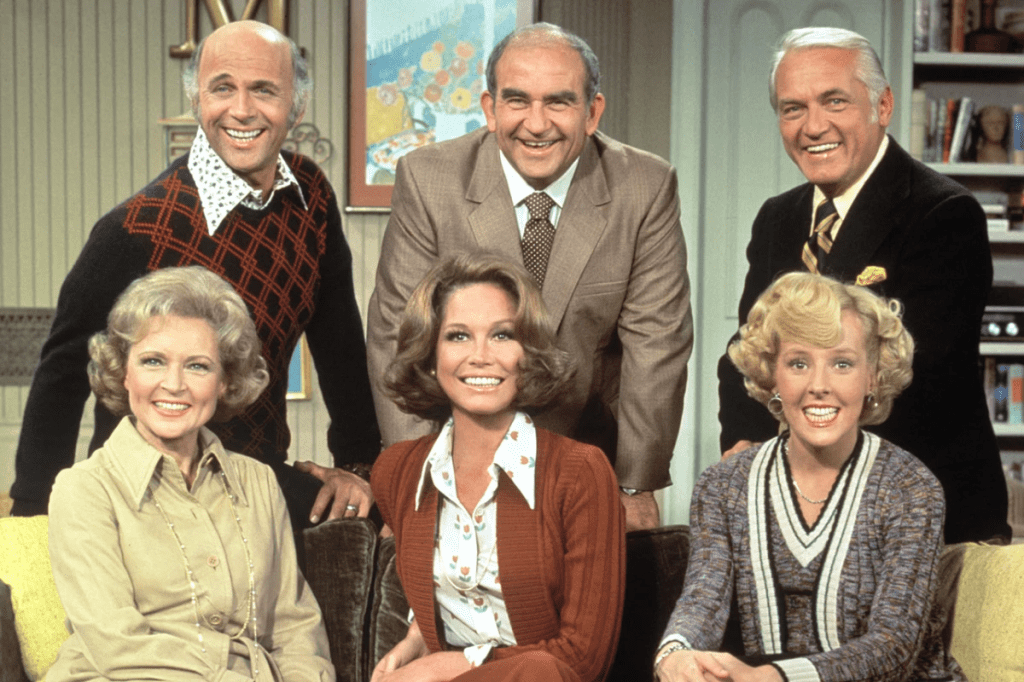
The most Emmy-winning workplace series – comedy OR drama – in history, The Mary Tyler Moore Show is the yardstick by which all workplace sitcoms are measured. A masterclass in comedy acting, writing, and directing.
My favorite episode: “Chuckles Bites the Dust” (Season 6, Episode 7)
“A little song, a little dance, a little seltzer down your pants”
Fun fact: In 2009, TV Guide ranked “Chuckles Bites the Dust” #1 on its list of “100 Greatest Episodes Of All Time”.
Office Space (1999)
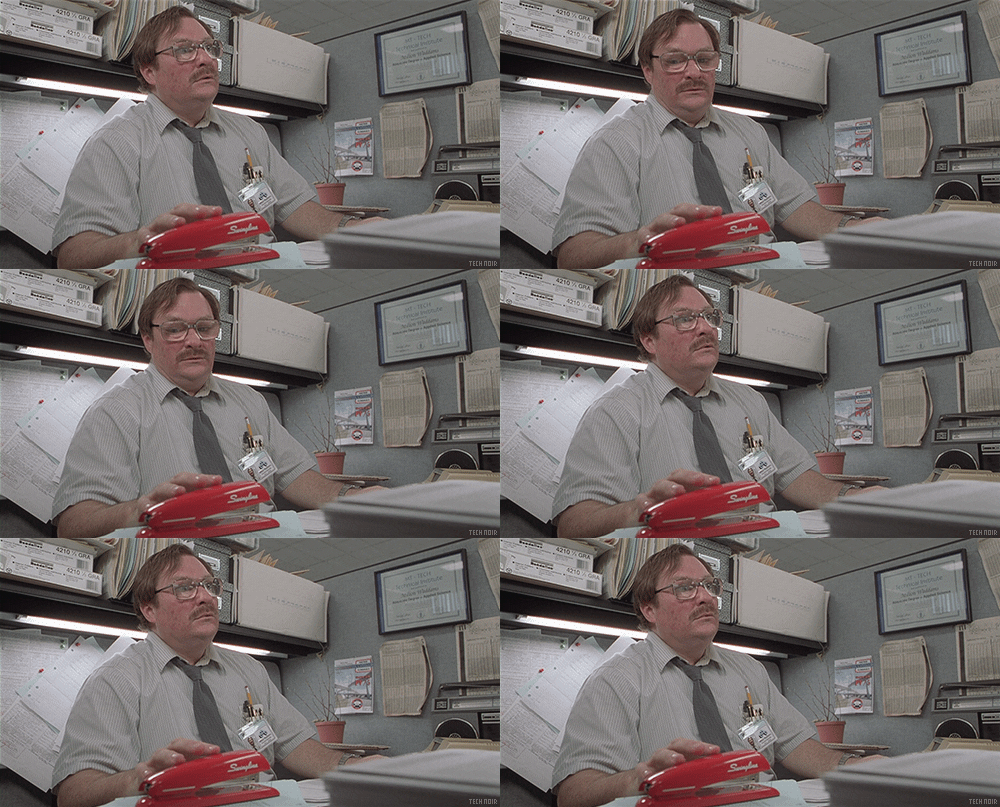
A Gen-X cult classic, Office Space proved that Beavis and Butt-Head creator Mike Judge could also do live action. The film’s name has since been used as shorthand for what every office worker has fantasized about – killing the constantly broken-down printer (as in, “I’m going to go ‘Office Space” on this thing”).
My favorite scene (tie): “Joanna’s flair” and “Printer death”
Fun fact: Swingline wasn’t manufacturing a red stapler when Office Space was made, so one was created for the film using red spray paint. After repeated requests from the film’s fans, Swingline put a red stapler into production in 2002.
Cheers (1982-1993)
A beloved favorite, Cheers was not an immediate hit (in fact, it placed 74th out of 77 shows in its first season and was nearly canceled). But in 1982, series were still given the opportunity to find an audience; Cheers ended up in the Nielsen top ten for eight of its eleven seasons. Co-creators James Burrows, Glen Charles, and Les Charles all worked for MTM Enterprises, Mary Tyler Moore’s production company, so their workplace sitcom credentials were top-notch. And that cast? Absolute perfection.
My favorite episode: “Thanksgiving Orphans” (Season 5, Episode 9)
Fun fact: “Thanksgiving Orphans” featured the long-awaited debut of Norm’s oft-referenced but previously unseen wife Vera, though her face was obscured by a pumpkin pie.
Clerks (1994)
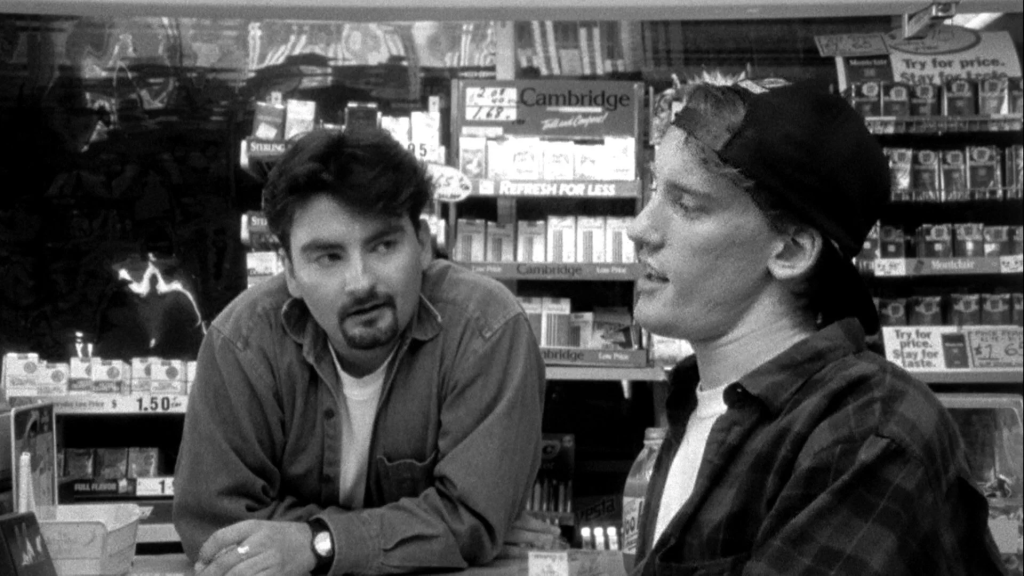
For better or worse, this indie buddy comedy (shot for $27,575 at the video and convenience stores where Kevin Smith worked) introduced the world to Jay and Silent Bob and created the View Askewniverse. Anyone who has worked in retail (yours truly included) will sympathize with Dante’s recurring refrain: “I’m not even supposed to be here today!”
My favorite scene: “I don’t watch movies”
“You weren’t paying any attention!” “No, I wasn’t”
Fun fact: Clerks was initially rated NC-17 for its explicit dialogue. Miramax hired Alan Dershowitz to help them appeal the decision, which would have limited the film’s commercial prospects. The MPAA ultimately relented and an unaltered Clerks was released with an R rating.
Empire Records (1995)
A Peanut Butter & Julie favorite (https://peanut-butter-and-julie.com/2021/04/08/happy-rex-manning-day/), Empire Records holds a special place in my heart due to my brief but memorable stint working in retail record stores. This day-in-the-life flick features an absurdly likable cast and a killer soundtrack.
My favorite scene: “If You Want Blood (You’ve Got It)”
Fun fact: Empire Records‘ soundtrack is one of my favorites, but the soundtrack album is only the beginning. Among the other 35 tunes featured in the film are “Snakeface” by Throwing Muses, “How” by The Cranberries, and “This Is the Day” by The The. You can listen to the complete soundtrack here:
Designing Women (1986-1991)
Designing Women was one of the rare (especially for the 1980s) sitcoms to have a female showrunner (Linda Bloodworth-Thomason). This lent the show a feminist edge, and the series tackled all sorts of social issues; at least once an episode, Julia Sugarbaker (Dixie Carter) used her withering stare and acerbic tongue to put a lesser person in their place.
My favorite episode: “Killing All the Right People” (Season 2, Episode 4)
Not-so-fun fact: Linda Bloodworth-Thomason was inspired to write “Killing All the Right People” after her mother contracted HIV from a blood transfusion and died of AIDS-related complications. The title of the episode comes from a conversation amongst hospital staffers that Bloodworth-Thomason overheard while caring for her dying mother.
Erin Brockovich (2000)
Armed only with street smarts, a push-up bra, and ferocious determination, Erin Brockovich helps bring justice to the citizens of Hinkley, CA, devastated by the effects of hexavalent chromium in their water. The villain? Pacific Gas & Electric, who poisoned Hinkley’s water supply and spent decades covering up the truth. In an Oscar-winning performance, Julia Roberts shines, assisted by a spectacular supporting cast (especially Albert Finney, also Oscar-nominated) and crackerjack direction by Steven Soderbergh (not to mention some awesome Sheryl Crow tunes).
My favorite scene: “A Lame-Ass Offer”
Fun fact: The real Erin Brockovich has a small role in the film, as a waitress at the restaurant where Erin takes her kids to “celebrate”.
Monsters, Inc. (2001)
For their fourth animated feature, the geniuses at Pixar tapped into a key childhood fear – monsters in the closet. Monsters, Inc. takes place primarily at Monsters, Incorporated, a factory where children’s screams are captured to provide energy for the city of Monstropolis. James P. “Sulley” Sullivan (John Goodman) is the company’s top scarer, but his world will soon turn upside down when a child named Boo follows him through her closet back to the factory.
My favorite scene: “Sneaking Boo back into the factory”
Fun fact: Monsters, Inc.‘s title was inspired by Murder, Inc., a 1960 gangster film starring Peter Falk.
M*A*S*H (1972-1983)
Adapted from the 1970 Robert Altman movie of the same name (which was based on a novel by Richard Hooker), M*A*S*H chronicles the highs and lows of life at the 4077th Mobile Army Surgical Hospital. M*A*S*H was brilliantly written, directed, and acted (it received more than a hundred Emmy nominations over its eleven-season run) and expertly captured both the pathos and the ludicrousness of war.
Favorite episode: “Goodbye, Farewell and Amen” (series finale), which was watched by more than 120 million people and remains the highest-rated broadcast television episode of all time.
Fun fact: M*A*S*H‘s run lasted almost four times as long as the conflict in Korea that the series depicts.
The Devil Wears Prada (2006)
The Devil Wears Prada stars Anne Hathaway as idealistic Andrea “Andy” Sachs, an aspiring journalist forced to take a job as assistant to Miranda Priestly, the much-feared editor-in-chief of the fictional Runway magazine. The ultimate horrible boss, Miranda is played to wicked perfection by Meryl Streep in an Oscar-nominated, Golden Globe-winning performance. The film’s most lovely revelation is Emily Blunt in her American debut; audiences – and future husband John Krasinski – fell utterly in love with Blunt.
My favorite scene (tie): “Miranda Priestly’s Entrance” and “Andy’s Makeover”
Fun fact: Costume designer Patricia Field asked for a budget of $1 million for the film’s wardrobe but the studio would only give her $100,000. Field, already a two-time Emmy winner for Sex and the City, reached out to her fashion designer friends, who loaned their pieces to the production. Field earned her only Academy Award nomination for The Devil Wears Prada.
Network (1976)
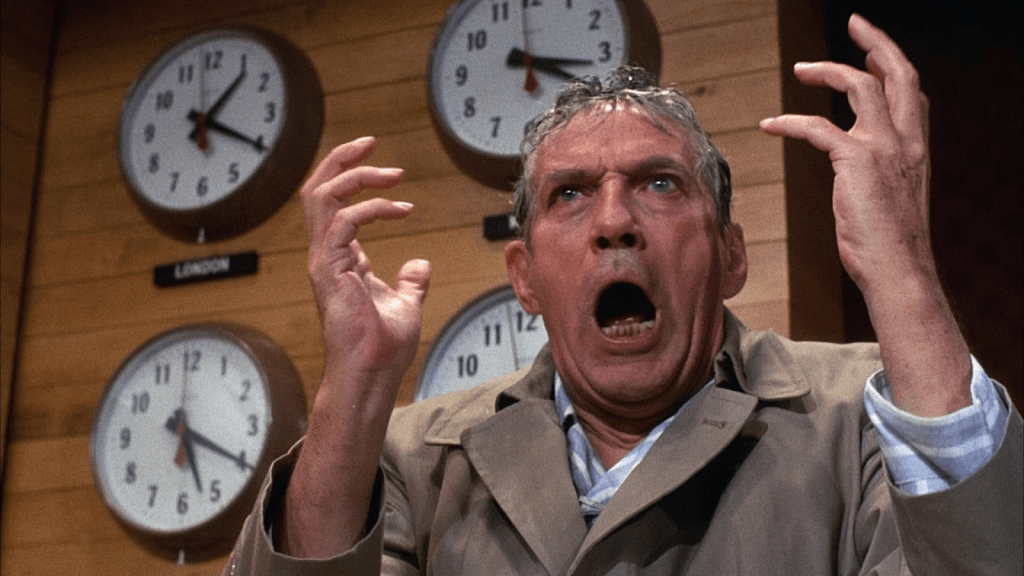
This pitch-black satire, set at the fictional television station Union Broadcasting System (UBS), demonstrates the lengths to which a show’s producers will go to achieve high ratings. One of the most highly-acclaimed films of 1976 (or any other year), Network received ten Oscar nominations and took home four Academy Awards: Best Actor (Peter Finch), Best Actress (Faye Dunaway), Best Supporting Actress (Beatrice Straight), and Best Original Screenplay (with his win, Paddy Chayefsky became the only person to win three screenplay Oscars).
My favorite scene: “I’m as mad as hell, and I’m not going to take this anymore!”
Fun fact #1: At five minutes, two seconds, Beatrice Straight’s Network performance is the shortest one to ever receive an acting Oscar (William Holden, also Oscar-nominated, is fantastic in this scene as well).
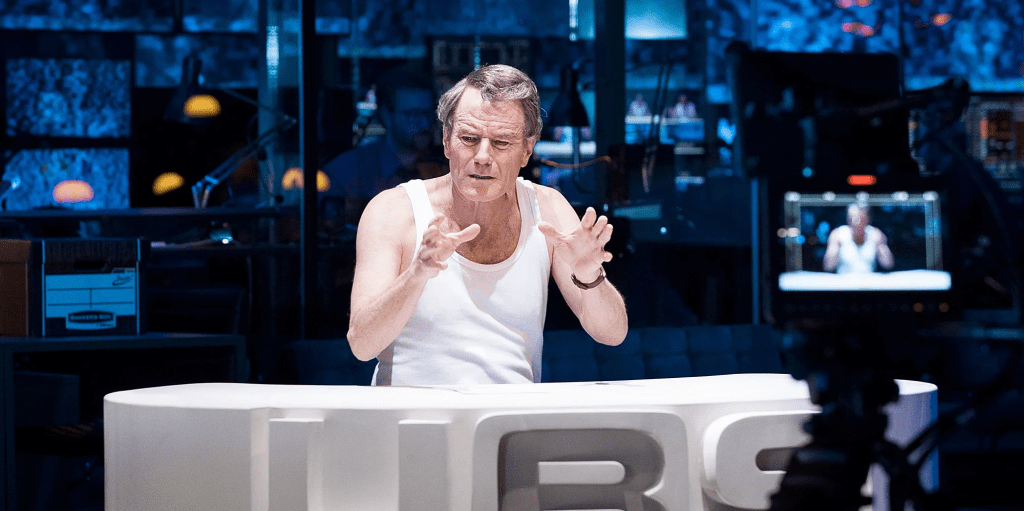
Fun fact #2: Bryan Cranston received an Olivier Award and a Tony for his performance as Howard Beale in a 2017 stage adaptation.
The Wolf of Wall Street (2013)
Based on the memoir by Jordan Belfort, this black comedy was the recipient of five Oscar nominations and truckloads of criticism (the use of animals on set, the moral ambiguity, and the explicit language, just to name a few). The Wolf of Wall Street is deliriously over the top and blisteringly funny, anchored by a Golden Globe-winning performance from Leonardo DiCaprio. It’s one of my favorite movies of the 2010s.
My favorite scene: “Quaaludes”
This scene alone should have won DiCaprio the Oscar
Fun fact: The Wolf of Wall Street holds the Guinness World Record for the most profanities in a motion picture.
The West Wing (1999-2006)
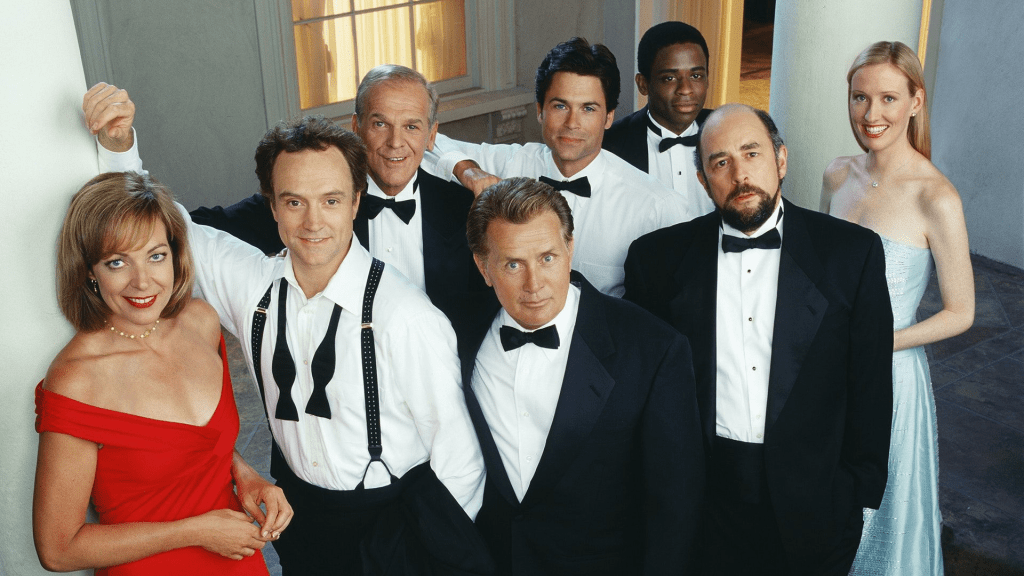
The West Wing reunited writer Aaron Sorkin and Martin Sheen, who had previously worked together on the 1995 PBandJulie favorite The American President (an unused plot element from that film actually inspired the series). The West Wing featured a powerhouse cast, including Emmy winners Allison Janney, Alan Alda, Stockard Channing, Richard Schiff, John Spencer, and Bradley Whitford. During a time when the US was moving farther to the right politically (George W. Bush was elected for the first time a little more than a year after The West Wing‘s debut), The West Wing offered us an idealized version of democracy, a liberal Xanadu where a presidential administration is filled with public servants doing right (or trying their darndest) by their constituents.
Favorite episode: “In Excelsis Deo” (Season one, Episode ten), which won Emmys for writing and for Richard Schiff’s moving performance as Toby Ziegler.
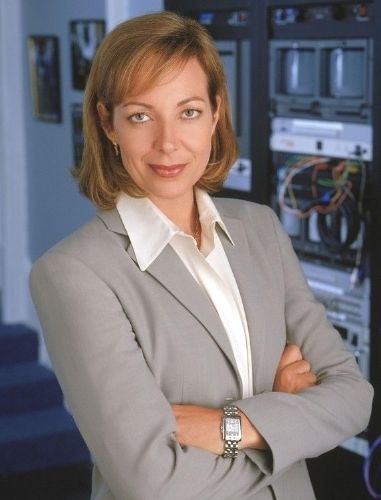
Fun fact #1: The West Wing made a star of Allison Janney, and deservedly so. Her Claudia Jean “C.J.” Cregg, White House Press Secretary (and later Chief of Staff), was inspired by Dee Dee Myers, who was Press Secretary for the first two years of the Clinton administration.
Dee Dee MyersC.J. Cregg
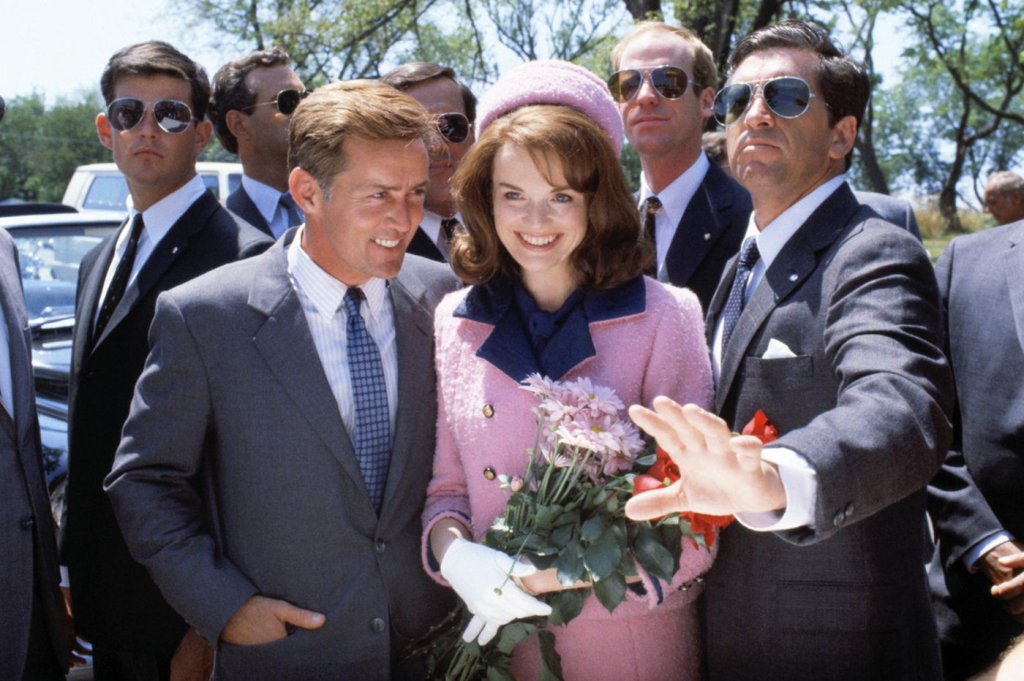
Fun fact #2: Martin Sheen once described President Bartlet as a combination of John F. Kennedy, Jimmy Carter, and Bill Clinton. Sheen actually portrayed JFK in the 1983 mini-series Kennedy.
Sheen and Blair Brown as John and Jackie Kennedy in Kennedy
Note: this piece was originally published in 2021. It has been edited for both content and clarity.
Originally published in 2022, this post has been edited for content and clarity.
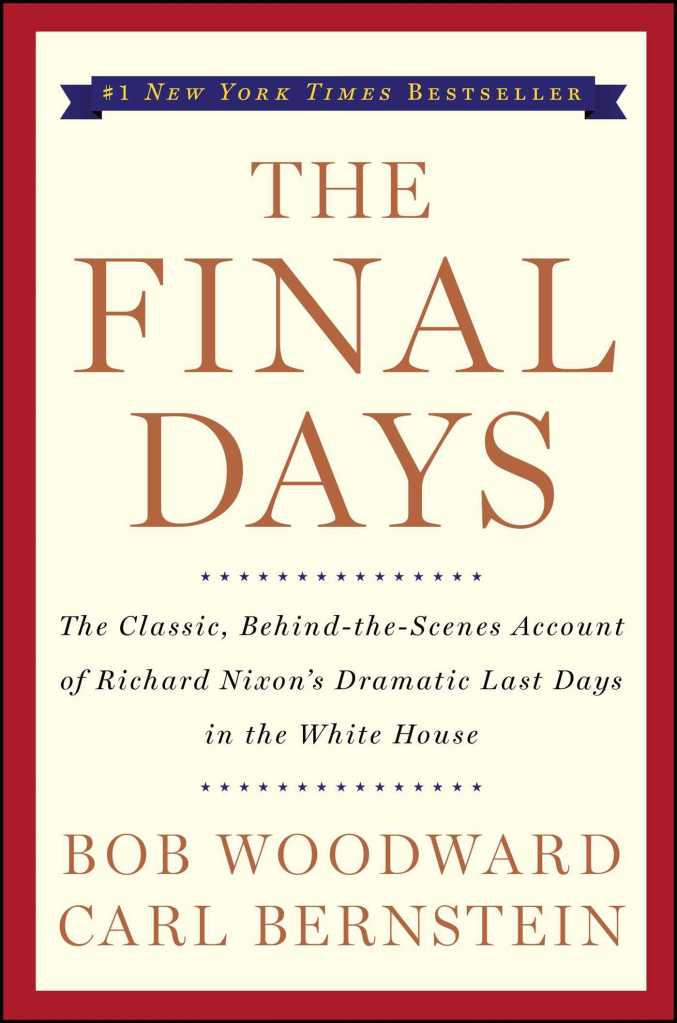
On June 18, 1972, five men were arrested after breaking into the Democratic National Committee’s headquarters in the Watergate office complex in Washington, D.C. The five men – Virgilio “Villo” R. González, Bernard Barker, James McCord, Eugenio Martínez, and Frank Sturgis – were arrested and charged with attempted burglary and attempted interception of telephone and other communications. The story was given scant attention until it was revealed that McCord was the head of security for the Committee to Re-Elect the President (CRP or “Creep”). Initially, the White House denied any advance knowledge of the break-in; eventually, it was revealed that the burglary was sanctioned by the highest levels of the Oval Office. Sixty-nine people were indicted for crimes related to the break-in and the resulting cover-up; forty-eight people – many of whom were top White House and CRP officials – were indicted. President Nixon, his impeachment looming, resigned from office on August 8, 1974; President Ford pardoned him thirty days later.
One of the biggest political scandals in US history, Watergate found its way into the zeitgeist. The Senate Watergate hearings were broadcast live on television; an estimated 85% of Americans tuned in to their TV sets for at least a portion of the proceedings. National Public Radio, then in its infancy, broadcast gavel-to-gavel coverage of the hearings, allowing people to listen at their workplaces and in their cars. Watergate was as much a cultural event as a political one. As with other political events that capture the nation’s attention – JFK’s assassination, for instance – there are plenty of pop-culture depictions of Watergate to choose from. Here are a few:
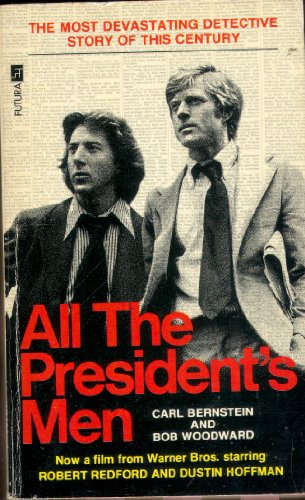
All the President’s Men
By the time the Watergate break-in became a major political scandal, The Washington Post had two of its best reporters – Bob Woodward and Carl Bernstein – investigating the story. Their work is the gold standard in Watergate reporting. Woodward and Bernstein were initially hesitant to write the book but committed once Robert Redford expressed interest in a film adaptation. According to Woodward, Redford was instrumental in switching the story’s viewpoint from the Watergate co-conspirators to the reporters themselves and the Post‘s investigative and editorial process.
From left: Dustin Hoffman as Carl Bernstein, Robert Redford as Bob Woodward, Best Supporting Actor Oscar winner Jason Robards as Ben Bradlee, Jack Warden as Harry M. Rosenfeld, and Martin Balsam as Howard Simons
All the President’s Men was the book that made me want to be a writer. If you haven’t seen Alan J. Pakula’s flawless film adaptation, you’re in for a treat (it’s available to stream on Max, by the way). All thePresident’s Men earned eight Academy Award nominations and won four Oscars: Best Supporting Actor (for Jason Robards’ brilliant portrayal of Post executive editor Ben Bradlee), Best Adapted Screenplay (William Goldman), Best Art Direction, and Best Sound. It should have won Best Picture but Rocky – shockingly – took home the top prize (I would also have accepted Network). In 2015, The Hollywood Reporter interviewed hundreds of Academy members about some of the more controversial Oscar decisions from years past; the voters indicated that All the President’s Men should have beaten Rocky for Best Picture. Oscar nonsense aside, All the President’s Men is a gripping, superbly acted thriller that is at least as relevant today as it was in 1976.
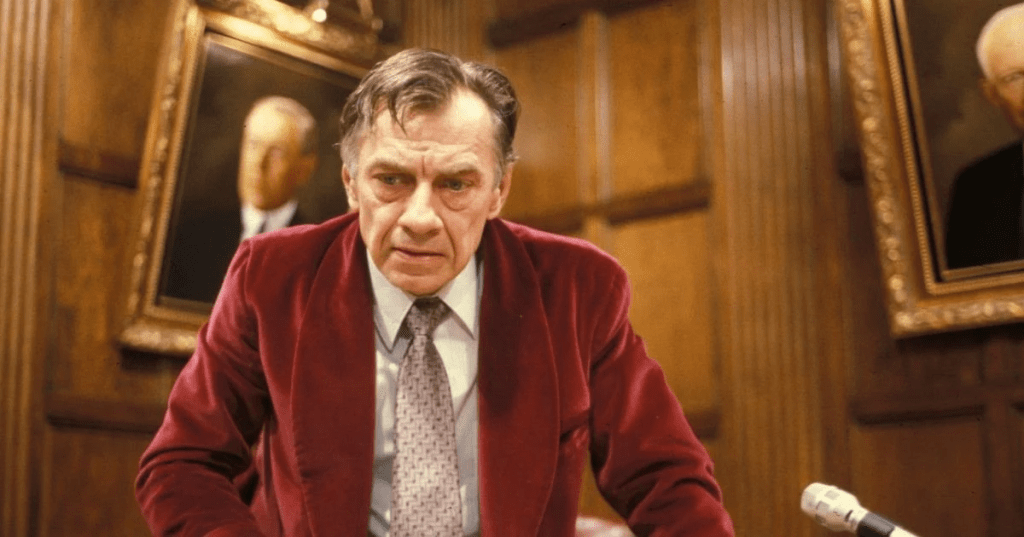
Among the brilliant supporting cast is Hal Holbrook, who played Woodward’s confidential source “Deep Throat”. Deep Throat’s identity was kept hidden for more than thirty years, but rumors swirled: the top contender was former White House Associate Counsel Fred F. Fielding. Some opined that Deep Throat was a composite of several sources, or that Woodward and Bernstein fabricated the story. In 2005, former FBI associate director Mark Felt’s family attorney confirmed that Felt had been the informant, which Woodward and Bernstein then confirmed.
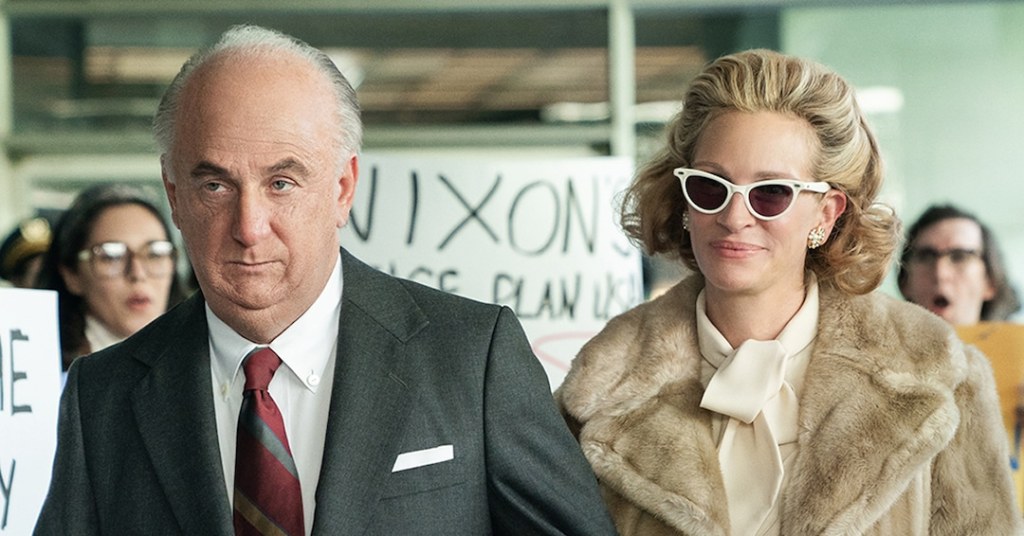
Slow Burn, Gaslit, The Martha Mitchell Effect
“I’m convinced if it hadn’t been for Martha, there’d have been no Watergate” – Richard Nixon
Martha and John Mitchell
Martha Mitchell’s story is equal parts fascinating and heartbreaking. I begrudgingly admit that I wasn’t as familiar with it as I should have been, but I understand it all too well now. Mitchell was the wife of former Attorney General John N. Mitchell, who at the time of the Watergate break-in was Nixon’s reelection campaign manager. Outspoken Martha – the pride of Pine Bluff, Arkansas – was always a bit of a thorn in Nixon’s side, despite the fact that she fully supported the president and his reelection campaign. That all changed in the days and weeks after the break-in. You see, James McCord – one of the five men arrested at the Watergate that June morning – had worked at one time as a bodyguard and driver for the Mitchell family; Martha was quite fond of McCord and John Mitchell knew that Martha would recognize him. At the time of the break-in, the Mitchells were in California for a campaign fundraiser. John Mitchell hurried back to Washington to help clean up the mess, leaving Martha behind with former FBI agent Steve King (over Martha’s objections). Martha was essentially held hostage in a hotel room and denied access to any media. Five days after the break-in, Martha made a frantic phone call to UPI reporter Helen Thomas; before the phone call abruptly ended, Thomas could hear Martha say, “You just get away”. A few days later, another reporter – Marcia Kramer of the New York Daily News – tracked Martha down and discovered she had massive bruises on her arms. Martha relayed to Kramer her astonishing story – after attempting to escape from the hotel balcony, five men physically accosted her and held her down while a doctor injected her with a tranquilizer. The White House went into damage control mode, painting Martha as an alcoholic with mental health issues in an attempt to discredit her (they almost got away with it). John Mitchell abandoned his wife in September of 1973, taking their pre-teen daughter with him. In 1975, Martha was diagnosed with multiple myeloma. She passed away on May 31, 1976, at the age of fifty-seven. Eventually, James McCord admitted that everything Martha had said was true. In 1988, psychologist Brendan Maher coined the term “The Martha Mitchell Effect”, defined as “the process by which a psychiatrist, psychologist, mental health clinician, or other medical professional labels a patient’s accurate perception of real events as delusional, resulting in misdiagnosis”. More recently, we’ve adopted the term “gaslighting” to describe the process of making someone question their own reality.
A chrysanthemum arrangement reading “Martha was right” was sent to Mitchell’s funeral; no card was attached.
All three of the above titles revolve around Martha’s story. The best of the bunch is Slow Burn, based on the podcast of the same name. Slow Burn is a six-episode docuseries that tells the lesser-known stories related to Watergate, including Martha’s. The series makes extensive use of archival footage, as well as new interviews with folks like John Dean and Eugenio Martínez. I was shocked to learn how much I didn’t know about Watergate; I was thoroughly entertained and enlightened throughout. Slow Burn is available to stream on MGM+ (formerly Epix).
Fun fact: Slate‘s Slow Burn pod covers a different storyline each season. Subsequent seasons have covered topics such as Bill Clinton’s impeachment, the Iraq War, and the 1992 Los Angeles riots that resulted from the police beating of Rodney King. I’m hoping the Slow Burn docuseries will cover some of these topics as well. I’d watch as many hours of that as they could crank out.
On to Gaslit, the 2022 Starz original series, which I am entirely ambivalent about recommending. I wanted to love it, and I did love it about 75% of the time; it’s just that the other 25% of the time I kind of hated it. Let me preface this by saying that Shea Whigham is brilliant as the idiosyncratic and unapologetic G. Gordon Liddy, but the darkly comic Liddy sequences border on slapstick and the tone is out of sync with the rest of the series. And Sean Penn’s hammy portrayal of John Mitchell is as terrible as his make-up; I found him to be excruciatingly distracting. That being said, Julia Roberts is magnificent as Martha Mitchell; her Golden Globe-nominated performance is so convincing that I often forgot I was watching Julia Roberts. Dan Stevens is charming enough as White House Counsel John Dean, but his scenes really come alive when he is with the glorious, gorgeous Betty Gilpin, who plays Dean’s wife Mo. The talented supporting cast includes Allison Tolman, Hamish Linklater, Chris Messina, and John Carroll Lynch, but none of them is given enough to do (I would have especially loved more screen time for Tolman, so lovely as Martha’s friend and biographer, reporter Winzola “Winnie” McLendon).
Sean Penn and Julia Roberts in GaslitDan Stevens and Betty Gilpin as John and Maureen “Mo” Dean
And finally, to Netflix’s The Martha Mitchell Effect. If you’re looking for a tidy summary of Martha’s story, this forty-minute documentary will get the job done (it also clarified a couple of things that confused me in Gaslit). Do yourself a favor and spend a little time in Martha Mitchell’s world; she’s earned it.
Dick
If you’re looking for a more light-hearted take on the Watergate scandal, try Andrew Fleming’s delightful 1999 romp, Dick. The film stars Kirsten Dunst and Michelle Williams as Betsy and Arlene, two teenagers who inadvertently foil the Watergate break-in, then are offered jobs as presidential dog walkers to ensure their silence. Ultimately, the two decide to come clean, sharing what they know with Bob Woodward and Carl Bernstein. Yes, that’s correct – in the world of Dick, Betsy and Arlene are Deep Throat. Dunst and Williams are adorable and the supporting cast features comedy legends like Dan Hedaya (Richard Nixon), Harry Shearer (G. Gordon Liddy), Dave Foley (as H.R. Haldeman), Bruce McCulloch (Bernstein), and Will Ferrell (Woodward).
Nixon
Oliver Stone’s Nixon is a love-it-or-hate-it kind of film. Critics, including Richard Nixon’s family, have lambasted both the historical inaccuracy of the film and Anthony Hopkins’ campy portrayal of Nixon (his accent, which sometimes sounds Irish, is especially perplexing). But the film also garnered four Oscar nominations: Best Actor for Hopkins, Best Supporting Actress for Joan Allen (as Pat Nixon), Best Original Screenplay (The Usual Suspects rightfully took home that award), and Best Original Score for John Williams. Biopics tend to play fast and loose with the facts, so the historical inaccuracies bother me less than the film’s run time: a butt-numbing three hours and twelve minutes.
Frost/Nixon
Frost/Nixon, on the other hand, clocks in at a tidy two hours and two minutes. Based on the stage play by Peter Morgan, Frost/Nixon reenacts David Frost’s 1977 interviews with Richard Nixon. Plenty of dramatic liberties are taken here too, but Frost/Nixon features a far more convincing Nixon (Frank Langella, in a commanding, Oscar-nominated performance). And while Nixon may not have revealed nearly as much to Frost as the film suggests, Frost/Nixon is riveting nonetheless. Langella received all the accolades, but Michael Sheen is also terrific as Frost.
Secret Honor
I’ll admit I’ve never seen Secret Honor, which stars the late, great Philip Baker Hall as Richard Nixon, but I can imagine how awesome his performance must be. Robert Altman directed this adaptation of the one-man play of the same name. Roger Ebert called Secret Honor “one of the most scathing, lacerating and brilliant movies of 1984.”
Philip Baker Hall as Nixon in Secret Honor
The Final Days
In 1976, the same year All the President’s Men arrived in theaters, Bob Woodward and Carl Bernstein published their second Watergate book, The Final Days. The sequel continues where All the President’s Men left off: in April of 1973, with John Dean’s firing. It chronicles the events of the next fifteen months and ends on August 9, 1974, the day Nixon left office. In 1989, The Final Days was adapted into a mini-series starring Lane Smith, Ed Flanders, Richard Kiley, Gary Sinise, and David Ogden Stiers. The series was nominated for four Emmys, including Outstanding Miniseries or Made for Television Movie. Smith was nominated for a Golden Globe for Best Actor – Miniseries or Television Film for his portrayal of Richard Nixon.
Lane Smith as Nixon in The Final Days
The White House Plumbers
HBO’s five-part limited series just wrapped up a few weeks ago. The series documents the story of E. Howard Hunt and G. Gordon Liddy and their covert White House Special Investigations Unit (AKA The White House Plumbers). The unit was formed a week after the publication of the Pentagon Papers in 1971; their job was to stop the leaks coming out of the White House (hence, “plumbers”). Several of the plumbers went on to work for CRP, including Hunt, Liddy, and Frank Sturgis. Showrunners Alex Gregory and Peter Huyck, of Veep fame, give the proceedings a comedic edge and the cast – particularly Woody Harrelson as Hunt, Justin Theroux as Liddy, and Lena Headey as Hunt’s wife Dorothy – is terrific.
From left: Justin Theroux and Judy Greer as Gordon & Fran Liddy, and Lena Headey and Woody Harrelson as Dorothy & Howard Hunt
***** CONTENT WARNING: THIS POST CONTAINS REFERENCES TO CHILD ABUSE, ALCOHOL AND DRUG USE, PARENT DEATH, CANCER, AND DOGFIGHTING *****
Happy Father’s Day to all who celebrate! In honor of the occasion, here are some pop culture dads that I love – and a few that I love to hate.
Mike Brady – The Brady Bunch (Robert Reed)
For Gen-Xers like me, no pop culture dad is more iconic than Mike Brady. The head of a blended family, Mike is a busy architect who still finds time to attend school plays, football games, and dance recitals. As played by Robert Reed, Mike is firm and fair, and he dispenses the best advice to both his three bio sons and his three stepdaughters. This clip from The Brady Bunch Movie is a perfect send-up of Mike’s often platitude-filled life lessons.
Captain Von Trapp – The Sound of Music (Christopher Plummer)
My favorite movie musical – unapologetically – is The Sound of Music, and Christopher Plummer is the musical leading man of my childhood dreams. Absurdly handsome, Plummer was the perfect choice to play stern but devoted single father Captain Georg Von Trapp (although other actors, including Bing Crosby, Yup Brynner, Sean Connery, and Richard Burton, were considered for the role). Plummer was so dreamy, his young co-star Charmain Carr, who portrayed eldest child Liesl, had an enormous crush on him, and who could blame her? But Plummer also had the gravitas to sell the family’s escape from the Nazis.
FUN FACT: Plummer was a dad in real life, too. Amanda is also an actor; you may know her from movies like Pulp Fiction – she played Honey Bunny – and The Hunger Games: Catching Fire. Amanda won a Tony in 1982 for her portrayal of the title character in Agnes of God.
Christopher and Amanda Plummer
Mufasa – The Lion King (James Earl Jones)
To his subjects, Mufasa is “King of the Pride Land”; to Simba, Mufasa is “Dad”. With his booming basso profundo, James Earl Jones has a voice is befitting of a King. Mufasa’s death at the hands of his scheming brother Scar kicks off the film’s plot, but the lessons Simba learns from his father stay with him on his journey (with a little help from his bonus dads, Timon and Pumbaa).
Royal Tenenbaum – The Royal Tenenbaums (Gene Hackman)
Royal Tenenbaum, played by the legendary Gene Hackman, is a formerly absentee father looking to make up for lost time. Director Wes Anderson wrote the part for Hackman “against his wishes”, but Hackman initially passed, feeling like he couldn’t relate to the character’s motivations. Anderson reportedly considered Michael Caine and Gene Wilder before Hackman accepted the role. In one of the film’s most memorable scenes, Royal takes his grandsons for an adventure, the kind their neurotic, recently widowed dad Chas disapproves of.
CONTENT WARNING: This scene contains a reference to dogfighting.
Edward Bloom – Big Fish (Ewan McGregor and Albert Finney)
“Big Fish is about what’s real and what’s fantastic, what’s true and what’s not true, what’s partially true and how, in the end, it’s all true.” – Tim Burton
Big Fish is Burton’s most personal film (he’d lost his father and mother in 2000 and 2002, respectively). In the film, based on Daniel Wallace’s novel, Will Bloom is estranged from his tall-tale-telling father, Edward (played by Ewan McGregor in flashbacks and a BAFTA and Golden Globe-nominated Albert Finney). Now cancer-stricken, a dying Edward attempts to reconcile with his son. Will takes over as storyteller, describing their imaginary escape from the hospital to the banks of a river, where all of the characters from Edward’s stories (as well as his late wife) are waiting to send him off. I defy you to watch this without tearing up.
FUN FACT: Miley Cyrus made her film debut in Big Fish, as Edward’s childhood friend Ruthie.
Jack Bristow – Alias (Victor Garber)
Double agent Sydney Bristow has a complicated relationship with her father Jack (Victor Garber in an Emmy-nominated performance), who’s lied to her about basically everything her entire life, from what actually happened to Sydney’s mom Laura to the fact that Jack is also a double agent. Forced to work side by side with a man she hardly knows or trusts, Sydney will eventually understand that everything Jack did, he did for her.
FUN FACT: Offscreen, Garber and Alias star Jennifer Garner developed a father-daughter love for one another. When Garner married Ben Affleck in 2005, Garber officiated the ceremony. The two remain close to this day.
Henry Jones, Sr. – Indiana Jones and the Last Crusade (Sean Connery)
Sean Connery did some of his best acting in Indiana Jones and the Last Crusade, my favorite film in the franchise. Connery was initially hesitant to play the role because he was only twelve years older than Harrison Ford, but director Steven Spielberg knew he’d be perfect for the role of Indy’s strict professor father, whose lifelong pursuit of the holy grail has left his son feeling neglected. The chemistry between Ford and Connery, who modeled the senior Jones after his own “gruff, Victorian Scottish father”, is spectacular, and Connery gets to be funny, a joy the James Bond actor was rarely afforded.
FUN FACT: Connery ad-libbed the line, “She talks in her sleep”. Everyone on set laughed, so Spielberg kept the line in the film.
“I suddenly remembered my Charlemagne” is such a perfect line reading
Jim Hopper – Stranger Things (David Harbour)
At some point prior to the series premiere, Jim Hopper lost his daughter Sara – and his marriage – and now he’s drowning his grief in booze and pills. In season 2, he finds Eleven hiding in the woods and takes her in, and a new father-daughter relationship is born. As played by the brilliant David Harbour, Hopper wants so desperately to keep Elle safe from the government baddies who want to use her as a weapon that he sequesters her, keeping her away from not only the baddies but her friends as well. By season three, they’ve found a balance, despite Hopper’s ham-fisted attempts to keep Elle and Mike apart. When season three ends, Hopper is presumed dead (though a post-credits scene suggests he’s still alive) and Elle leaves Hawkins with the Byers family. In season four, as Hopper is fighting for his life against Russian prison guards and demogorgons, we learn the devastating truth about Sara’s illness: Hopper was exposed to Agent Orange while serving in Vietnam. Fortunately, Hopper and Elle are reunited at the end of season four, though things look a little bleak for the future of mankind (the writer’s strike has delayed production on season five).
😭😭😭
Darth Vader – The Empire Strikes Back (David Prowse and the voice of James Earl Jones)
The Big Bad of Daddies, Darth Vader severs Luke Skywalker’s hand during a light saber fight before dropping the ultimate bombshell: Vader is Luke’s birth father. The prequels explain the transformation of Anakin Skywalker into Vader, but we didn’t really need the origin story. On the American Film Insitute’s list of 100 Heroes & Villains, Vader placed third on the villains list behind Hannibal Lecter and Norman Bates.
“Search your heart, you know it to be true.”
FUN FACT: Concept artist Ralph McQuarrie, who also worked on E.T. the Extra-Terrestrial and Cocoon (he won an Oscar for the latter), was the first to suggest that Darth Vader should wear a helmet with a breathing apparatus. Vader’s headwear resembles a samurai helmet, which is fitting since Star Wars was heavily inspired by Akira Kurosawa’s The Hidden Fortress.
Ralp McQuarrie’s original Darth Vader concept art
Red Forman – That ’70’s Show (Kurtwood Smith)
Gruff Korean War veteran Red Forman doesn’t have much patience for his son Eric’s antics (or Eric’s dumbass friends), but he loves his family to pieces. Kurtwood Smith, best known at the time for his roles in RoboCop and Dead Poets Society, turned out to be quite adept at comedy (he also got a big assist from the delightful Debra Jo Rupp, who played Red’s wife Kitty). Red is my husband’s favorite television dad, probably because Red reminds him of his own father, who passed away in 2007.
Atticus Finch – To Kill a Mockingbird (Gregory Peck)
Atticus Finch, the inspiration for many a law student, is the American Film Institute’s greatest film hero of all time. Finch, played by Gregory Peck in an Oscar-winning performance, stands for justice and equality; he is the story’s moral center. But he’s also a widowed father whose children (narrator Scout and her big brother Jem) adore him so much, they’ll risk their own safety to rescue Atticus from a dangerous situation.
Marlin – Finding Nemo (Albert Brooks)
Sure, Marlin (voiced to perfection by Albert Brooks) is a helicopter dad, but can you blame him? His son Nemo is the only survivor of a terrifying barracuda attack that killed Marlin’s wife, Coral, and their remaining children. Marlin promised Nemo he’d always keep him safe, but the kid was bound to rebel against his overprotective father sooner or later. When Nemo is captured by divers, Marlin travels to Sydney with forgetful blue tang Dory to find him.
FUN FACT: William H. Macy was originally cast as Marlin, but director Andrew Stanton was unhappy with Macy’s performance. According to Stanton, hiring Albert Brooks “saved” the film. Brooks, so gifted at improv, loved the idea of Marlin being an unfunny clownfish and recorded outtakes of Marlin telling terrible jokes.
This is the only video I could find of Brooks’s outtakes, but you get the idea
Walter White – Breaking Bad (Bryan Cranston)
Pop quiz, hot shot. One day you’re celebrating your 50th birthday, the next you’re diagnosed with terminal lung cancer. You’re a high school chemistry teacher who needs to quickly secure your family’s financial security. What do you do? Make meth, of course. Played by Bryan Cranston in a career-defining, four-time Emmy-winning performance, Walter White transforms from “Mr. Chips into Scarface” (creator Vince Gilligan’s pitch for the show). We know that Walt loves his children, Walt Jr. and Holly – but not as much as he loves being a drug kingpin.
In “Ozymandias”, the highest rated episode of BreakingBad, Walter kidnaps baby Holly, who breaks his heart by uttering her first word – “Mama”
FUN FACT: Vince Gilligan, who worked with Cranston on a 1998 episode of The X-Files called “Drive”, knew he wanted Cranston for the role of Walter White, but AMC was hesitant (at the time, Cranston was best known as goofy dad Hal on Malcolm in the Middle). AMC execs apparently approached John Cusack and Matthew Broderick. When both actors declined, AMC agreed to hire Cranston, who became the first actor to win a Critic’s Choice, Golden Globe, Primetime Emmy, and Screen Actors Guild Award for the same performance.
James P. “Sulley” Sullivan – Monsters, Inc. (John Goodman)
Sulley isn’t Boo’s dad, but when the child follows him back to the scare factory, Sulley takes on a paternal role, keeping her safe (with the help of his BFF Mike Wazowski) until he can return her home. In one harrowing scene, Sulley believes he’s lost Boo – and he realizes just how much he’s grown to love her.
Jack Torrance – The Shining (Jack Nicholson)
Jack Nicholson’s Jack Torrance differs significantly from the novel (one of the main reasons Stephen King hated Stanley Kubrick’s adaptation). Book Jack was far more sympathetic; yes, he was an alcoholic and yes, he broke his son’s arm while drunk, but he wasn’t a monster until the Overlook’s ghosts turned him into one. At the end of the novel, Jack has enough humanity left to sacrifice himself so his son can escape. From the beginning of the film, though, Jack is angry and a little crazed; there’s never any doubt that he’s the villain. In the following clip, Jack tells Danny, “I love you more than anything in the world, and I’d never do anything to hurt you”, but you don’t buy it for a second.
FUN FACT: In his book Hollywood’s Stephen King, Tony Magistrale stated, “Kubrick’s version of Torrance is much closer to the tyrannical Hal (from Kubrick’s 2001: A Space Odyssey) and Alex (from Kubrick’s A Clockwork Orange) than he is to King’s more conflicted, more sympathetically human characterization.”
***** CONTENT WARNING: THIS POST CONTAINS REFERENCES TO BLACKFACE, ANTI-SEMITISM, BULLYING, SEXUAL ASSAULT, MISCARRIAGE, CANCER, AND ALZHEIMER’S *****
Gene Wilder would have celebrated his 90th birthday today. An Emmy-winning, Oscar-nominated actor, writer, director, and comedian, Wilder had a unique gift for finding humor in the darkest of places.
Wilder with Richard Pryor in 1980’s Stir Crazy
Gene Wilder was born Jerome Silberman on June 11, 1933, in Milwaukee, Wisconsin. His father and maternal grandparents were all Russian-Jewish immigrants. Wilder became interested in performing at the age of eight; his mom was sick with rheumatic fever and the doctor whispered in his ear, “try to make her laugh”. At eleven, he begged his sister’s acting coach to accept him as a student. The teacher told him if he was still interested at age thirteen to let him know; Wilder called him the day after his thirteenth birthday and was immediately accepted.
Wilder in 1974’s Young Frankenstein
After a brief, traumatic stint at Black-Foxe Military Institute in Los Angeles, where he was bullied and sexually assaulted because he was the only Jewish student, Wilder returned to Milwaukee. He became active in the local theater community, making his professional debut at fifteen in a production of Romeo and Juliet. After graduating from Washington High School in 1951, he studied Communication and Theater Arts at the University of Iowa, then was accepted to the prestigious Bristol Old Vic Theatre School in England.
Wilder in his most iconic role, Willy Wonka
Wilder was drafted into the Army in 1956, serving in the medical corps at Valley Forge Army Hospital in Pennsylvania. Upon his release from the Army, he spent three years studying with Herbert Berghof and Uta Hagen at the famed HB Studio in New York’s Greenwich Village. During this time, Wilder changed his name after deciding that “Jerry Silberman in Macbeth” just didn’t sound right. He joined the Actors Studio and found some success off-Broadway.
Wilder with Donald Sutherland in 1970’s Start the Revolution Without Me
In 1963, Wilder co-starred in the original Broadway adaptation of One Flew Over theCuckoo’s Nest, in which he played the tragic Billy Bibbit, and in Mother Courage and HerChildren. His leading lady in the latter was Anne Bancroft, who introduced Wilder to her then-boyfriend (and future husband) Mel Brooks. Brooks mentioned a screenplay he’d been working on – Springtime for Hitler – and Wilder verbally agreed to play Leo Bloom if the movie ever got, ahem, produced. In the meantime, Wilder made his film debut in 1967’s Bonnie and Clyde.
Also in 1967, Brooks’ long-gestating script finally made it to the big screen as The Producers, which earned Wilder his first Academy Award nomination (for Best Supporting Actor). Brooks, in his directorial debut, won his only Oscar for The Producers, for Best Original Screenplay. Wilder and Brooks made two more movies together, each one more iconic than the last. More on those in a bit.
After appearances in 1970’s Start the Revolution Without Me and Quackser Fortune Has aCousin in the Bronx, Wilder landed what would become his signature role: Willy Wonka. Though Roald Dahl famously hated the 1971 movie adaptation of his beloved Charlie andthe Chocolate Factory, Wilder’s Wonka has delighted and terrified generations of children (me included). Several years ago, I had the pleasure of meeting Julie Dawn Cole (Veruca Salt) and Paris Themmen (Mike Teevee) at a special screening of the film, and they shared the most wonderful memories of Wilder and the making of Willy Wonka & the ChocolateFactory.
In 1974, Wilder reteamed with Brooks not once, but twice, for Blazing Saddles and Young Frankenstein. The two iconic comedies, which earned a combined five Oscar nominations and a box office take of almost $200 million, sealed the duo’s status as one of the greatest actor/director combinations in cinema history. For Young Frankenstein, my favorite of the Brooks-Wilder collaborations, Wilder received his second Academy Award nomination, this time for Best Adapted Screenplay (he shared the nod with Brooks). Wilder made two more films in 1974, Rhinoceros and the sci-fi fantasy musical The LittlePrince. Based on the beloved novella by Antoine de Saint-Exupéry, with music and lyrics by Lerner & Loewe, The Little Prince co-stars Wilder as The Fox, one of several characters the titular prince encounters on his journey to Earth.
In 1976, Wilder collaborated with Richard Pryor for the first time in the buddy comedy-action flick Silver Streak. They would go on to make three more films together, including 1980’s Stir Crazy (directed by Sidney Poitier) and 1989’s See No Evil, Hear No Evil. Some of the humor in these films has not aged well (blackface isn’t funny, and neither is any of See No Evil, Hear No Evil) but Wilder and Pryor had amazing chemistry and became lifelong friends.
In 1979, Wilder starred with Harrison Ford in The Frisco Kid, which Wilder referred to as “Young Frankenstein meets the Dirty Dozen” (fun fact: Ford’s role was written for John Wayne, who either asked for too much money or turned the role down due to “vulgarity” in the script, depending on who you ask). I distinctly remember seeing (and enjoying) The Frisco Kid in the theater, though I don’t think I’ve watched it since, so I have no idea how well it’s held up. I can tell you that the film’s director, Robert Aldrich, once said of Wilder, “With the exception of Bette Davis, Gene is the best actor I’ve worked with.”
On August 13, 1981, several years after divorcing his first wife Mary, Wilder met Gilda Radner on the set of Hanky Panky. At the time, Radner was married to musician and SNL bandleader G.E. Smith, but she and Wilder became good friends. Radner and Smith divorced in 1982, the same year Hanky Panky, the second collaboration between Wilder and Sidney Poitier, was released. Wilder and Radner married in 1984, and though they wanted children, Radner suffered a series of miscarriages before being diagnosed with ovarian cancer in 1986. The pair made one more movie together, 1986’s Haunted Honeymoon. On May 20, 1989, Radner passed away at Cedars-Sinai Medical Center, Wilder by her side.
After Radner’s death, Wilder only made two more feature films, 1990’s Funny AboutLove and 1991’s Another You, his final collaboration with Richard Pryor. He made some television appearances, including an eponymous NBC sitcom (1994’s Something Wilder) and a performance as The Mock Turtle in a 1999 made-for-television movie adaptation of Alice’s Adventures in Wonderland. His final role, a two-episode arc on Will & Grace, earned Wilder an Emmy Award for Outstanding Guest Actor in a Comedy Series. Acting offers continued to come his way, but Wilder instead spent his time painting, writing, and pursuing philanthropic endeavors like the non-profit Gilda’s Club.
Wilder with Megan Mullally and Eric McCormack in Will & Grace
Wilder died of complications from Alzheimer’s disease on August 29, 2016. He was 83 years old. He kept his diagnosis hidden for three years, because he didn’t want to make Willy Wonka fans sad. As his nephew Jordan Walker-Pearlman put it, Wilder “…simply couldn’t bear the idea of one less smile in the world.” About a month ago, the trailer to a documentary feature titled Remembering Gene Wilder was released. Featuring clips from his beloved filmography and interviews with friends and collaborators like Mel Brooks, Carol Kane, Alan Alda, Peter Ostrum (Willy Wonka‘s Charlie Bucket), Rain Pryor, and Wilder’s third wife, Karen, Remembering Gene Wilder promises to honor one of the all-time greats. Like Wilder himself, this trailer made me smile and brought tears to my eyes.
I love a good film or television score. I especially love a good electronic film or television score. An electronic score is particularly suited to genres like sci-fi and horror, so you’ll see several of each on this list, including some of the most iconic films of the modern era. Without further ado, here are twenty-five of my favorite electronic scores, in no particular order.
Fight Club – The Dust Brothers
FUN FACT #1: Director David Fincher asked Radiohead to compose the film’s music, but lead singer Thom Yorke declined, citing exhaustion from the band’s recent tour in support of OKComputer (Yorke would eventually work as a film composer, most notably for the soundtrack to the 2018 remake of Suspiria). Fincher then commissioned breakbeat producers the Dust Brothers, who were best known for their work with artists like The Beastie Boys and Beck (two PBandJulie favorites). Their Fight Club score – utilizing samples, scratches, and drum loops – was a perfect fit for Fincher’s polarizing, post-modern meditation on toxic masculinity.
“Homework”
FUN FACT #2: “Corporate World” is currently my phone’s notification sound.
Firestarter – Tangerine Dream
FUN FACT: Germany’s Tangerine Dream are electronic music titans who have influenced countless other artists, including Air (see next entry) and Stranger Things composers Kyle Dixon and Michael Stein (more on them in a bit). The Duffer Brothers also used three Tangerine Dream songs – “Green Desert”, “Exit”, and “Horizon” – in StrangerThings in addition to Dixon and Stein’s kick-ass score. Tangerine Dream have scored several iconic films, including Thief, Risky Business and Legend, but my favorite of their scores is Firestarter, the 1984 adaptation of the Stephen King novel. Some of the effects are pretty cheesy now, but the music combined with Drew Barrymore’s heartbreaking performance still gets me every time.
“Flash Final”
The Virgin Suicides – Air
FUN FACT #1: In 2014, New Musical Express listed The Virgin Suicides, Sofia Coppola’s directorial debut, at #11 on its list of the greatest film soundtracks of all time. It’s also Pitchfork‘s pick for fourth-best movie score ever. The album has some of the most gorgeous cover art I’ve ever seen (featured image).
“Playground Love” (please don’t ask me to explain the singing wad of chewing gum, cuz I can’t)
FUN FACT #2: Sofia Coppola met her future husband – Phoenix frontman Thomas Mars – while working on The Virgin Suicides‘ soundtrack. Mars, under the pseudonym Gordon Tracks, co-wrote and provided the vocals for “Playground Love”.
The Social Network – Trent Reznor and Atticus Ross
FUN FACT #1: Reznor and Ross have collaborated with David Fincher four times, but The Social Network is the best of the bunch. Oscar voters agreed, giving Reznor and Ross one of the film’s three Academy Awards (it should have won more, including Best Picture, but I can bitch about terrible Oscar decisions another time).
“Hand Covers Bruise”
FUN FACT #2: I’m adding a bonus score here. In 2021, Reznor and Ross shared their second Oscar with Jon Batiste, who wrote the jazz segments for the Soul soundtrack. Reznor and Ross’s ambient score for the metaphysical scenes brings me endless delight.
Blade Runner – Vangelis
FUN FACT: Vangelis earned an Oscar (and a #1 single on the Billboard Hot 100) a year earlier for his iconic Chariots of Fire score, but it’s Blade Runner‘s haunting music that has always stuck with me. Vangelis did not receive an Oscar nod for Blade Runner, but he did get BAFTA and Golden Globe nominations.
“Main Titles”
The Shining – Wendy Carlos
Wendy Carlos is an electronic music pioneer who won three Grammy Awards for 1968’s platinum-selling Switched-On Bach. Carlos also composed the music for A Clockwork Orange and 1982’s TRON (modern electronic titans Daft Punk scored the 2010 sequel), but she is best known for her work on Stanley Kubrick’s masterpiece of claustrophobic dread, The Shining. Unfortunately, much of Carlos’ catalog is out of print and unavailable for streaming.
“Rocky Mountains”
PRIDE MONTH FUN FACT #1: Wendy Carlos (pictured below with her Moog synthesizer) was the first transgender recipient of a Grammy Award! 🏳️⚧️🏳️⚧️🏳️⚧️
FUN FACT #2: The Shining‘s “Main Title” incorporates the “Dies Irae” section of Berlioz’s Symphonie fantastique. This excellent video from Vox‘s “Earworm” series explains why this specific sequence of notes is so spooky (spoiler alert, it’s about death).
Christine – John Carpenter & Alan Howarth
Carpenter has scored many of his own films (more on a notable exception next); his score for Halloween is among the most iconic horror themes of all time. Of his scores, I’m singling out Christine mainly because it’s my favorite of Carpenter’s films (my blog, my rules).
FUN FACT: Alan Howarth, who began his career as a musician and later a sound designer, collaborated with John Carpenter on several movies, including Christine, Halloween II and III, Escape from New York, and Big Trouble in Little China. Howarth has also done sound effects for films like Poltergeist, Gremlins, Total Recall, and Army of Darkness.
“Show Me”
“Moochie’s Death”
The Thing – Ennio Morricone
FUN FACT: John Carpenter has written the music for most of his films (including Halloween, Escape from New York, and the previous entry, Christine), but for The Thing, Carpenter enlisted the help of one of the most acclaimed and prolific film composers in cinema history, Ennio Morricone. Morricone garnered six Oscar nominations during his lifetime, finally winning on his last try, for 2016’s The Hateful Eight. His most iconic work is certainly The Good, the Bad, and the Ugly, one of several scores he composed for Italian director Sergio Leone. For The Thing, Morricone used a combination of a traditional orchestral score with the electronic approach favored by Carpenter.
Arrival – Jóhann Jóhannsson
FUN FACT: Jóhann Jóhannsson, who tragically died in 2018 at the age of 48, was known for blending electronica with traditional orchestral elements. He earned Oscar nominations for The Theory of Everything and Sicario, but my personal favorite is his gorgeous, haunting score for 2016’s absolutely brilliant Arrival.
“First Encounter”
A Nightmare on Elm Street – Charles Bernstein
FUN FACT: Charles Bernstein composed the music for several other ’80s horror films, including The Entity, Cujo and April Fool’s Day (a PBandJulie favorite), but A Nightmare onElm Street is by far his best-known work. Bernstein utilized electronic music for his Nightmare score because it’s far cheaper to produce than an orchestral score (the film’s $1.1 million budget was tiny even for 1984).
Profondo Rosso – Goblin
FUN FACT: Profondo Rosso (“Deep Red”) was the first of many collaborations between Italian prog-rock outfit Goblin and giallo filmmaker Dario Argento (they also worked together on 1977’s Suspiria). But Goblin wasn’t Argento’s first choice – or even his second. Argento initially hired Italian jazz pianist Giorgio Gaslini to create the score, but he was unhappy with the results. Argento next sought Pink Floyd, but they passed, so the director went back to Italy and found Goblin. The title track to Profondo Rosso was a #1 hit in Italy.
“Profondo Rosso”
Moon – Clint Mansell
FUN FACT: Mansell is perhaps best known for his work with Darren Aronofsky, having scored six of Aronofsky’s films, including Requiem for a Dream and Black Swan. But my favorite of his scores is 2009’s mind-bending Moon, the feature directorial debut of Duncan Jones.
“Welcome to Lunar Industries”
Stranger Things – Kyle Dixon and Michael Stein
FUN FACT: When the Duffer brothers were pitching Stranger Things to Netflix, they put together a mock trailer and used a song called “Dirge” by electronic band S U R V I V E. Once Netflix greenlit the project, the brothers reached out to S U R V I V E members Kyle Dixon and Michael Stein and begged them to work full time on the project, and an iconic television theme was born.
“Stranger Things”
Birdy – Peter Gabriel
FUN FACT: One of my favorite musical artists of all time, Peter Gabriel has scored three films, beginning with 1984’s criminally underrated Birdy. Though his second film score, The Last Temptation of Christ, garnered Gabriel more acclaim – as well as a Grammy Award and a Golden Globe nomination for Best Original Score – it’s his work on Birdy that I love the most. By the way, if you’ve never seen this lovely little gem of a movie, directed by the late, great Alan Parker and starring Matthew Modine and Nicolas Cage, do yourself a favor and check it out; it’s available to stream on Amazon Prime.
Drive – Cliff Martinez
FUN FACT: For the soundtrack to his action neo-noir Drive, Danish director Nicolas Winding Refn was looking for a retro ’80s europop vibe. Refn initially hired Johnny Jewel, with whom he’d worked on his previous movie, 2008’s Bronson, but he wasn’t happy with the results. Enter Cliff Martinez, former drummer for the Red Hot Chili Peppers, who’s best known for his collaborations with Steven Soderbergh. Refn was so pleased with Martinez’s score, the pair re-teamed for two more films, 2013’s Only God Forgives and 2016’s Neon Demon. For the former, Martinez won the Robert Award, the Danish version of an Oscar.
Interstellar – Hans Zimmer
FUN FACT: Two-time Oscar winner Hans Zimmer is known for his sweeping orchestral scores (The Lion King, for which he won his first Academy Award, and Gladiator, to name two). But he also understands that sonic tinkering can take a traditional score to new heights. Zimmer and director Christopher Nolan have worked together numerous times, starting with 2005’s Batman Begins. Zimmer’s score for Interstellar, with ambient music design by Mario Reinsch, earned him a tenth Oscar nomination and drew comparisons to the legendary Philip Glass.
Twin Peaks – Angelo Badalamenti
FUN FACT: Angelo Badalamenti scored films as disparate as A Nightmare on Elm Street III: Dream Warrior and National Lampoon’s Christmas Vacation, but his greatest success was in collaboration with David Lynch, particularly Twin Peaks. Badalamenti won a Grammy for his dreamy Twin Peaks theme song; the theme provided the basis (with lyrics by Lynch himself) for Julee Cruise’s “Falling”, which was a top-twenty hit in twelve countries.
“Tubular Bells” (The Exorcist) – Mike Oldfield
FUN FACT #1: Director William Friedkin would later say that if he’d heard Tangerine Dream’s music prior to making the film, he would have hired them to score The Exorcist. Instead, Friedkin used existing music, including classical pieces by Krzysztof Penderecki and a song by a young prog rock artist Mike Oldfield called “Tubular Bells”, which subsequently became known as the theme for The Exorcist.
FUN FACT #2: The legendary Lalo Schifrin (Mission: Impossible) wrote six minutes of score for The Exorcist‘s initial trailer that was deemed “too scary”, which WHAT? Six years later, Schifrin was nominated for an Oscar for The Amityville Horror; it was rumored that he used the scrapped Exorcist score for Amityville, though Schifrin himself denied it.
The Terminator – Brad Fiedel
FUN FACT: The Terminator‘s main theme is in an unusual time signature – 13/16 time – because Fiedel accidentally created an incomplete loop when he programmed his Prophet-10 synthesizer. Fiedel and director James Cameron collaborated again on Terminator 2: Judgment Day and True Lies.
“Main Title – The Terminator”
Cat People – Giorgio Moroder
FUN FACT: Moroder has won three Oscars – Best Original Score for 1978’s Midnight Express and Best Original Song for 1983’s “Flashdance…What a Feeling” and 1986’s “Take My Breath Away” – but he wasn’t nominated for Cat People. He did receive two Golden Globe nominations for the film, though: one for the score and a second one for Best Original Song for “Cat People (Putting Out Fire)”, which he co-wrote with David Bowie.
“Axel F” (Beverly Hills Cop) – Harold Faltermeyer
FUN FACT: The Beverly Hills Cop soundtrack was stacked with pop gems like The Pointer Sisters’ “Neutron Dance”, Patti Labelle’s “Stir It Up”, and Glenn Frey’s “The Heat Is On”, but the film’s best-known track is the instrumental “Axel F”. “Axel F” peaked at #3 on the Billboard 100, a rare feat for an instrumental.
FUN FACT #2: Faltermeyer also composed the score for another ’80s cinematic icon, Top Gun.
Mad Max: Fury Road – Junkie XL
FUN FACT: Dutch composer Tom Holkenborg, AKA Junkie XL, has collaborated with Hans Zimmer on several occasions, including the Christopher Nolan films Inception and The Dark Knight Rises. Brought in to meet Mad Max director George Miller and view a rough cut of Fury Road, Holkenborg’s on-the-spot suggestions won him the job.
“Storm Is Coming”
A Quiet Place – Marco Beltrami
FUN FACT: Beltrami earned a Golden Globe nomination for A Quiet Place; he has also received two career Oscar nods, for 2007’s 3:10 to Yuma and 2009’s The Hurt Locker. Beltrami composed the music for the first four films in the Scream franchise, as well.
“Rising Pulse”
It Follows – Disasterpeace
FUN FACT: Disasterpeace is the stage name for New York musician Richard Vreeland, who specializes in a subgenre known as “chiptune” or “8-bit music”, which has its origins in vintage video games. It Follows was the first feature film Vreeland scored, and he nailed it.
“Heels” (CONTENT WARNING: GRUESOME DEATH AT 2:45)
Day of the Dead – John Harrison
FUN FACT: In the first episode of Stranger Things 3 – “Suzie, Do You Copy” – Mike, Will, Lucas, and Sam sneak into a screening of Day of the Dead though Scoops Ahoy. The scene features footage from the movie that uses Harrison’s “The Dead Suite”.
As always, I’ve made a playlist that includes snippets of all the scores I’ve mentioned in this post: