Legend: Tina Turner

***** CONTENT WARNING: THIS POST CONTAINS REFERENCES TO DOMESTIC ABUSE, RAPE, DRUG USE, CANCER, KIDNEY FAILURE, AND STROKE *****

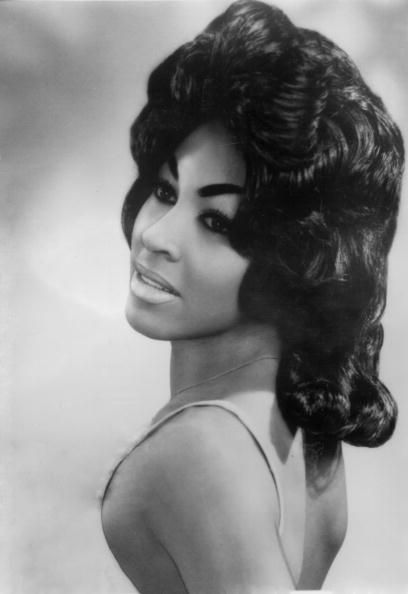
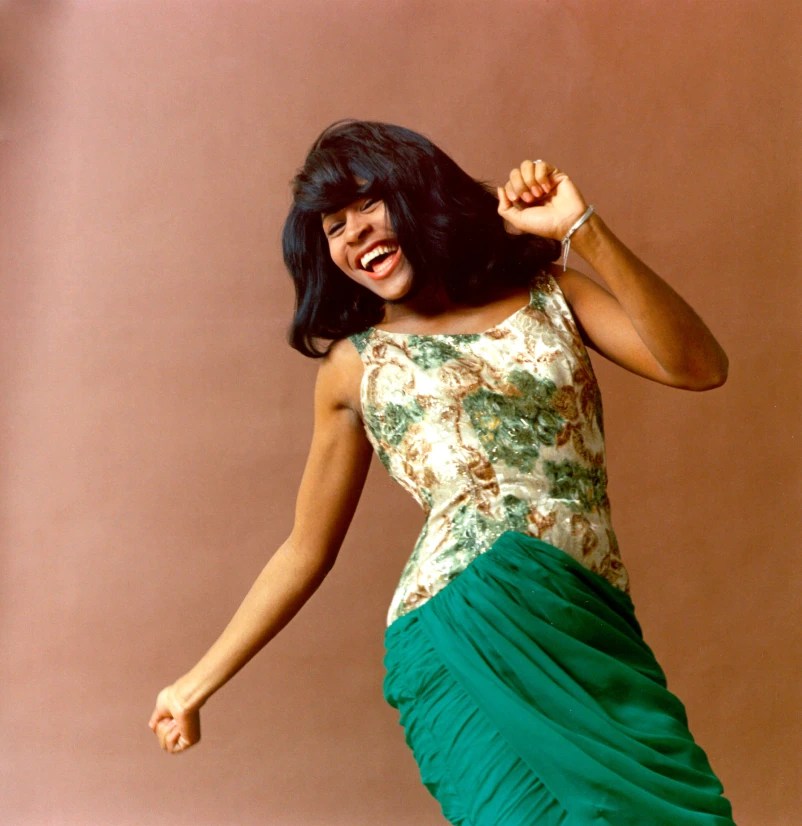
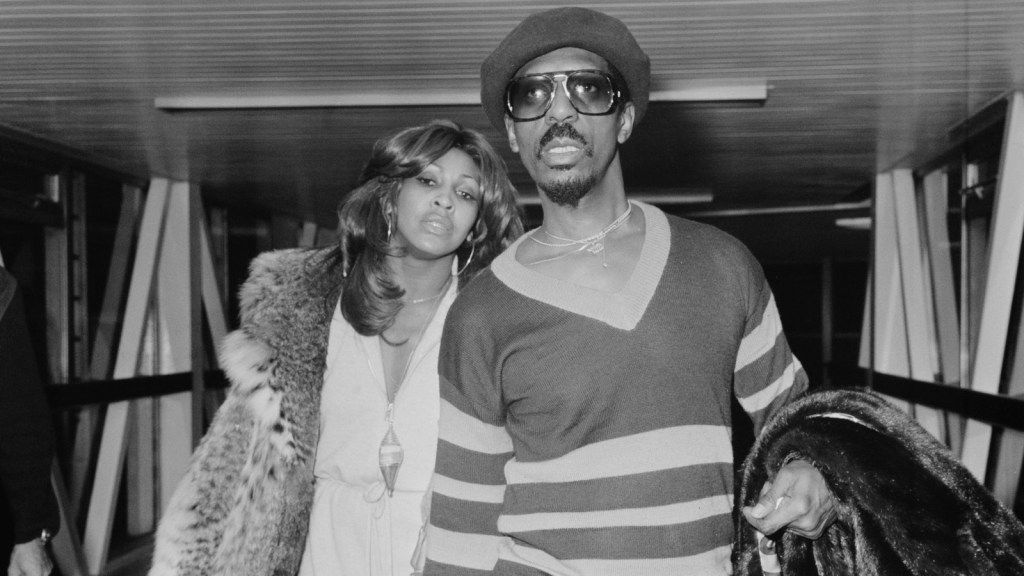
Tina Turner, the “Queen of Rock and Roll”, has died at the age of 83. A twelve-time Grammy-winning singer, dancer, actor, and author, Turner was a two-time inductee to the Rock and Roll Hall of Fame (one of only two women to achieve that honor) and an all-around badass.

Turner was born Anna Mae Bullock on November 26, 1939, in Brownsville, Tennessee. Raised in Nutbush, the daughter of sharecroppers, she sang in the choir at the local Baptist church. When Bullock was eleven, her mother fled her own abusive marriage. Two years later, her father moved to Detroit to remarry, leaving Bullock and her sisters in the permanent care of their strict, religious grandparents. She attended George Washington Carver High School in Brownsville, participating in cheerleading and basketball, before reuniting with her mother in St. Louis upon the death of her grandmother. After graduating from Sumner High School in 1958, Bullock found work as a nurse’s aide.

Bullock’s move to St. Louis would prove to be life changing in more ways than one. She and her sister began frequenting the nightclubs of East St. Louis, especially the Manhattan Club; it was there that she met her future husband, collaborator, and abuser, Ike Turner. At the time, Turner played at the Manhattan with his band, the Kings of Rhythm. One night during their intermission, Bullock grabbed the mic and performed a rendition of the B.B. King ballad “You Know I Love You”; an impressed Turner invited young Anna Mae to join him onstage (that moment was later recreated for the Oscar-nominated biopic, What’s Love Got to Do with It, albeit with some artistic license).

Bullock became a featured vocalist with Turner’s band and in 1958, she made her first recording – credited as “Little Ann” – with a song called “Boxtop”. Two years later, she was set to be a backup vocalist for a song Turner wrote for Art Lassiter; when Lassiter was a no-show for the recording session, Bullock sang the lead vocal herself. The single – “A Fool in Love” – made its way to a local deejay, who convinced Turner to submit it to Sue Records. Impressed, Sue’s president Juggy Murray agreed to distribute “A Fool in Love”, which became a top 40 hit. Murray also encouraged Turner to make Bullock “the star of the show”. It was during this time that Turner gave Bullock her stage name: Ike christened her Tina because it rhymed with Sheena (as in, Queen of the Jungle) and gave her his last name, though they weren’t married yet. The two also began their romantic relationship in 1960 and Tina gave birth to their son, Ronnie, in October of that year. The abuse started almost immediately. The pair released their Grammy-nominated debut album, The Soul of Ike & Tina Turner, in 1961.

Despite their tumultuous private lives, Ike and Tina Turner were a successful act, recording and touring throughout the 1960s. In 1965, producer Phil Spector attended one of their live shows on the Sunset Strip; the following year, they signed with Spector’s Philles Records and immediately began work on what would become their commercial breakthrough (at least in Europe), River Deep – Mountain High. Though the album was not an immediate hit in the states, it earned them a spot opening for the Rolling Stones. The duo began to focus less on R&B and more on rock and roll, covering songs like “Honky Tonk Women” and “Come Together”. Their 1970 album Workin’ Together, which contained two Beatles covers (“Get Back” and “Let It Be”), yielded their biggest hit yet, “Proud Mary”.

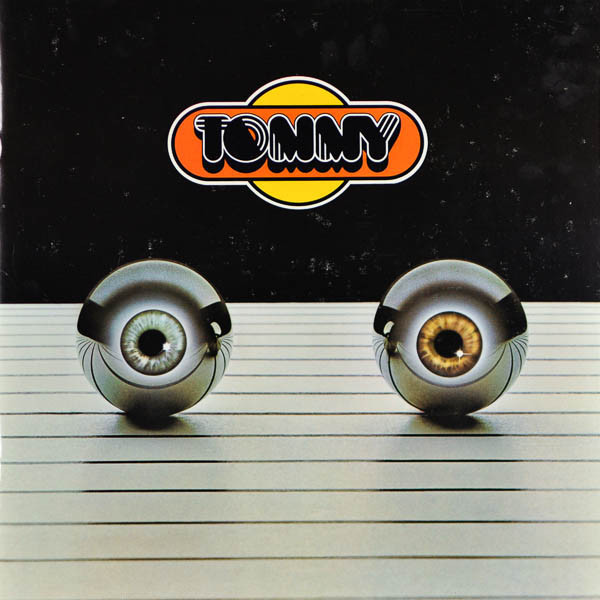
As the 1970s progressed, Ike and Tina continued to record and tour. Tina made her feature film debut in Ken Russell’s Oscar-nominated Tommy, based on The Who’s rock opera of the same name. But her relationship with her husband continued to devolve, fueled by Ike’s cocaine addiction. On July 1, 1976, the pair flew to Dallas for a show; upon arrival, Ike assaulted Tina in the limo on the way to the hotel. With just 36 cents and a Mobil gas card, Tina left Ike, hiding out at a Ramada Inn and filing for divorce later that month.

Tina Turner’s separation from Ike was costly. Lawsuits were filed over cancelled tour dates, and Turner relied mainly on television appearances to pay the bills. She released two solo albums – 1978’s Rough and 1979’s Love Explosion – that failed commercially. Turner continued to perform but was considered a nostalgia act. In 1981, Rod Stewart caught Turner’s show at the Ritz in New York City and invited her to join him onstage for a rendition of “Hot Legs”. The following year, she had a dance hit in the UK with a cover of “Ball of Confusion”. A deal with Capitol Records followed and after the surprise success of a 1983 standalone single (another cover, this time of Al Green’s “Let’s Stay Together”), they greenlit a full album. Tina Turner was about to have one hell of a second act.

Private Dancer, Turner’s fifth solo album, was released May 29, 1984. Fueled by the success of the smash hit “What’s Love Got to Do with It”, which went to #1 in the US, Canada, and Australia, Private Dancer was one of the most popular albums of the year. “What’s Love Got to Do with It”, Turner’s biggest-selling single of all time, earned three Grammy Awards, including Song of the Year and Record of the Year, and the MTV Video Music Award for “Best Female Video”.

Fun fact: Cliff Richard, Phyllis Hyman, and Donna Summer all declined “What’s Love Got to Do with It” before Turner finally recorded it.

More singles followed (notably, “Better Be Good to Me” and “Private Dancer”), as did a world tour, another film role (Aunty Entity in Mad Max Beyond Thunderdome), and appearances on “We Are the World” and David Bowie’s “Tonight”. Turner electrified the audience at Live Aid when she took the stage with the Rolling Stones. She was one of the biggest pop stars on the planet, and she was having a fucking blast.

Whenever I think of “Better Be Good to Me”, I think of Paul Rudd’s fantastic lip-sync version.
Fun fact: Turner and Bryan Adams won the MTV VMA for Best Stage Performance for “It’s Only Love”.

In 1986, Turner released the follow up to Private Dancer, Break Every Rule. While it didn’t attain blockbuster status of its predecessor, Break Every Rule was a solid hit, making it to the top five in thirteen countries. Its leadoff single, “Typical Male”, almost became Turner’s second US #1, but it was kept out of the top spot by Cyndi Lauper’s “True Colors”. Also in 1986, Turner published her autobiography, I, Tina, and met the love of her life, German music executive Erwin Bach. They began dating the following year and were together until Turner’s passing.

Though not as successful in the states, Turner’s seventh solo album, 1989’s Foreign Affair, was a smash overseas (it went to #1 in eleven countries). Foreign Affair included the single “The Best”, which went on to become one of Turner’s signature songs. She embarked on a European tour in 1990 and released a greatest hits compilation, Simply the Best, in 1991. That same year, Ike and Tina were inducted into the Rock and Roll Hall of Fame. Ike, incarcerated at the time, couldn’t attend; Tina opted not to, and Phil Spector accepted the honor on their behalf (Tina would be inducted as a solo artist in 2021).

In 1993, Touchstone Pictures released What’s Love Got to Do with It, based on Turner’s career and relationship with Ike. Though both Turners disputed the factual accuracy of the film (for one thing, Ike claims he never raped Tina), it was a box office success. Both lead actors – Angela Bassett and Laurence Fishburne – were nominated at the 66th Academy Awards, and Bassett won the Golden Globe for Best Actress – Motion Picture Comedy or Musical. For the soundtrack, Turner re-recorded some of her biggest hits as well as one new song, “I Don’t Wanna Fight”. It was her last worldwide hit, though she had a European smash with the Bono and The Edge-penned “Goldeneye”, the theme song to Pierce Brosnan’s first outing as James Bond.

Turner retired from performing after 2000’s Twenty Four Seven Tour, but she still made public appearances at events like the 2005 Kennedy Center Honors and the 2008 Grammy Awards (where she performed with Beyoncé). One final tour – in honor of her fifty years in show business – accompanied the ultimate Tina Turner greatest hits compilation, Tina! A jukebox musical based on her discography opened in 2016 (and won its lead actress, Adrienne Warren, a Tony Award). That same year, she was diagnosed with intestinal cancer after years of health problems that included kidney failure and a stroke. A kidney donated by her husband in 2017 bought her six more years, long enough to write two more books and participate in an HBO documentary about her life. Turner died on May 24 at the age of 83. May she live forever in our hearts – and in our ears. Rest in peace, Queen; you’ve earned it.

Iconic Pop Culture Moms

Originally published in 2021, this post has been edited for content and clarity.

Happy Mother’s Day to all who celebrate! In honor of the occasion, here are some pop culture moms I love – and a few that I love to hate.

  • Diane Freeling – Poltergeist (JoBeth Williams)

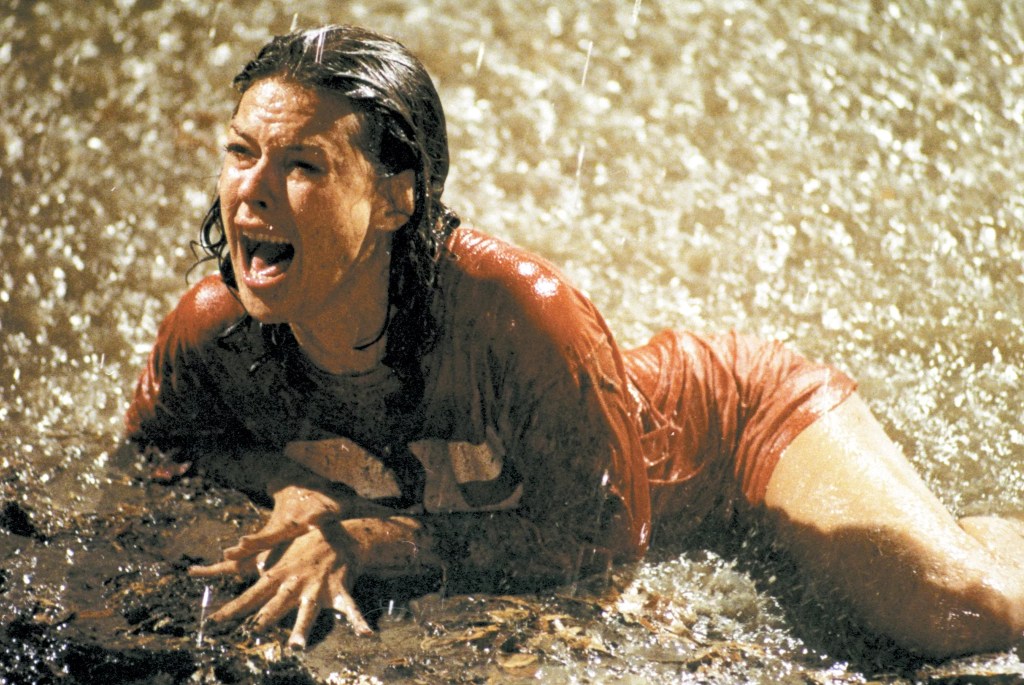
Diane Freeling is a typical suburban mom (homemaker, three children) whose biggest worry is that one of her kids will fall into the pool they’re installing. But her life is turned upside down by a malevolent force that wrests her youngest child away and holds her hostage in a supernatural realm. It starts out innocently enough, with chairs stacked on the kitchen table, but soon Carol Ann is gone (although seemingly still close by). Diane helps bring Carol Ann back to the land of the living, but of course that’s not the end of it (this is a horror movie, after all), and Diane must summon superhuman strength to save her babies from being sucked into a literal hellmouth. The lovely JoBeth Williams is spectacular in the role, and the film propelled her to stardom.

  • Carol Brady – The Brady Bunch (Florence Henderson)

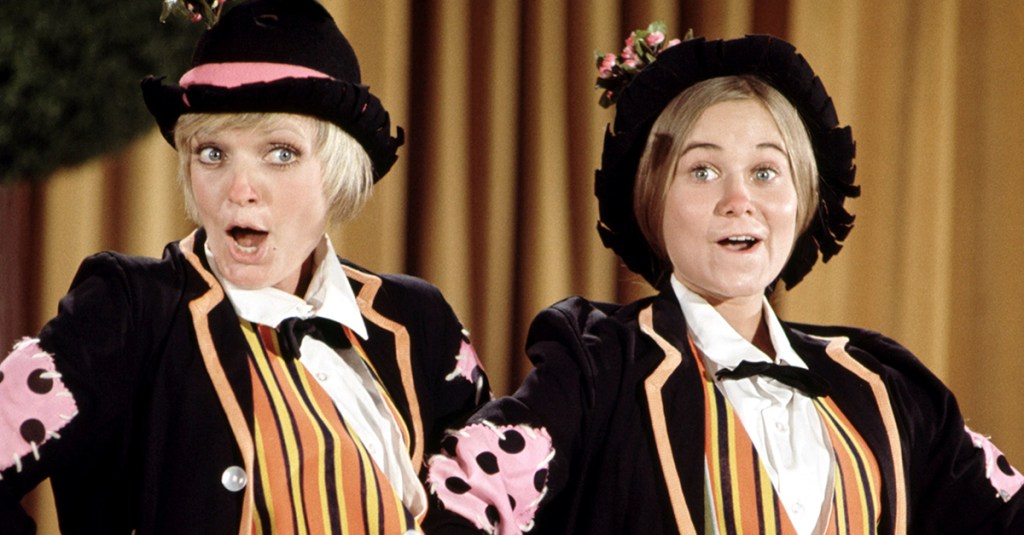
Traditional in some ways (stay-at-home mom) but modern in others (second marriage, blended family), Carol Brady is a super-sexy yet wholesome All-American mom. Managing a house with six kids can be tricky (and Carol certainly gets heaps of help from live-in maid Alice), but Carol handles it with ease. Carol’s life generally takes a backseat to the Brady children’s storylines, but she’s always there when they need her, whether they have a skinned knee, a broken heart, or the measles.

Shelley Long perfectly captured Carol’s personality – and her shag haircut – in 1995’s The Brady Bunch Movie.
  • Margaret White – Carrie (Piper Laurie)

Margaret White is a religious fanatic whose daughter Carrie (Sissy Spacek) has just had her first period (and acquired telekinetic powers in the process). When Carrie is asked to the prom by Tommy Ross, Margaret is convinced it will end badly for Carrie (in the ultimate case of “Mother knows best”, she turns out to be 100% correct). After the prom ends in a raging inferno, Carrie returns home. Certain that Carrie’s newfound powers make her a witch, Margaret stabs Carrie; Carrie retaliates by using her telekinesis to crucify her mother. As the White house burns down, Carrie pulls Margaret into a closet, and the two perish together. Carrie White may burn in hell, but at least she dragged Margaret there with her. Piper Laurie is absolutely terrifying as Margaret and deservedly earned an Oscar nod for her performance (Spacek was also nominated).

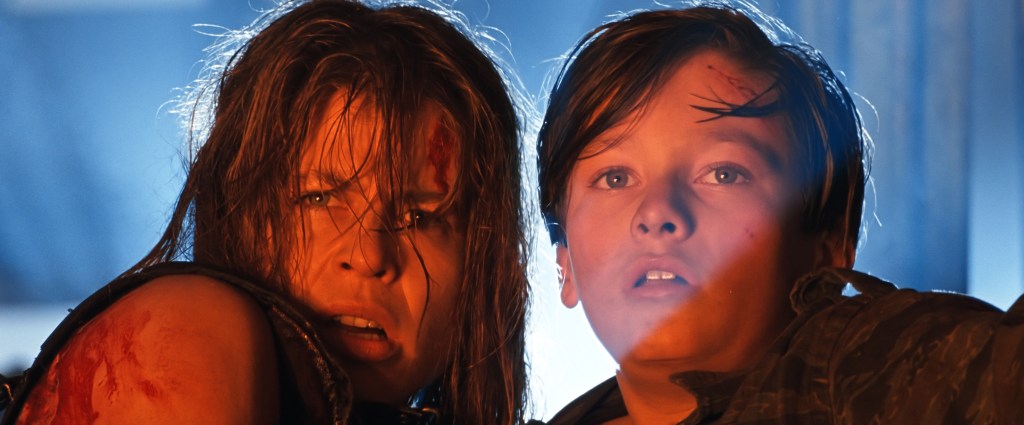
  • Sarah Connor – Terminator 2: Judgment Day (Linda Hamilton)

Perhaps the most badass mother in pop culture history, Sarah Connor must protect her son – and future leader of the human uprising against the machines – from the T-1000. With some help from the first film’s T-800, Sarah battles the T-1000 not just for her son (although that’s her primary objective), but for all humankind. Sarah, beautifully played by a buff, tough Linda Hamilton, has more at stake than your typical pop culture mom, but in the end, a mother’s love for her child is universal.

FUN FACT: Hamilton won a Saturn Award and two MTV Movie Awards for her performance in Terminator 2.

Those special effects still rock, BTW
  • Evelyn Abbott – A Quiet Place (Emily Blunt)

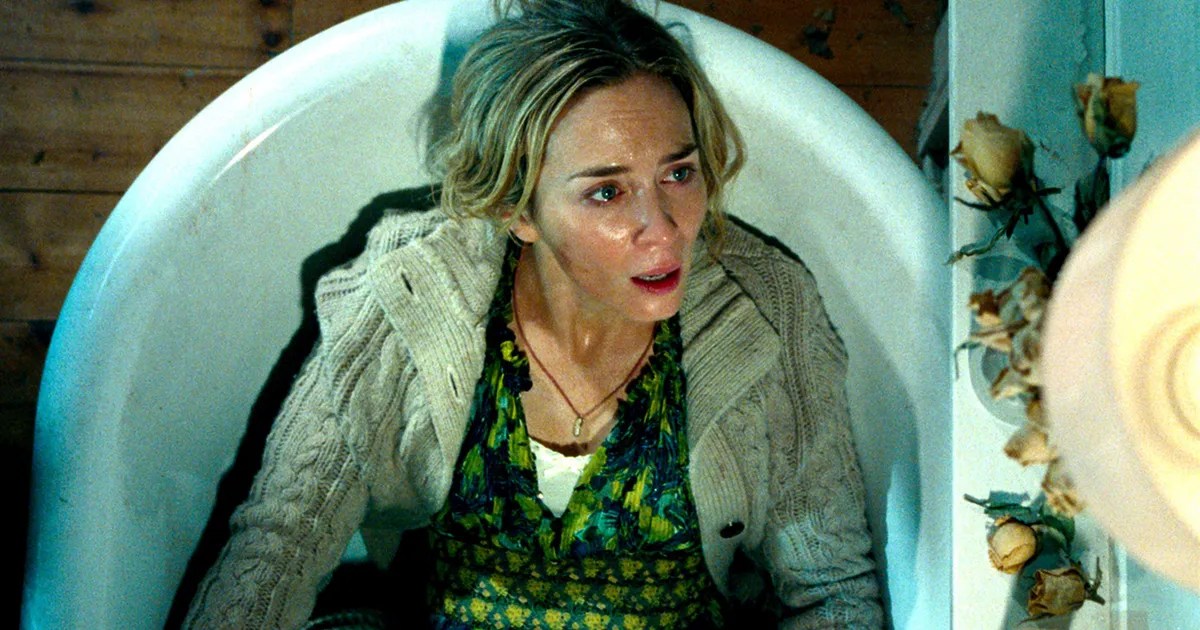
Humanity has been largely eradicated by monsters who hunt using sound; if you don’t make any noise, the monsters won’t find you. The Abbott family has survived thus far, but the shit, as they say, is about to hit the fan. Emily Blunt is extraordinary (as always) as matriarch Evelyn, whose husband and children are elsewhere as she goes into labor. Evelyn gives birth alone – SILENTLY – in a bathtub and must quiet her newborn so the monsters can’t locate them. It is an insanely tense sequence, grounded by Blunt’s gut-wrenching, SAG Award-nominated performance (Blunt is also terrific in the solid, if unnecessary, sequel).

FUN FACT: At the insistence of her director-husband John Krasinski, Blunt and her co-stars learned American Sign Language for the film. Deaf actor Millicent Simmonds, who plays daughter Regan, helped the others immerse themselves in the language so their interactions would feel natural and fluent.

CONTENT WARNING: A BLOODY CHILDBIRTH, A GRUESOME FOOT INJURY, AND SCARY MONSTERS.
  • Mary – E.T. the Extra-Terrestrial (Dee Wallace)

Mary is coping pretty well as a single mom, all things considered, although news that her ex-husband is going to Mexico with his new girlfriend Sally rattles her a bit (“He hates Mexico”). But Mary’s life will soon be upended by her middle child’s pet alien. Played by the ridiculously underrated Dee Wallace, Mary is forced to quickly process a lot of unimaginable yet utterly true information when she is finally introduced to E.T. As she watches Elliott and E.T. get sicker and sicker, Mary experiences a range of emotions, and you never once doubt how very much she loves her children.

This scene always gives me goosebumps
  • Lynn Sear – The Sixth Sense (Toni Collette)

As played by the sublime Toni Collette, Lynn Sear is the struggling single mother of a child with a very special gift (spoiler alert: he sees dead people). Lynn doesn’t know Cole’s secret, but she does worry about his social skills and the bullying he endures. When Cole finally reveals his secret, Lynn is reluctant to believe him until he shares details of her relationship with her own mother that Cole couldn’t possibly have known. Cole gives her a message from her mom, the emotions flood Lynn’s face, and we feel all the feels. Collette rightfully earned an Oscar nomination for her performance (Haley Joel Osment, so good as Cole, was also nominated). Angelina Jolie swept the Best Supporting Actress awards that year for Girl, Interrupted, but it should have been Collette.

💔🥹😭
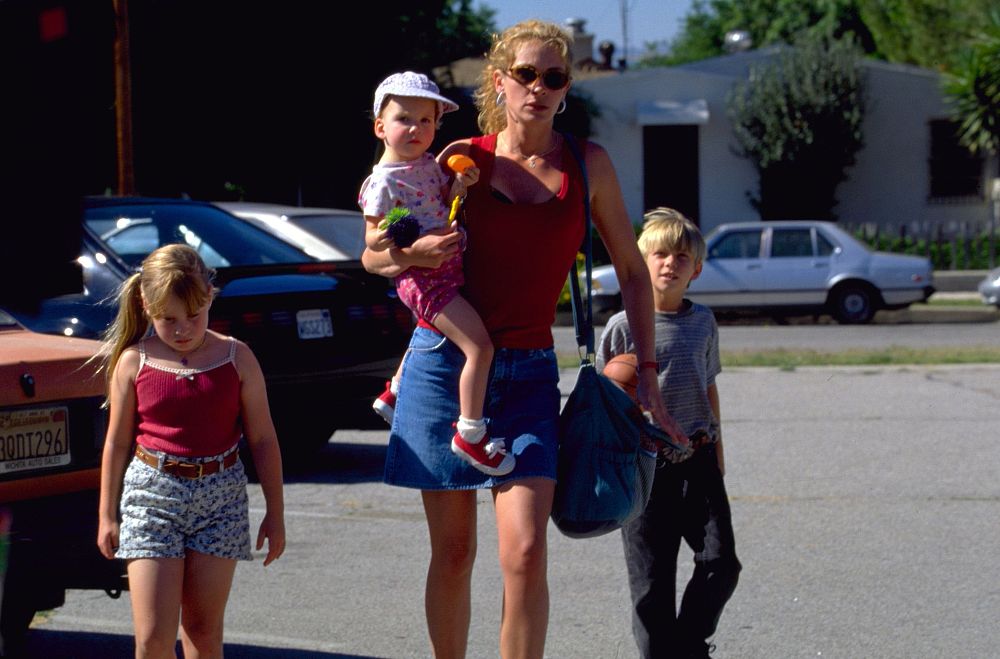
  • Erin Brockovich – Erin Brockovich (Julia Roberts)

Erin Brockovich, played by Julia Roberts in an absurdly entertaining, Oscar-winning performance, is a single mom with a potty mouth and a heart of gold. How much she loves her children is never in question, even when she struggles to provide for them. Erin’s work schedule means her kids are resentful they don’t get to spend more time with her, but we understand that everything she does is for them.

What I love about this scene is the easy, natural way Roberts interacts with the baby (this clip also contains my favorite quote from the film – “They’re called boobs, Ed”).
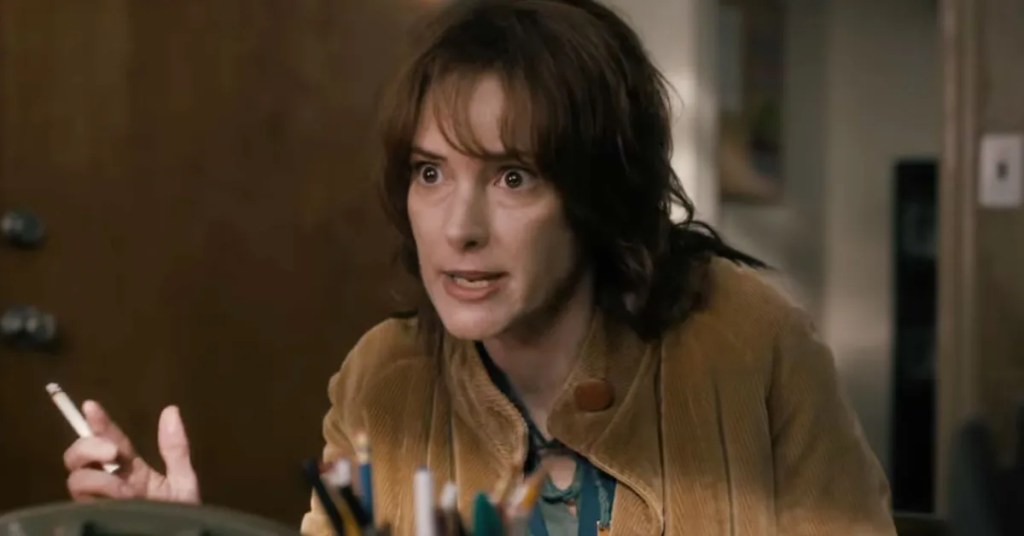
  • Joyce Byers and Karen Wheeler – Stranger Things (Winona Ryder and Cara Buono)

Joyce Byers doesn’t have it as easy as some of the other moms of Hawkins, Indiana. Her ex-husband Lonnie doesn’t have much of a relationship with his children, leaving Joyce as the sole caretaker on a general store clerk’s salary. When her latchkey kid Will disappears, Joyce feels a combination of heartbreak and guilt, as she confronts the knowledge that she wasn’t there for Will when he needed her most. But Will and Joyce have a connection, and when Will contacts Joyce from the Upside Down, she knows it’s really him. Chief of Police Jim Hopper and Lonnie both think Joyce is crazy, because how could Will be talking to her through the Christmas lights? Winona Ryder’s performance is a master class, and I appreciate it more with each rewatch.

Karen Wheeler, played by the lovely Cara Buono, is the anti-Joyce Byers; a traditional stay-at-home mom, Karen has three kids and a husband she’s come to resent being ignored by. She is way too involved in her children’s lives (Jonathan: “Your mom doesn’t knock?”), but then again, she has a strange girl living in her basement for days and doesn’t know it. By the third season, Karen is spending her days at the pool, where Billy is a lifeguard (and yes, this storyline is still icky, even with the gender roles reversed). In a surprising twist, though, Karen turns out to be a closet feminist. As Nancy is learning how to navigate sexism in the workplace, Karen gives her a pep talk for the ages. It’s one of my favorite mother-daughter moments in pop culture.

  • Joan Crawford – Mommie Dearest (Faye Dunaway)

We all know the quote, even if we’ve never seen the movie: “NO… WIRE… HANGERS… EVER!!!” I have no idea if Joan Crawford was this horrible in real life (several sources have disputed Christina Crawford’s version of events), but as played by an absolutely unhinged Faye Dunaway (who won a Razzie for her performance), movie Joan Crawford definitely wins the award for World’s Worst Mother. It’s one of the most unintentionally funny performances in cinema history, and the movie itself won the Razzie for Worst Movie of the Decade, beating such contenders as Cocktail, Leonard Part 6, Howard the Duck and Bolero.

  • Louise Banks – Arrival (Amy Adams)

The exquisite Amy Adams should have taken home the Best Actress Oscar for her brilliant performance as linguist Louise Banks, but she WASN’T EVEN NOMINATED, a fact I’ll never be over. Alien spacecraft have arrived on earth, but in a refreshing twist, they don’t appear bent on humanity’s destruction. Banks, whom the audience believes is grieving the death of her daughter, is brought in to help translate the alien language. In doing so, she becomes unstuck in time and learns (along with the audience) the devastating truth: her dead daughter hasn’t even been born yet.

  • Morticia Addams – The Addams Family (Carolyn Jones)

When I was a kid, my family had a collection of the original Charles Addams cartoons. I was OBSESSED. Around the same time, I discovered the 1964 sitcom when it arrived in syndication. Although Morticia Addams has been played by iconic actresses like Angelica Huston, Bebe Neuwirth, and Catherine Zeta-Jones, Carolyn Jones will always be my favorite Morticia. She was astonishingly beautiful, and she loved and supported her kids no matter what.

    • Beatrix Kiddo/The Bride – Kill Bill: Volume 1 and Volume 2 (Uma Thurman)

    A pregnant Beatrix Kiddo is shot and left for dead on her wedding day. After spending time in a coma, she awakens to discover she is no longer pregnant. Assuming her child has died, she vows revenge on those responsible, particularly her daughter’s father (the titular character). But when she finally tracks Bill down, Beatrix learns her daughter B.B. is still alive.

    FUN FACT: Tarantino had a single film planned, but the four-hour run time meant it needed to be split into two parts. That worked out well for Thurman, who earned back-to-back Golden Globe nominations for the role.

    • Xenomorph Queen – Aliens

    It’s hard to fault a mother for attacking the people who’ve kidnapped and murdered her offspring, even if she is an alien. But the queen has a formidable foe in Ellen Ripley, which sets up one of the greatest showdowns in the history of cinema.

    • Helen Parr/Elastigirl – The Incredibles and Incredibles 2 (Holly Hunter)

    Voiced by the incomparable Holly Hunter, Helen Parr is not your typical suburban mom. Forced into retirement when the government outlaws superheroes, Elastigirl hides her true identity and settles into domestic life. But when her husband finds himself in trouble, she dusts off her cape and her superpowers to save him. Hunter, who had never voiced an animated character before, finds the perfect balance of humor and heart for this literal supermom.

    FUN FACT: Elastigirl’s power – superhuman elasticity – is based on the stereotypical role of a mom, who (in director Brad Bird’s words) is “always juggling a million things and pulled in a million directions”.

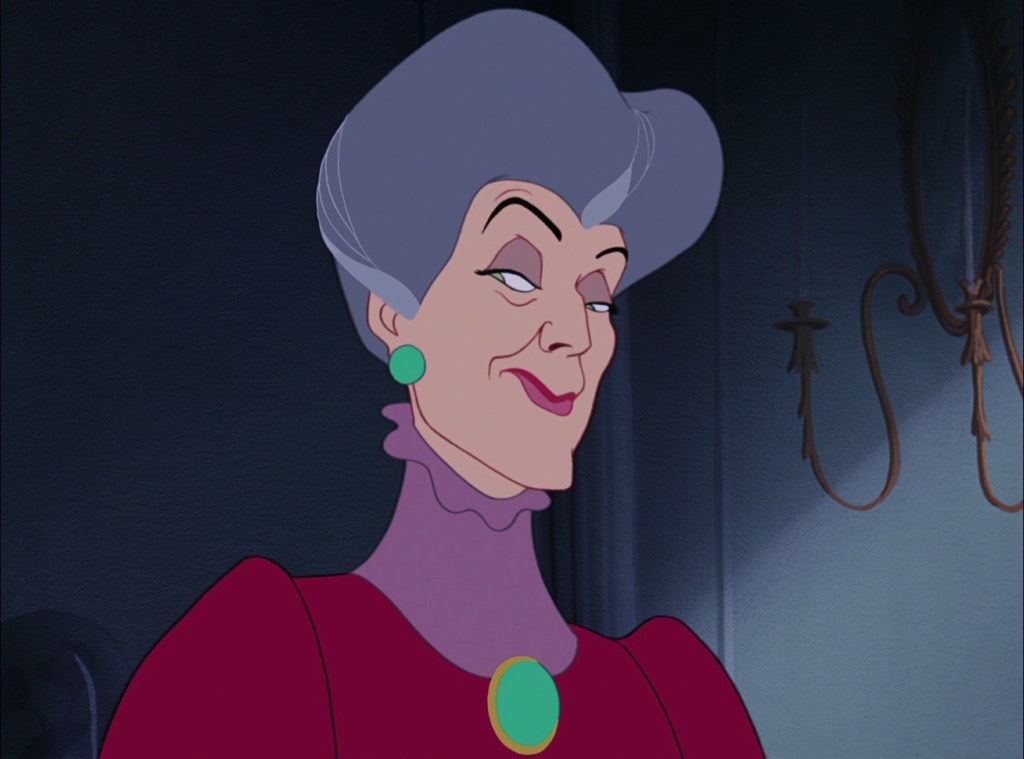
    • Lady Tremaine – Cinderella (voiced by Eleanor Audley)

    When her father dies, Cinderella is left in the care of her cruel and uncaring stepmother, Lady Tremaine, who dotes on her daughters and forces Cinderella to perform all the household chores. The epitome of the evil stepmother trope, Lady Tremaine allows her daughters (Anastasia and Drizella) to bully and abuse Cinderella, culminating in them ruining the dress Cinderella has sewn for the Royal Ball.

    FUN FACT: Eleanor Audley, who provided the voice for Lady Tremaine, also voiced Maleficent in 1959’s Sleeping Beauty and Madame Leota in the Haunted Mansion attraction at Disneyland.

    Legend: Harry Belafonte

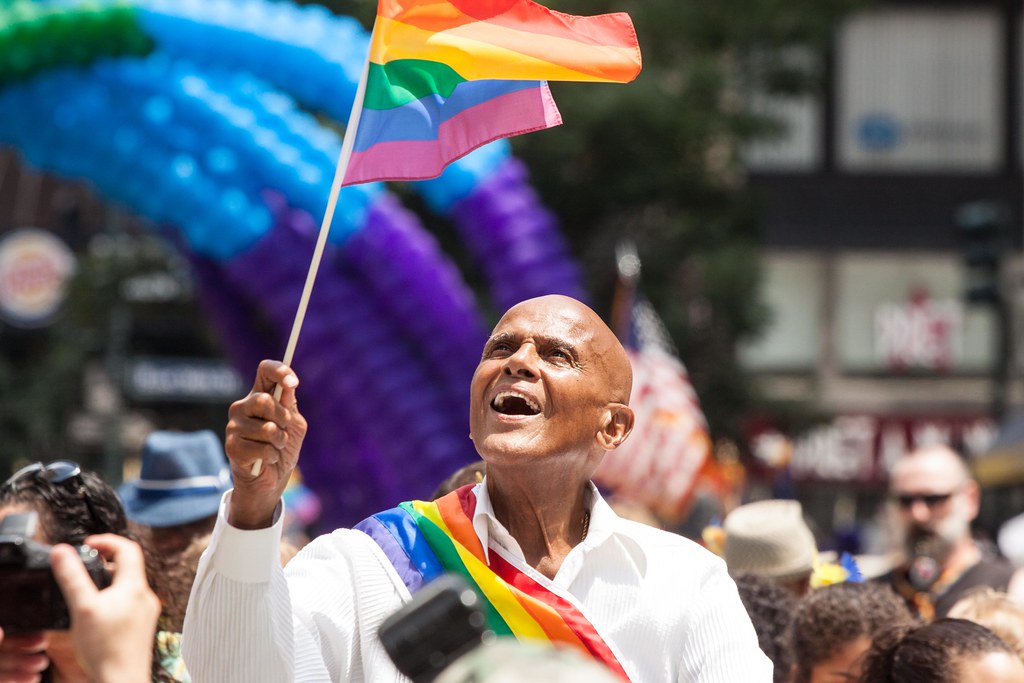
    Harry Belafonte has died at the age of 96. Belafonte was a Tony, Emmy, and Grammy-winning singer and actor, civil rights activist, philanthropist, humanitarian, and UN Goodwill Ambassador.

    Harold George Bellanfanti Jr. was born in Harlem on March 1, 1927. From ages five to thirteen, Belafonte lived with his grandmother in her native Jamaica. Upon returning to the states, he attended George Washington High School in Washington Heights, then joined the U.S. Navy and served during World War II. After the war, Belafonte found work as a janitor’s assistant. A tenant tipped him a pair of tickets to the American Negro Theatre, where he fell in love with acting AND met his lifelong friend and collaborator Sidney Poitier. He attended the New School’s Dramatic Workshop alongside Poitier, Marlon Brando, Bea Arthur, and Walter Matthau and later found work on Broadway. He earned a Tony Award for his performance in John Murray Anderson’s Almanac.

    Belafonte’s music career began as a way for him to pay for acting classes, but he found some success as a club singer. He debuted with Charlie Parker before making his way to the legendary Greenwich Village jazz club, the Village Vanguard. Belafonte’s love wasn’t jazz, though; it was folk music. In 1953, he signed a contract with RCA Victor; that same year, he made his film debut in the Dorothy Dandridge-starring Bright Road. The following year, Belafonte released his debut album, Mark Twain and Other Folk Favorites, and reunited with Dandridge for Carmen Jones.

    Fun fact: Dorothy Dandridge was the first black woman to receive an Oscar nomination for Best Actress (she lost to Grace Kelly).

    In 1956, Belafonte recorded his breakthrough album, Calypso, which contained the song that would become his signature: “Day-O (The Banana Boat Song)”. Calypso spent thirty-one weeks at #1 on the Billboard album chart and was the first album in history to sell more than one million copies. That same year, Belafonte filmed his follow-up to Carmen Jones, Island in the Sun, a film about race relations and interracial romance in a fictional Caribbean nation. He also co-wrote the film’s theme song.

    “Jamaica Farewell” is another well-known track from Belafonte’s Calypso.

    After his musical career peaked in the early 1960s, Belafonte took much of the decade off to raise a family with his second wife, Julie Robinson, and to participate in the civil rights movement. He didn’t make another motion picture until 1970’s The Angel Levine (though he did make the occasional television appearance). In 1972, he co-starred with Poitier in the latter’s directorial debut, Buck and the Preacher.

    The remainder of the 1970s saw Belafonte working on beloved projects like The Muppet Show and Marlo Thomas’ Free to Be… You and Me, as well as recording the occasional album. His final studio album, Paradise in Gazankulu (a protest of the South African government’s policy of apartheid), was released in 1988.

    Also in 1988, Belafonte was introduced to a new generation when four of his songs – including “Day-O” and “Jump in the Line (Shake, Senora)” – were featured in Tim Burton’s Beetlejuice.

    With his recording career behind him and his movie roles few and far between, Belafonte focused primarily on humanitarian and political causes but still made the occasional television appearance. In 1997, PBS aired An Evening with Harry Belafonte and Friends; the event ended with a rousing sing-along of “Day-O”.

    In 2018, Belafonte made his final film appearance in Spike Lee’s Oscar-winning BlacKkKlansman.

    Harry Belafonte died of congestive heart failure on April 25, 2023, at the age of 96. He left behind a wife, four children, five grandchildren, and a cultural and artistic legacy for the ages. Here are a few more highlights from Belafonte’s life and career:

    Belafonte had a minor hit in 1961 with his duet with Odetta of “Hole in the Bucket”.
    Belafonte, who was blacklisted during the McCarthy era for his involvement in the civil rights movement, helped organize the 1963 March on Washington, famous for Dr. Martin Luther King’s “I Have a Dream” speech.
    The recording session for Belafonte’s brainchild “We Are the World” inspired this joyful behind-the-scenes tribute.
    Belafonte paid tribute to Sidney Poitier at the 1992 AFI Life Achievement Award ceremony.
    Belafonte was an outspoken critic of the “morally bankrupt” Bush II administration.
    Belafonte was the subject of the 2011 documentary Sing Your Song, which you can rent on Amazon or Apple TV.
    Belafonte secured his EGOT status when he received the Jean Hersholt Humanitarian Award at the 87th Academy Awards.
    In 2020, Belafonte celebrated his 93rd birthday at Harlem’s legendary Apollo Theater. It was one of his final public appearances.

    My Favorite Pop Culture Stoners

    Initially published in 2021, this post has been edited for content and clarity.

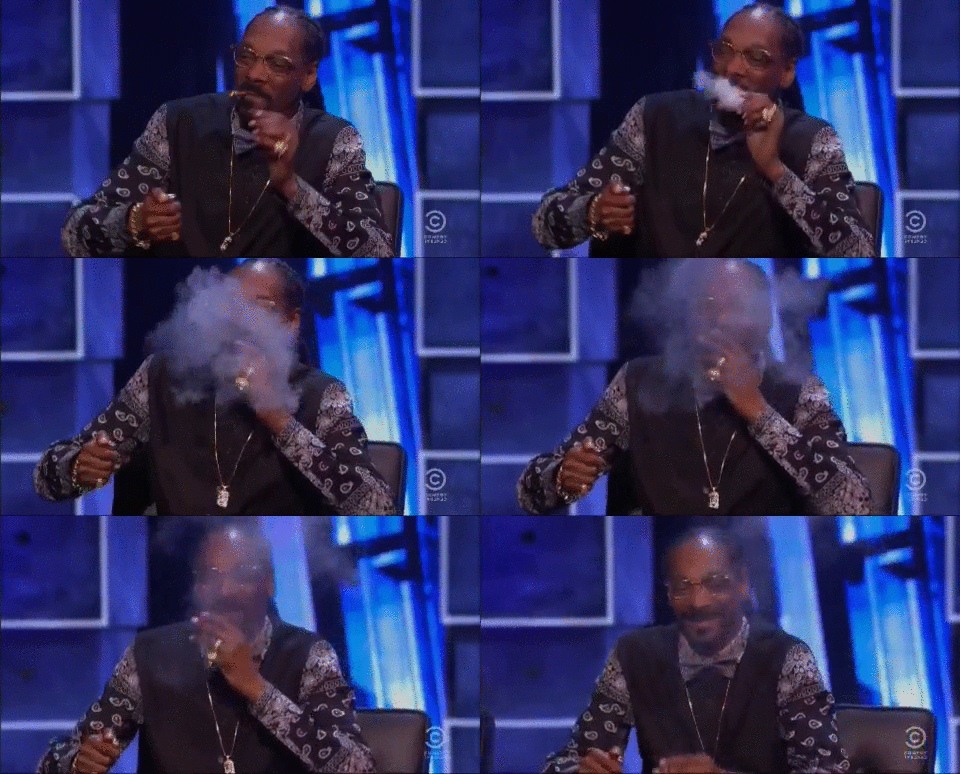
    HAPPY 4/20, Y’ALL!!! Why do we celebrate cannabis culture on April 20th? According to legend, the holiday’s roots date back to 1971, when a group of teens in San Rafael, California, used the term “420” for their search for an abandoned cannabis crop (they met after school at 4:20 PM). The boys never found the crop, but they inadvertently created a term still used more than fifty years later. A piece in High Times magazine in 1998 told the story of the boys and their treasure hunt; one of them, Dave Reddix, later became a roadie for Grateful Dead bassist Phil Lesh, so the consensus is that Reddix passed the phrase along to Lesh and the Deadhead community helped popularize it.

    Recreational marijuana use has been legalized in Canada, Mexico, and several US states, including my home state of Michigan. Outside of North America, only a few countries – Thailand and South Africa among them – have legalized recreational cannabis, though many more have either decriminalized it or legalized medical use. And even though 38 US states have legalized medical use and 21 have legalized recreational use, the federal government still classifies cannabis as a Schedule I controlled substance alongside drugs like heroin and ecstasy. I acknowledge the privilege that allows me to legally consume recreational cannabis, so let me make my position clear: I am in favor of full decriminalization and legalization of cannabis.

    In locations where cannabis use is still illegal, 4/20 observances are often used as a platform for legalization or decriminalization and sometimes involve acts of civil disobedience (the penalty for cannabis possession in the US is typically a civil infraction/fine or a misdemeanor charge but in some countries, one could potentially be imprisoned for years).

    However you celebrate, I hope you all have a happy 4/20. And if you don’t observe the occasion, you could always spend the evening with one of these fictional stoners:

    • Ron Slater, Dave Wooderson, and Randall “Pink” Floyd – Dazed and Confused

    Before I even saw Dazed and Confused, I knew that I would love it; the reviews were glowing, and I’d enjoyed director Richard Linklater’s first film, Slacker. What I didn’t realize was how much I would love a scrappy little stoner boy named Ron Slater. Played by the adorable Rory Cochrane, Slater is the quintessential slacker, single-minded in his pursuit of recreation. But he’s also a philosopher and historian; his theory about George and Martha Washington being weed farmers is one of the funniest bits in the movie. Slater’s sole disappointment in life? He never gets shotgun.

    Yes, Wooderson is super creepy – if he were a real person, he’d have been a “Times Up” cautionary tale by now. But I admire Wooderson’s motto: “Just keep livin’…L-I-V-I-N”. Matthew McConaughey, in his first film role, oozed confidence and charisma, and the part expanded to match his outsized personality. Linklater apparently hesitated to cast McConaughey because he was “too handsome” (and you can hardly blame him), but I’m glad Linklater saw past McConaughey’s absurd good looks to the actor underneath. In a film full of fantastic characters, McConaughey steals scene after scene.

    Randall “Pink” Floyd (Jason London) is experiencing an existential crisis. He wants to continue playing football but is uneasy about the pledge his coaches have asked him to sign, promising not to engage in “drinking, drugs or any other activity that would jeopardize the goal of a championship season in ’76”. Pink just wants to enjoy the last day of school -and the rituals that accompany it – but he’s caught between his teammates and his stoner friends. When Pink, Wooderson, and company are busted on the fifty-yard line of the school’s football field, the police call the coach. In the end, Pink crumples up the pledge and tosses it at the coach (“I may play football, but I will never sign that”), then goes off with the stoners – to the strains of Foghat’s “Slow Ride” – to buy Aerosmith tickets.

    • The Dude – The Big Lebowski

    Please do not refer to Jeff Lebowski (Jeff Bridges) as Mr. Lebowski – it’s “The Dude”, thank you very much (“or His Dudeness, or El Duderino, if you’re not into the whole brevity thing”). The Dude just wants to bowl with his friends Walter and Donny, drink White Russians, and get high. His tranquil life is disrupted when he is mistaken for another Jeff Lebowski, whose trophy wife Bunny owes money to porn tycoon Jackie Treehorn. Treehorn’s goons break into The Dude’s apartment and, realizing they have the wrong Lebowski, leave – but not before urinating on his favorite rug (“That rug really tied the room together”). This sets off a farcical chain of events that can only occur in a Coen film. Featuring a fantastically talented supporting cast (among them, John Goodman, Steve Buscemi, Julianne Moore, and Philip Seymour Hoffman), The Big Lebowski nevertheless rests on Bridges’ more-than-capable shoulders.

    • Larry “Doc” Sportello – Inherent Vice

    Paul Thomas Anderson’s underrated gem Inherent Vice, based on the Thomas Pynchon novel of the same name, stars the incomparable Joaquin Phoenix as “Doc” Sportello, a hippie private investigator who finds himself embroiled in LA’s criminal underworld. Phoenix’s performance feels entirely lived-in, and he was deservedly nominated for a Golden Globe for Best Actor – Musical or Comedy (he lost to Michael Keaton). The film itself could best be described as “Sam Spade meets Cheech & Chong”. Speaking of which…

    • Anthony “Man” Stoner and Pedro de Pacas – Cheech and Chong’s Up in Smoke

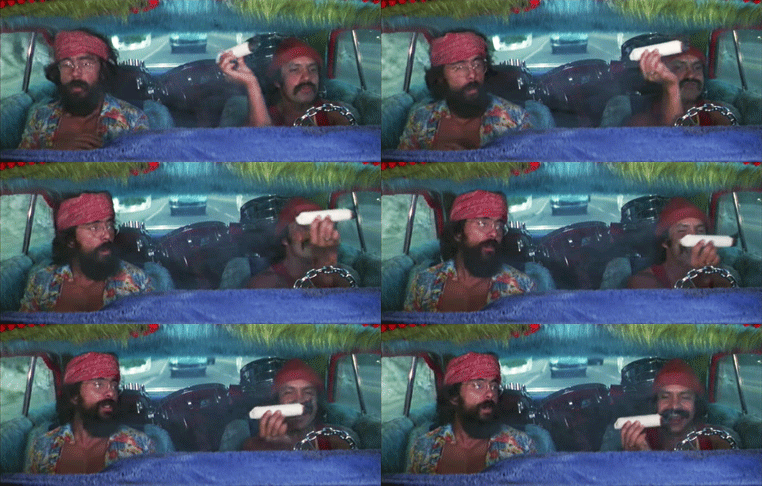
    For all intents and purposes, Cheech Marin and Tommy Chong created the stoner buddy genre. The two met in Vancouver in the late 1960s; Chong was a Canadian citizen, and Marin had moved there to avoid the Vietnam War draft. They started performing stand-up together and released their first album in 1971. Their success culminated in Up in Smoke, their first of several films. Mainly consisting of a series of skits, Up in Smoke‘s plot is primarily an excuse for the pair to smoke comically large joints. The movie was a critical failure but a box office hit, earning $104 million on a $2 million budget, and Cheech and Chong became one of the most successful comedy duos ever.

    FUN FACT #1: Ivan Reitman conceived Stripes as a Cheech and Chong vehicle, but the two demanded creative control, so Reitman had the screenwriter rework it for ultimate stars Bill Murray and Harold Ramis.

    FUN FACT #2: The Lion King‘s hyenas, Shenzi and Banzai, were modeled after the duo, and the film’s producers offered them the voice roles. The two weren’t getting along at the time, so Chong declined, and Whoopi Goldberg was cast as Shenzi to Marin’s Banzai.

    • Jeff Spicoli – Fast Times at Ridgemont High

    Sean Penn’s turn as Jeff Spicoli in Fast Times at Ridgemont High is the kind of comedic performance that can only be achieved by a remarkable dramatic actor. Penn also has terrific chemistry with Ray Walston, who plays Spicoli’s nemesis Mr. Hand, and with Anthony Edwards and Eric Stoltz as his stoner buds. Fast Times was the cream of the ’80s teen sex comedy crop and has aged remarkably well. Penn’s performance, which provides some much-needed levity to balance the film’s darker elements, is still the best thing about it.

    FUN FACT: Don Phillips was the casting director for both Fast Times at Ridgemont High and Dazed and Confused.

    • Floyd –True Romance

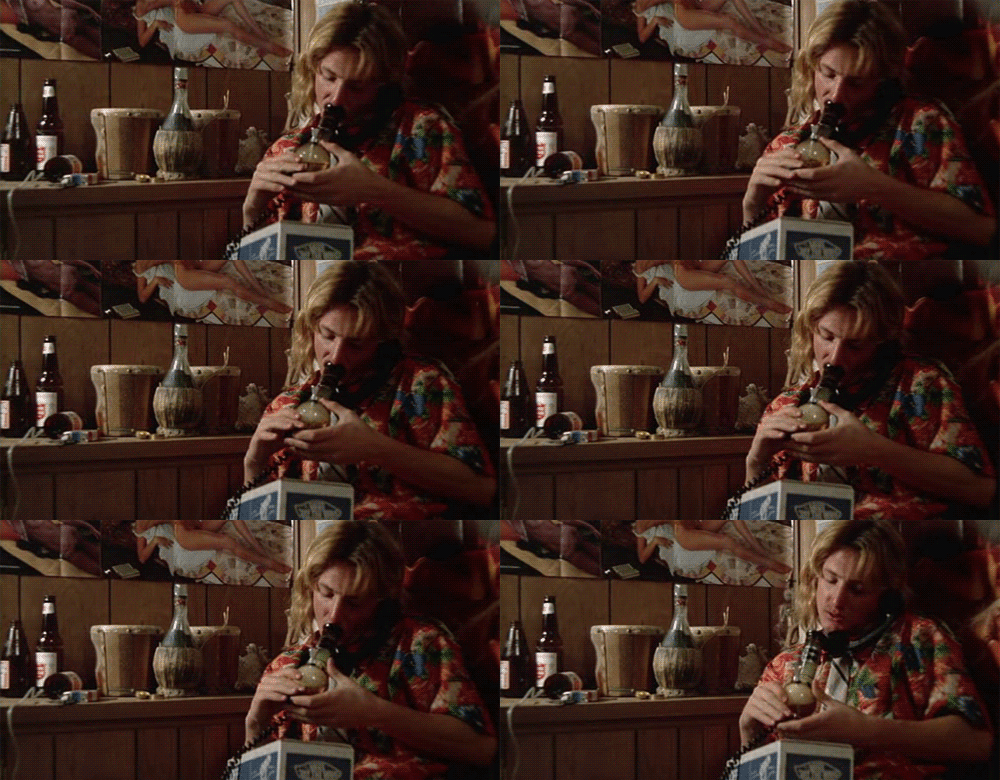
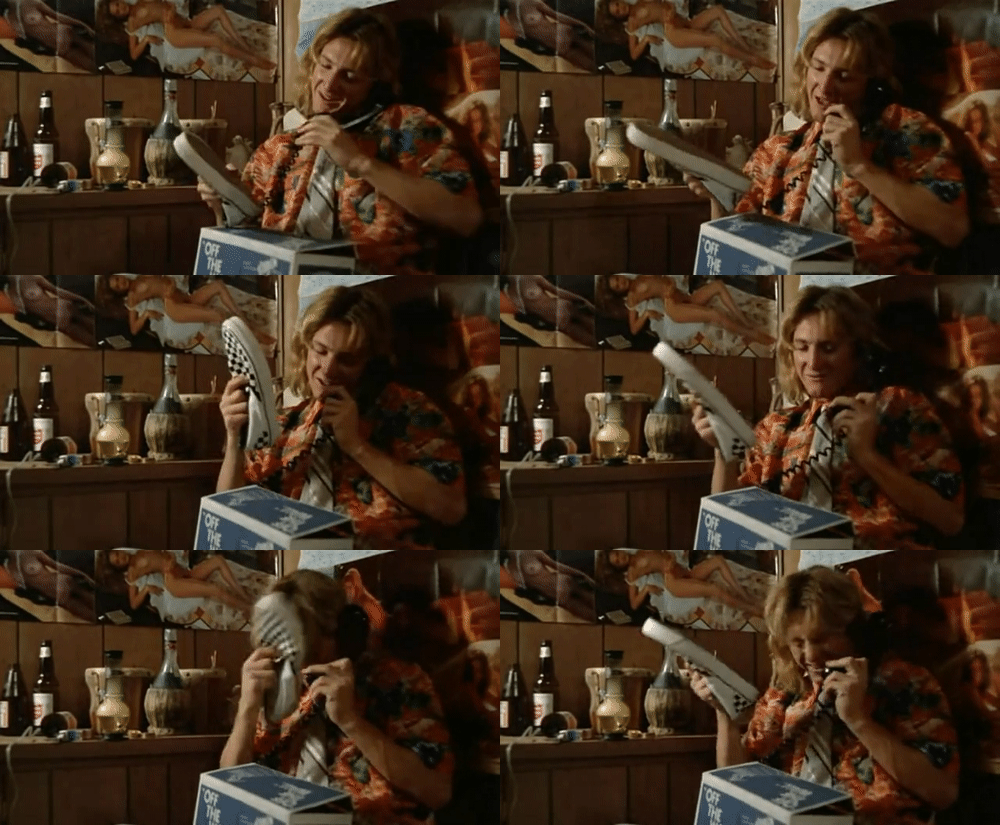
    On the cusp of superstardom in 1993, Brad Pitt turned in one of his funniest performances ever in True Romance, playing Floyd, the stoner roommate of Clarence’s friend Dick. Pitt makes the most of his mere minutes of screen time, wringing laughter from the tiniest details, like Floyd’s honey bear bong. Pitt purportedly improvised much of his dialogue, and it is pure genius. The following year, Pitt would land on the A-list with the one-two punch of Interview with the Vampire and Legends of the Fall, and his days of taking supporting roles like Floyd were over. It’s too bad, because I’ll take Floyd over Louis and Tristan any day.

    • Ted and Marshall – How I Met Your Mother, multiple episodes

    Since Future Ted is telling his kids this story, he resorts to using an interesting euphemism for smoking weed – “eating a sandwich”. The joke first appears in the season 3 episode “How I Met Everyone Else”, as Future Ted tells his kids how he first met their Uncle Marshall. It became one of the series’ best running gags, featuring in several flashbacks throughout its run. Once in a while, older Ted and Marshall would eat a sandwich as well; in the standout season 7 episode “Tick Tick Tick”, the two (along with a pregnant Lily) attend a concert and eat a sandwich that may have been laced with “hard meats”. The results are harrowing for Ted and Marshall, and absolutely hilarious for us.

    • Dale Denton and Saul Silver – Pineapple Express

    The Cheech and Chong of the 21st century, Seth Rogen and James Franco both got their start on the lovely, canceled-before-its-time Freaks and Geeks. Rogen and Franco vaulted to stardom, and their well-documented love of cannabis culminated in 2008’s Pineapple Express. The movie is shockingly violent for a stoner buddy comedy, as Saul and Ted are ensnared in a war between a corrupt cop and an Asian gang. Named for a particularly heady strain of marijuana, Pineapple Express was a box office success, making a worldwide total of $101 million on a $26 million budget. A sequel was planned, but the filmmakers and the studio couldn’t agree on a budget. We were treated to a pseudo-sequel by way of the movie-within-a-movie in 2013’s This Is the End.

    FUN FACT: The inspiration for Pineapple Express was True Romance‘s Floyd. Producer Judd Apatow thought it would be interesting to follow Floyd out of his apartment and watch him get chased by bad guys.

    • Scooby and Shaggy

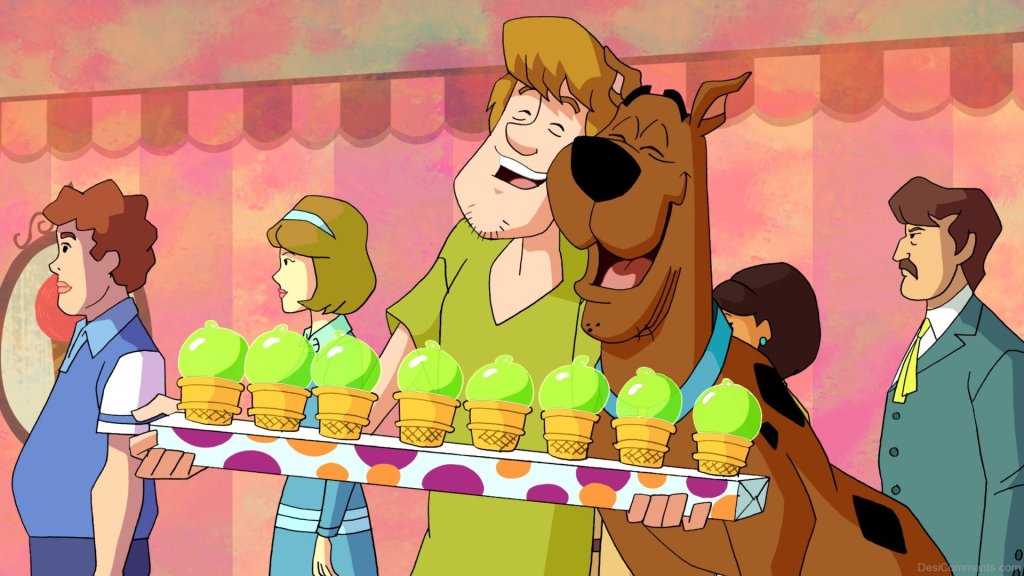
    Scooby and Shaggy never smoked weed onscreen; in fact, the folks at Hanna-Barbera never intended for the pair to be perceived as stoners. But we know what they were doing in the back of that van. The only question is, were Scooby snacks edibles or just his cure for the munchies?

    HONORABLE MENTIONS:

    Steve (Jon Lovitz) – Friends, “The One with the Stoned Guy”
    Andrew, Brian, and Claire – The Breakfast Club

    63 Awesome Albums From ’83, Vol. 2

    These albums are all turning forty this year. This list is in chronological order by release date and covers albums released between July and December 1983 (ICYMI, here’s volume one: https://peanut-butter-and-julie.com/2023/01/30/63-awesome-albums-from-83-vol-1/).

    • The Principle of Moments – Robert Plant

    CHART POSITION: #8 in the US, #7 in the UK, #10 in Australia, #1 in New Zealand

    SINGLES: “Big Log”, “In the Mood”, “Other Arms”

    MY FAVORITE TRACKS: All of the above, plus “Wreckless Love” and “Horizontal Departure”

    FUN FACT: Phil Collins played drums on five of the album’s eight tracks, including “In the Mood,” and former Jethro Tull drummer Barriemore Barlow performed on two. For the remaining song, “Big Log”, a drum machine called the Roland TR-808 provided the beat. The 808 was used extensively in the 1980s; you can hear it in singles like Marvin Gaye’s “Sexual Healing”, Whitney Houston’s “I Wanna Dance with Somebody (Who Loves Me), and “Going Back to Cali” by LL Cool J.

    • The Crossing – Big Country

    CHART POSITION: #18 in the US, #3 in the UK, #4 in Canada

    SINGLES: “Harvest Home”, “Fields of Fire”, “In a Big Country”, “Chance”

    MY FAVORITE TRACKS: All of the above, plus “Inwards” and “The Storm”

    FUN FACT: Big Country shared a producer – Steve Lillywhite – and an ethos with other socially conscious UK bands like U2, Simple Minds, and The Pogues. They were known for their bagpipe-like guitar sound, created using the MXR Pitch Transposer 129 Guitar Effect and an EBow, a device that alters a guitar’s sound. You can also hear the EBow on songs like “(Don’t Fear) the Reaper” by Blue Öyster Cult, The Church’s “Under the Milky Way”, Talking Heads’ “This Must Be the Place (Naive Melody)”, and R.E.M.’s “E-Bow the Letter”, which also namechecks the device.

    • No Parlez – Paul Young

    CHART POSITION: #79 in the US, #1 in six countries, including the UK, Sweden, Italy, and Germany

    SINGLES: “Iron Out the Rough Spots”, “Love of the Common People”, “Wherever I Lay My Hat”, “Come Back and Stay”, “Love Will Tear Us Apart”

    MY FAVORITE TRACKS: All of the above, plus “Ku Ku Kurama” and the title track

    FUN FACT: “Come Back and Stay” was written by Jack Lee, who also composed “Hanging on the Telephone”, a big hit for Blondie in 1978.

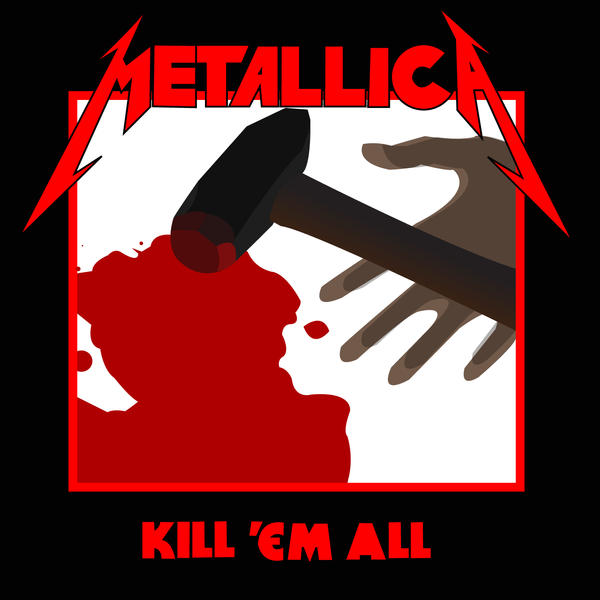
    • Kill ‘Em All – Metallica

    CHART POSITION: #155 in the US – but it didn’t enter the Billboard 200 until 1986, when the tragic death of bassist Cliff Burton in a tour bus accident boosted the band’s back catalog.

    SINGLES: “Whiplash” and “Jump in the Fire”

    MY FAVORITE TRACKS: I won’t pretend to be a Metallica fan (I’m just not a fan of the genre), but I appreciate their incredible talent and artistry.

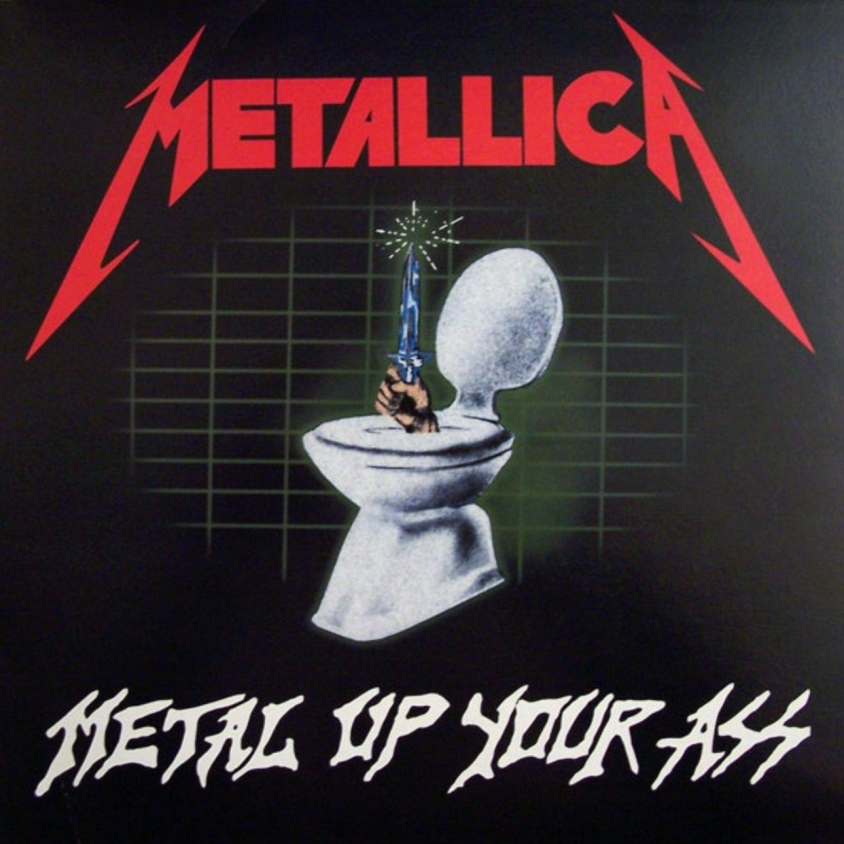
    FUN FACT: Kill ‘Em All‘s original title was Metal Up Your Ass; the proposed cover art was a hand clutching a dagger emerging from a toilet. The band took the label’s advice to change the title to something less potentially controversial but eventually sold t-shirts that used the Metal Up Your Ass artwork.

    • Good for Your Soul – Oingo Boingo

    CHART POSITION: N/A

    SINGLES: “Wake Up (It’s 1984)”

    MY FAVORITE TRACKS: “Who Do You Want to Be”, title track, “No Spill Blood”, “Sweat”, “Nothing Bad Ever Happens to Me”,

    FUN FACT #1: As a kid, bandleader (and future film composer) Danny Elfman demonstrated an aptitude for science – but not for music. He failed to make his elementary school’s orchestra because he showed “no propensity for music”.

    FUN FACT #2: “No Spill Blood” was inspired by 1932’s Island of Lost Souls, an adaptation of H.G. Wells’s novel The Island of Doctor Moreau. In the film, Charles Laughton plays Dr. Moreau, whose “House of Pain” is a laboratory for horrific experiments on human-animal hybrids. Bela Legosi portrays the “Sayer of the Law”, who recites Moreau’s laws (and ultimately rebels against the doctor). Wells’s dialogue “Not to go on all-fours; that is the Law. Are we not men?” inspired the “No Spill Blood” lyric “We walk on two legs not on four / To walk on four legs breaks the law / What happens when we break the law? / What happens when the rules aren’t fair? / We all know where we go from there! / To the house of pain!”

    • Madonna – Madonna

    CHART POSITION: #8 in the US, #6 in the UK

    SINGLES: “Everybody”, “Burning Up”, “Holiday”, “Lucky Star”, “Borderline”

    MY FAVORITE TRACKS: Just, all of them

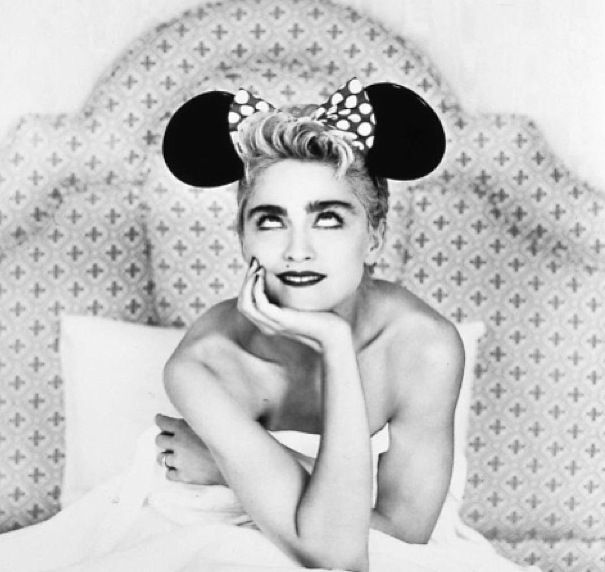
    FUN FACT: The album – and its creator – was dismissed as disco fluff by many critics, one of whom compared Madonna to “Minnie Mouse on helium”. Madonna later parodied the critique in a 1987 photoshoot with Herb Ritts because she is an absolute fucking boss.

    • Close to the Bone – Tom Tom Club

    CHART POSITION: #79 in the US, #31 in New Zealand, #42 in Sweden

    SINGLES: “Pleasure of Love” and “The Man with the 4-Way Hips”

    MY FAVORITE TRACKS: All of the above, plus “On the Line Again” and “Measure Up”

    FUN FACT: Tom Tom Club is the side project of married Talking Heads members Chris Frantz and Tina Weymouth, best known for the 1981 hit “Genius of Love”. That song has been sampled numerous times, most notably for Mariah Carey’s 1995 #1 smash hit “Fantasy”. Close to the Bone didn’t yield any hits in the US, but “The Man with the 4-Way Hips” reached #82 on the UK charts.

    • Burning from the Inside – Bauhaus

    CHART POSITION: N/A

    SINGLES: N/A

    MY FAVORITE TRACKS: “She’s in Parties”, “King Volcano”, “Slice of Life”, title track, “The Sanity Assasin”

    FUN FACT: Bauhaus (named for the German art school of the same name) broke up after the making of Burning from the Inside. Peter Murphy went on to have a successful solo career and Daniel Ash co-founded Tones on Tail and Love and Rockets.

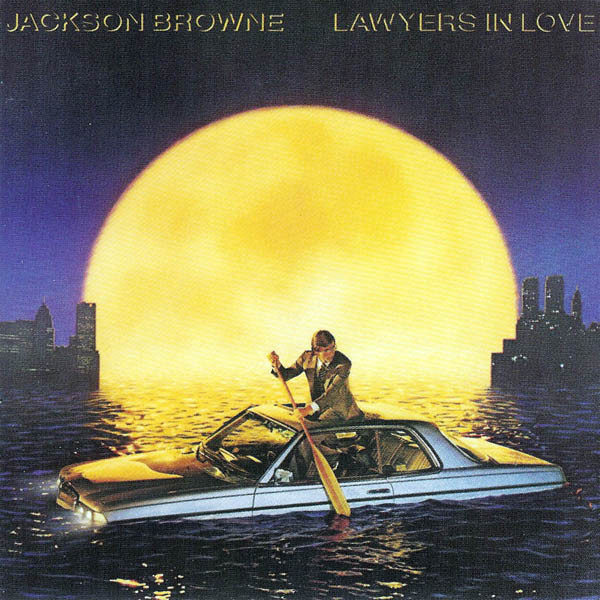
    • Lawyers in Love – Jackson Browne

    CHART POSITION: #30 in the US

    SINGLES: “Lawyers in Love”, “Tender is the Night”, “For a Rocker”

    MY FAVORITE TRACKS: All of the above, plus “Downtown” and “Say It Isn’t True”

    FUN FACT: The title track was Browne’s last US top-twenty hit, peaking at #13 on the Billboard Hot 100.

    • Punch the Clock – Elvis Costello and the Attractions

    CHART POSITION: #24 in the US, #3 in the UK

    SINGLES: “Everyday I Write the Book”, “Let Them All Talk”

    MY FAVORITE TRACKS: All of the above, plus “The Greatest Thing”, “Shipbuilding”, and “Charm School”

    FUN FACT: “Everyday I Write the Book” was Costello’s first US top-forty hit. The music video – featuring silent film clips and (inexplicably) Charles and Diana lookalikes – received significant airplay on MTV. Costello would later admit that he didn’t understand the reason for using Charles and Diana, which was apparently the director’s idea.

    • An Innocent Man – Billy Joel

    CHART POSITION: #4 in the US, #2 in the UK, #1 in New Zealand

    SINGLES: “Tell Her About It”, “Uptown Girl”, title track, “The Longest Time”, “Leave a Tender Moment Alone”, “Keeping the Faith”, “This Night”

    MY FAVORITE TRACKS: This isn’t my favorite Billy Joel album (that’d be The Stranger). I do appreciate the desire to revisit the music of one’s teen years (I’m literally doing that right now), but doo-wop was never my cup of tea to begin with.

    FUN FACT #1: “This Night” is credited on the album’s sleeve to L. v. Beethoven; the basis for the song’s chorus is Beethoven’s Sonata Pathétique.

    FUN FACT #2: An Innocent Man was nominated for Album of the Year at the 26th Grammy Awards. It lost – rightfully – to Michael Jackson’s Thriller, as did Let’s Dance and Synchronicity.

    • Construction Time Again – Depeche Mode

    CHART POSITION: #6 in the UK (didn’t chart in the US)

    SINGLES: “Everything Counts”, “Love, in Itself”

    MY FAVORITE TRACKS: All of the above, plus “Pipeline”, “The Landscape is Changing”, “And Then…”

    FUN FACT: “Get the Balance Right!”, one of my favorite DM tunes, was recorded during the Construction Time Again sessions and released as a single but didn’t make the album’s final cut. In the music video, the first two lines are sung by Alan Wilder, even though Dave Gahan provided the song’s vocals. Apparently, the video’s director assumed Wilder was the lead singer and the band didn’t want to embarrass him by pointing out his mistake.

    LOOK AT THESE BABIES
    • Bent Out of Shape – Rainbow

    CHART POSITION: #34 in the US, #11 in the UK, #3 in Japan

    SINGLES: “Street of Dreams”, “Can’t Let You Go”

    MY FAVORITE TRACKS: All of the above, plus “Fire Dance” and “Drinking with the Devil”

    FUN FACT: The music video for “Can’t Let You Go” was inspired by the 1920 German Expressionist silent film The Cabinet of Dr. Caligari, which Roger Ebert once called “the first true horror film”.

    • Mummer – XTC

    CHART POSITION: #51 in the UK, #145 in the US

    SINGLES: “Great Fire”, “Wonderland”, “Love on a Farmboy’s Wages”

    MY FAVORITE TRACKS: All of the above, plus “Beating of Hearts”, “Human Alchemy”, and “Funk Pop a Roll”

    FUN FACT: The album’s title and artwork reference the English Mummers’ plays I discussed in my drag post (ICYMI: https://peanut-butter-and-julie.com/2023/03/26/in-celebration-of-drag/?_thumbnail_id=15752).

    • Labour of Love – UB40

    CHART POSITION: #1 in the UK, New Zealand and the Netherlands, #39 (1983) and #14 (1988) in the US

    SINGLES: “Red Red Wine”, “Please Don’t Make Me Cry”, “Many Rivers to Cross”, “Cherry Oh Baby”

    MY FAVORITE TRACKS: All of the above, plus “Keep On Moving”, “Sweet Sensation”, “Version Girl”

    FUN FACT #1: UB40’s name is a reference to the acronym for Unemployment Benefit, Form 40, given to UK unemployment claimants.

    FUN FACT #2: Labour of Love made its way back onto the charts – and finally cracked the US top twenty – in 1988 after UB40 performed “Red Red Wine” at a 70th birthday celebration for Nelson Mandela, who at the time was still imprisoned in South Africa for the crime of being black.

    Why yes, I am annoyed by Ali Campbell’s gum-chewing
    During that same performance, UB40 shared the stage with Chrissie Hynde for “I Got You Babe”, which they had a hit with in 1985
    • Sports – Huey Lewis and the News

    CHART POSITION: #1 in the US, #23 in the UK, #22 in Australia

    SINGLES: “Heart and Soul”, “I Want a New Drug”, “The Heart of Rock & Roll”, “If This Is It”, “Walking on a Thin Line”

    MY FAVORITE TRACKS: All of the above, plus “Honky Tonk Blues”

    FUN FACT: “Heart and Soul” was written by Mike Chapman and Nicky Chinn, a songwriting team known for ’70s hits like “Ballroom Blitz” (The Sweet), “My Sharona” (The Knack), “Heart of Glass” (Blondie), and “Kiss You All Over” (Exile). Exile originally recorded “Heart and Soul” for their 1981 album of the same name, but the single failed to crack the Billboard Hot 100. Lewis’s version made it to #8 and earned the band a Grammy nomination.

    • More Fun in the New World – X

    CHART POSITION: #86 in the US

    SINGLES: “The New World”

    MY FAVORITE TRACKS: “The New World”, “We’re Having Much More Fun”, “Make the Music Go Bang”, “Devil Doll”

    FUN FACT: More Fun in the New World was the last X album produced by Ray Manzarek of the Doors. For their follow-up album (Ain’t Love Grand!), X worked with Michael Wagener, who is best known for his work with ’80s metal bands like Accept, Dokken, Great White, and White Lion.

    • What’s New – Linda Ronstadt & the Nelson Riddle Orchestra

    CHART POSITION: #3 in the US (it was kept off the top of the charts by Thriller and Lionel Richie’s Don’t Slow Down) #31 in the UK

    SINGLES: “What’s New”, “I’ve Got a Crush on You”, “Someone to Watch Over Me”

    MY FAVORITE TRACKS: All of the above, plus “I Don’t Stand a Ghost of a Chance”

    FUN FACT: Ronstadt first performed “I’ve Got a Crush on You” in a 1980 episode of The Muppet Show.

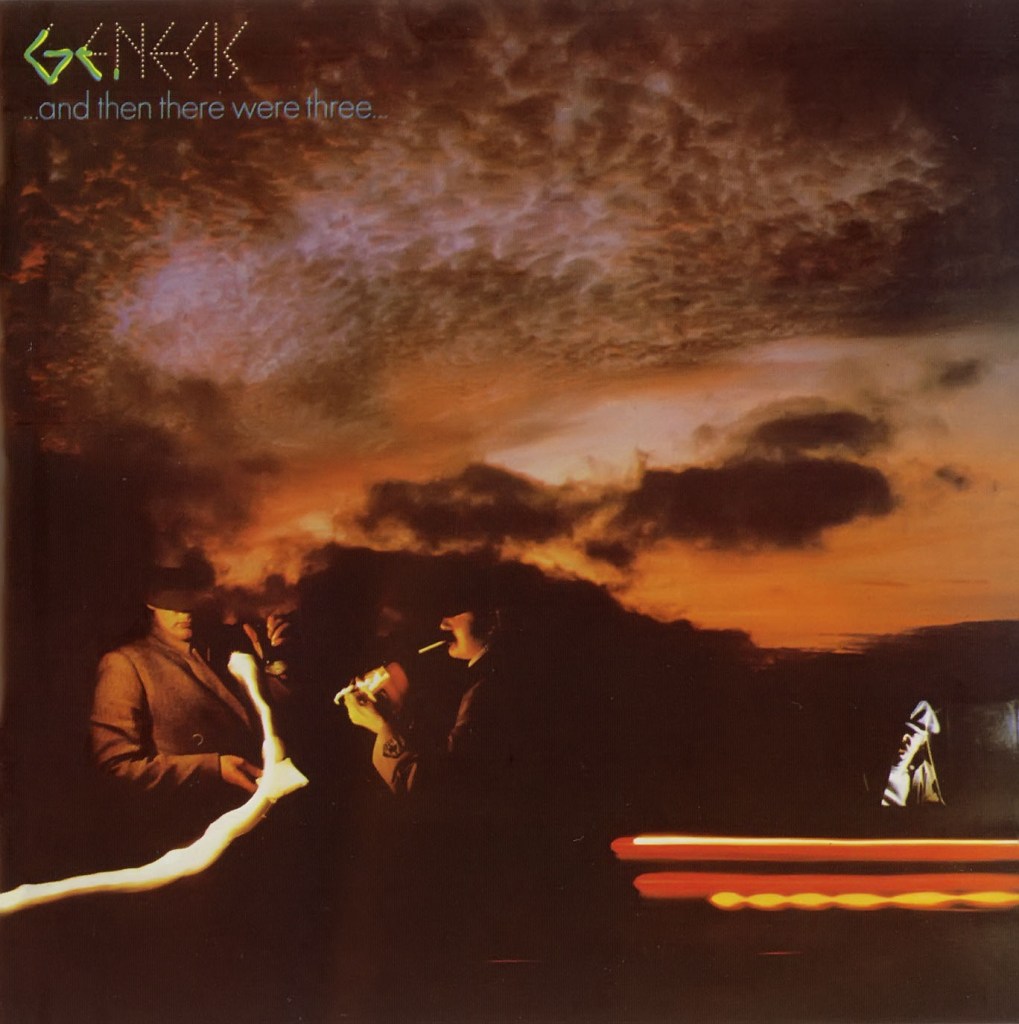
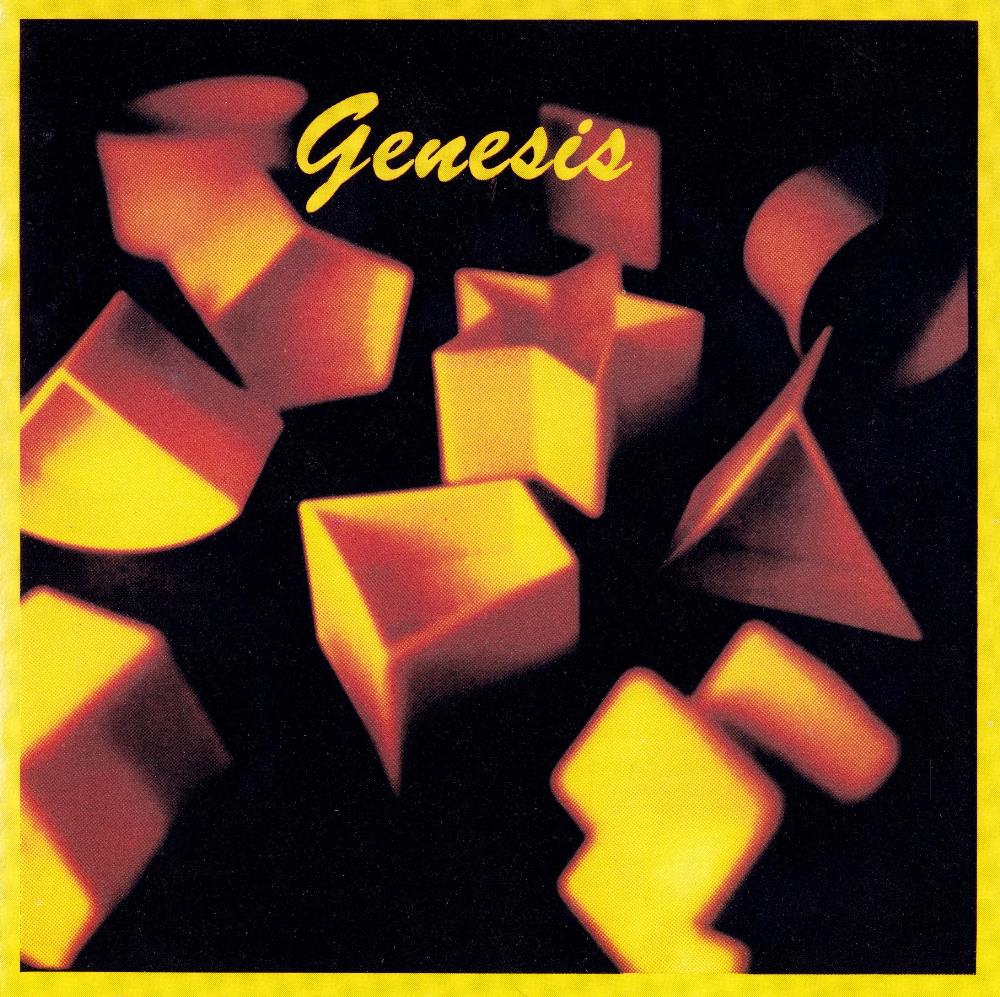
    • Genesis – Genesis

    CHART POSITION: #9 in the US, #1 in the UK, Germany, and Finland, top five in eight other countries

    SINGLES: “Mama”, “That’s All”, “Home by the Sea”, “Illegal Alien”, “Taking It All Too Hard”

    MY FAVORITE TRACKS: All of the above, plus “Silver Rainbow” and “It’s Gonna Get Better”

    FUN FACT: Genesis perfectly bridges the gap between the band’s progressive roots and its ’80s pop sensibilities; it’s my favorite Genesis album. A British reviewer credited the band with making “a Genesis album for people who normally hate Genesis.”

    I love this song so fucking much! It’s so dark and weird, which is how I felt in 1983.
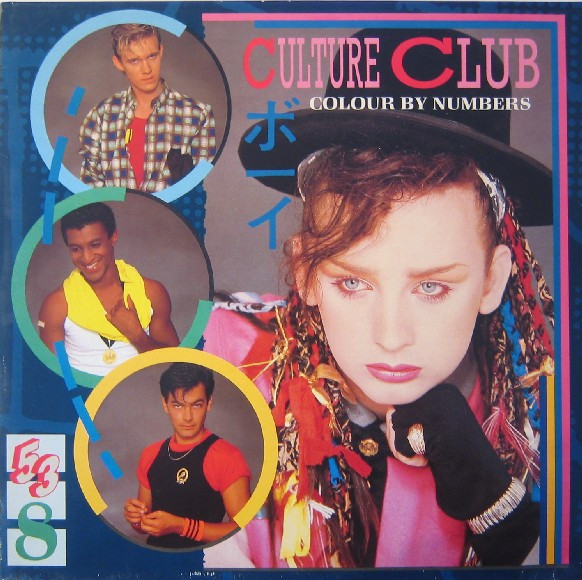
    • Colour By Numbers – Culture Club

    CHART POSITION: #1 in the UK, Australia, and Canada, #2 in the US (it was kept off the top of the chart by – you guessed it – Thriller)

    SINGLES: “Church of the Poison Mind”, “Karma Chameleon”, “Victims”, “Miss Me Blind”, “It’s a Miracle”

    MY FAVORITE TRACKS: All of the above

    FUN FACT #1: Colour By Numbers made the year-end charts in several countries, including the US (#5), Canada (#7), and Australia (#3), where it was also the 16th-best-selling album of the DECADE.

    “Karma Chameleon” was Culture Club’s only #1 in the US (it also went to #1 in the UK, where it was the biggest-selling single of 1983)

    FUN FACT #2: A lyric in “Miss Me Blind” – “I’m never really sure / If you’re just kissing to be clever” – is a reference to the title of Culture Club’s 1982 debut.

    • She’s So Unusual – Cyndi Lauper

    CHART POSITION: #4 in the US, top five in seven other countries (including Canada, Australia, and New Zealand)

    SINGLES: “Girls Just Want to Have Fun”, “Time After Time”, “She Bop”, “All Through the Night”, “Money Changes Everything”, “When You Were Mine”

    MY FAVORITE TRACKS: All of the above, plus “Yeah Yeah”

    FUN FACT #1: Annie Leibovitz photographed Lauper for the She’s So Unusual cover, which earned art director Janet Perr a Grammy Award for Best Recording Package.

    FUN FACT #2: “She Bop”, an ode to female masturbation with a be-bop back beat, was one of the “Filthy Fifteen”, fifteen pop and rock songs deemed offensive by Tipper Gore and the PMRC (for more on the PMRC, click here: https://peanut-butter-and-julie.com/2021/09/20/warning-pmrc-advisory/).

    Blueboy magazine was actually a gay men’s magazine. Apparently, someone left a copy at the recording studio, prompting Lauper’s attention and inspiring “She Bop”.
    • Soul Mining – The The

    CHART POSITION: #27 in the UK (it didn’t chart in the US)

    SINGLES: “Uncertain Smile”, “Perfect”, “This Is the Day”

    MY FAVORITE TRACKS: All of the above, plus “The Sinking Feeling”

    FUN FACT: The artwork for Soul Mining was done by frontman Matt Johnson’s brother Andrew, under the pseudonym Andy Dog. The typeface for the band’s iconic logo was created by Johnson’s girlfriend, graphic designer Fiona Skinner.

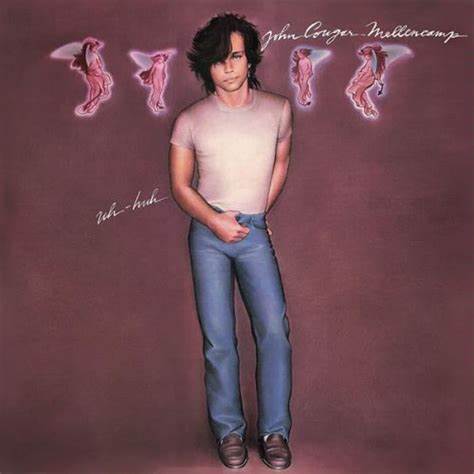
    • Uh-Huh! – John Cougar Mellencamp

    CHART POSITION: #9 in the US, #57 in Australia

    SINGLES: “Crumblin’ Down”, “Pink Houses”, “Authority Song”

    MY FAVORITE TRACKS: All of the above, plus “Playing Guitar” and “Lovin’ Mother Fo Ya”

    FUN FACT: “Crumblin’ Down” was the last song written for Uh-Huh! After listening to the album’s masters, Mellencamp felt he didn’t have a strong enough lead-off single. He contacted longtime songwriting partner George Green, with whom he’d collaborated on “Hurts So Good”. “Crumblin’ Down” was the first single Mellencamp released that credited his real name and not “Cougar”.

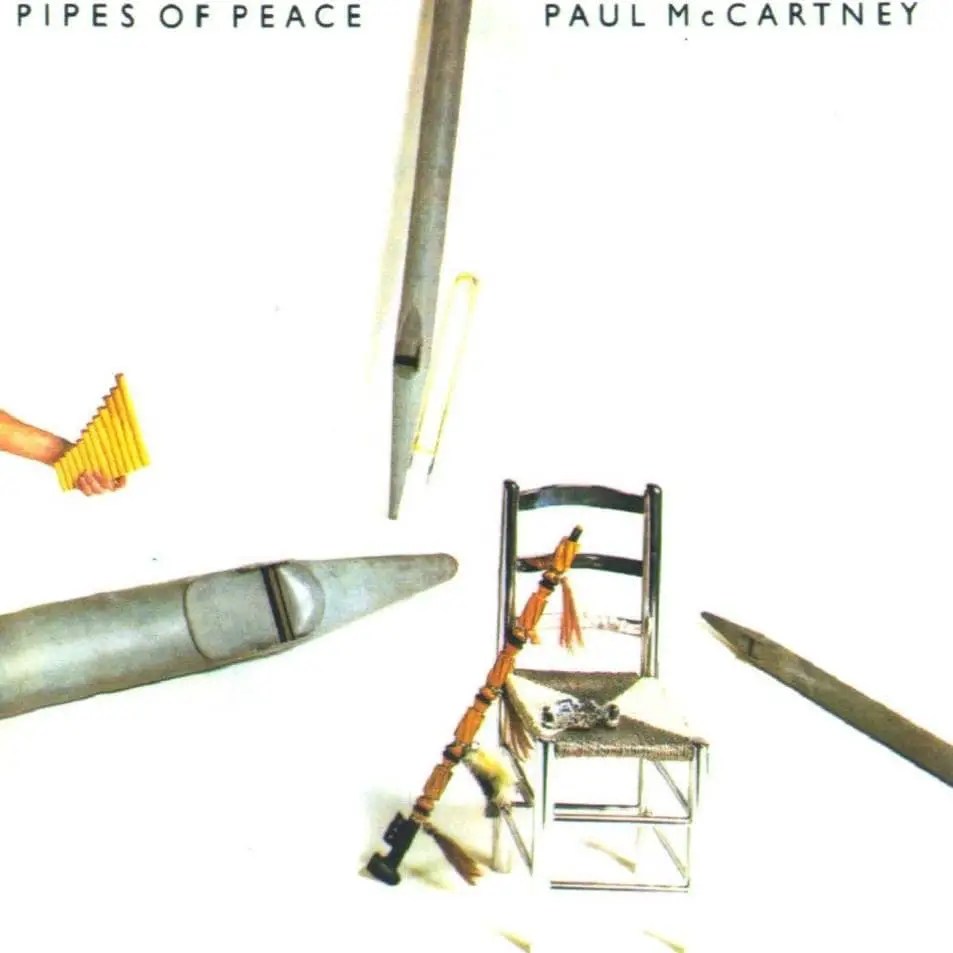
    • Pipes of Peace – Paul McCartney

    CHART POSITION: #15 in the US, #4 in the UK, #9 in Australia

    SINGLES: “Say Say Say” (duet with Michael Jackson) and the title track

    MY FAVORITE TRACKS: All of the above, plus “Keep Under Cover”, “The Man” (another duet with Jackson), “Through Our Love”

    FUN FACT: Much of Pipes of Peace was recorded during the sessions for McCartney’s previous album, Tug of War, so it feels a little like leftovers – more of the same, not quite as good, but more satisfying than cooking a whole new meal. The presence of Michael Jackson lent this project an extra helping of good will. Anyway, I’ll always show up for a former Beatle.

    • Hearts and Bones – Paul Simon

    CHART POSITION: #35 in the US, #34 in the UK

    SINGLES: “Allergies” and “Think Too Much”

    MY FAVORITE TRACKS: All of the above, plus “Hearts and Bones”, “Train in the Distance”, “René and Georgette Magritte with Their Dog after the War”

    FUN FACT #1: “Hearts and Bones” was inspired by Simon’s relationship with Carrie Fisher. I particularly love the opening lyric: “One and one-half wandering Jews / Free to wander wherever they choose”. Fisher and Simon divorced in 1984 and after a period of depression, Simon took a trip to Johannesburg, South Africa, where the seeds of his next album – Graceland – would be sown.

    FUN FACT #2: “René and Georgette Magritte with Their Dog after the War”, probably my favorite track on Hearts and Bones, was inspired by a photograph (below) of the surrealist painter and his mate taken by Lothar Wolleh (though the photo was taken in the 1960s).

    • Rebel Yell – Billy Idol

    CHART POSITION: #6 in the US, #36 in the UK

    SINGLES: “Rebel Yell”, “Eyes Without a Face”, “Flesh for Fantasy”, “Catch My Fall”

    MY FAVORITE TRACKS: All of the above, plus “(Do Not) Stand in the Shadows”

    FUN FACT: Several years before I struggled through two semesters of college French, “Les yeux sans visage” (“Eyes without a face”) was one of the first French phrases I ever learned, thanks to Billy Idol. The lyric is actually the name of a French-language horror film about a plastic surgeon attempting to give his daughter a face transplant after she is disfigured in an auto accident.

    “Eyes Without a Face” provides the soundtrack to snippets of 1960’s Les Yeux sans Visage in this YouTube clip from Music Video Vault
    • 90125 – Yes

    CHART POSITION: #5 in the US, #16 in the UK

    SINGLES: “Owner of a Lonely Heart”, “Leave It”, “It Can Happen”

    MY FAVORITE TRACKS: All of the above, plus “Changes” and “City of Love”

    FUN FACT: 90125, named for its Atco Records catalog number, is Yes’s best-selling album in the US. Sales were augmented by the success of “Owner of a Lonely Heart” and its Storm Thorgerson-directed music video, which went into regular rotation on MTV; the single was the band’s only US #1.

    This video freaked me out in 1983, and I’ll be honest, it is fairly disturbing to me in 2023, as well (content warning for creepy crawly creatures and a visual reference to suicide)
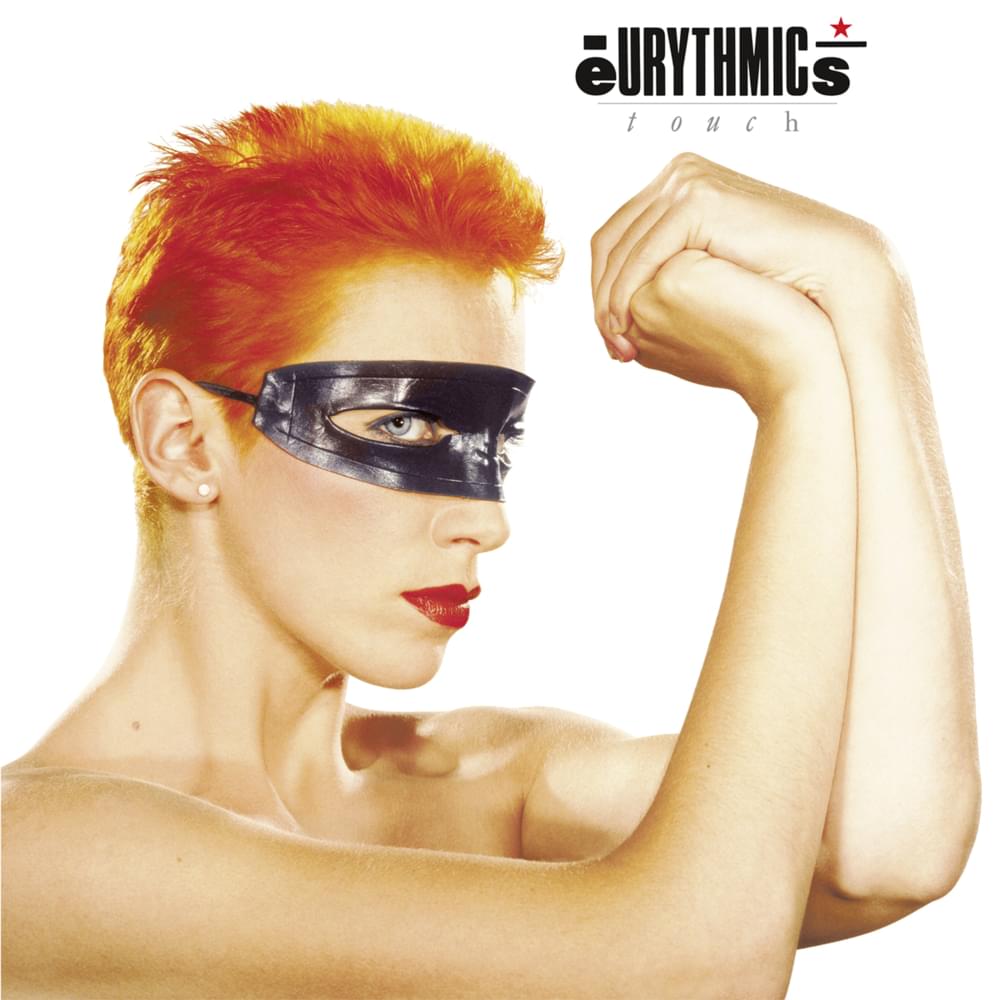
    • Touch – Eurythmics

    CHART POSITION: #1 in the UK and New Zealand, #7 in the US, #4 in Australia

    SINGLES: “Who’s That Girl?”, “Right by Your Side”, “Here Comes the Rain Again”

    MY FAVORITE TRACKS: Just, all of them. Seriously, I can’t choose. The combination of Annie Lennox’s soulful voice and Dave Stewart’s crisp synths remain a match made in synth-pop heaven.

    FUN FACT #1: As mentioned in volume one of this post, this is Eurythmics’ second album on the list – Sweet Dreams (Are Made of This) was released in January. In 2012, Rolling Stone placed Touch at #492 on its list of “The 500 Greatest Albums of All Time”.

    FUN FACT #2: Lennox and Stewart actually met in 1976; the two were in a band called the Tourists, who had a top-ten UK hit in 1979 with a cover of Dusty Springfield’s “I Only Want to Be with You”. The Tourists broke up in 1980 (as did Lennox and Stewart’s romantic relationship), but the pair wanted to continue their musical partnership. Eurythmics assumed the Tourists’ recording deal with RCA and their first album, In the Garden, was released in 1981.

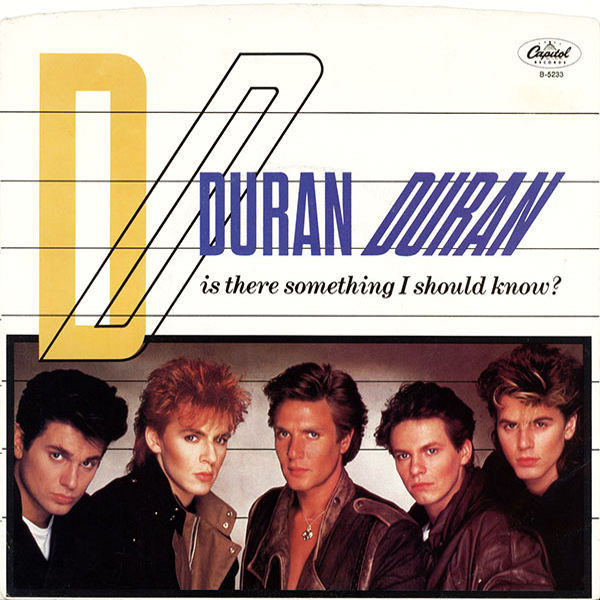
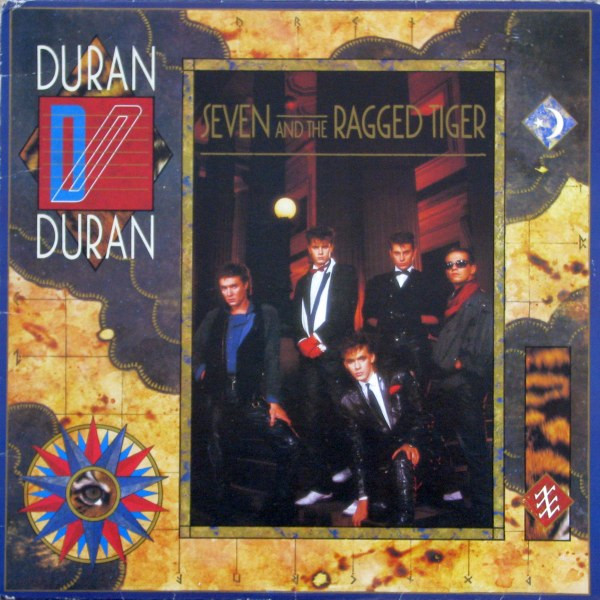
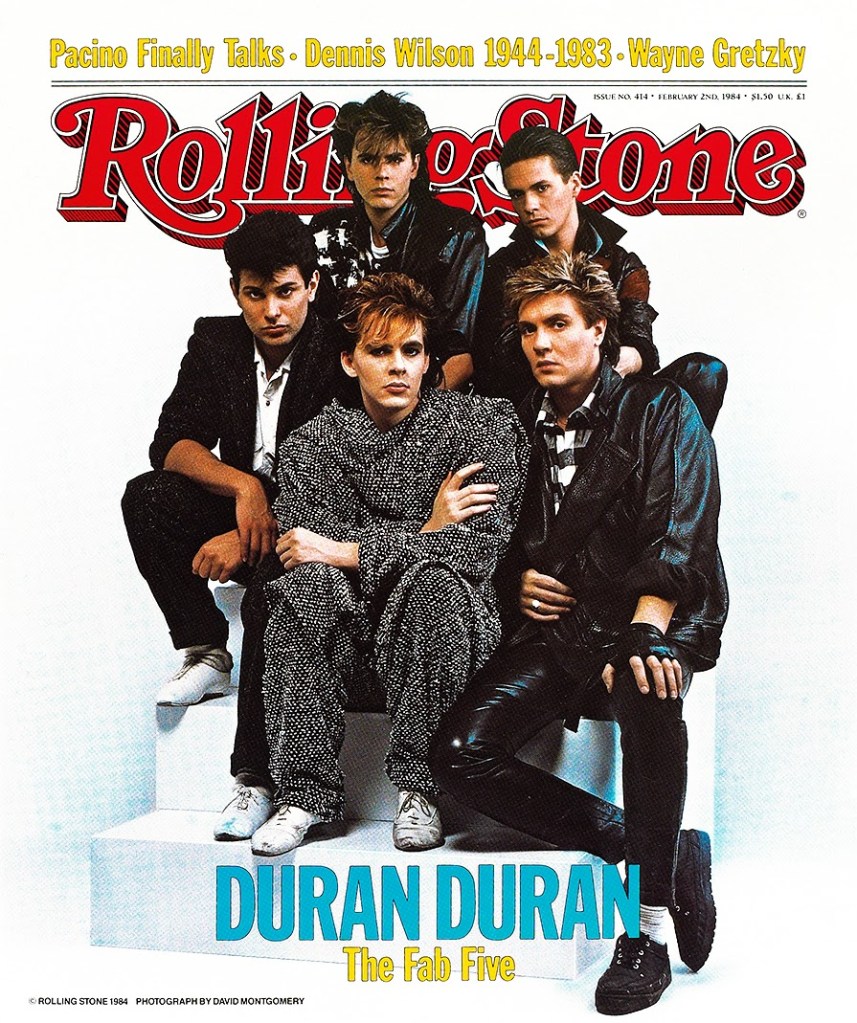
    • Seven and the Ragged Tiger – Duran Duran

    CHART POSITION: #8 in the US (where it was also the tenth best-selling album of 1984), #1 in the UK and the Netherlands, #2 in Australia, top twenty in nine other countries

    SINGLES: “The Union of the Snake”, “New Moon on Monday”, “The Reflex”

    MY FAVORITE TRACKS: All of the above, plus “I Take the Dice”, “Of Crime and Passion”, “Shadows on Your Side”, “The Seventh Stranger”

    FUN FACT #1: There probably isn’t a way to put into words what Duran Duran meant – and still mean – to me. My friends and I pored over every lyric and scoured the racks at the indie record store, searching for the imports and 12-inch singles you couldn’t find at the chains. My love affair with the band has never wavered, but it certainly reached its peak in 1983. I don’t know if I’ve ever anticipated an album as much as I did Seven and the Ragged Tiger. Obviously, I wanted it as soon as it was available, but my parents were reluctant to drive me into Ann Arbor on a weeknight (which, as an adult, I TOTALLY understand), so I had to call the store and verify they had it. I’ll never forget how the sales associate answered the phone: “Thank you for calling Record Town, where we have the new Duran Duran album, how can I help you?” Clearly, I was not the first 14-year-old whose parents made them call.

    FUN FACT #2: “The Reflex”, buoyed by a Nile Rodgers-produced remix, was Duran Duran’s first US #1 single. It was one of two songs – the other being Prince’s “When Doves Cry” – that kept Bruce Springsteen’s “Dancing in the Dark” from topping the charts. Rodgers later co-founded The Power Station with Robert Palmer and D2 members John Taylor and Andy Taylor.

    I love that in a Mad Max-style post-apocalyptic wasteland, the lads still have perfectly coiffed hair
    The scene at the end of the band dancing is CRINGE and they agree, with Nick Rhodes and Andy Taylor confirming in separate interviews that “New Moon on Monday” is Duran Duran’s least-favorite music video
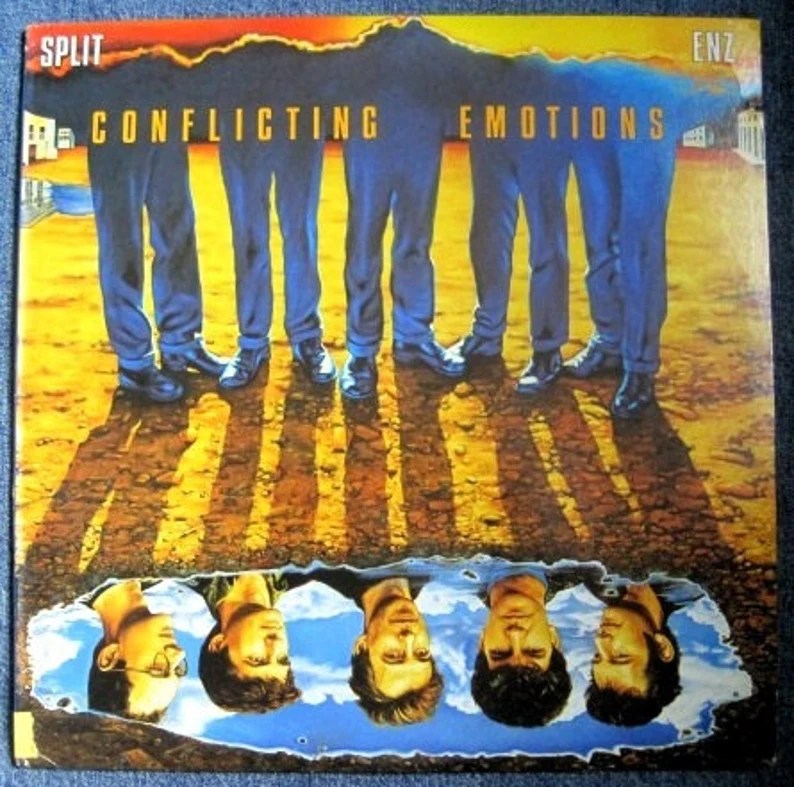
    • Conflicting Emotions – Split Enz

    CHART POSITION: #3 in New Zealand, #13 in Australia, #137 in the US

    SINGLES: “Strait Old Line”, “Message to My Girl”, “I Wake Up Every Night”

    MY FAVORITE TRACKS: All of the above, plus “Our Day” and “The Devil You Know”

    FUN FACT: Split Enz were best known for their 1981 single “I Got You”, which went to #1 in Australia and the band’s native New Zealand and #53 in the US. Escalating tensions between bandmates – and brothers – Tim and Neil Finn meant that Conflicting Emotions was aptly titled. In fact, Split Enz would break up the following year. Neil went on to form Crowded House, one of my favorite bands of the ’80s and ’90s.

    Drummer Paul Hester, who later co-founded Crowded House with Neil Finn, joined Split Enz just in time to feature in the “Message to My Girl” video
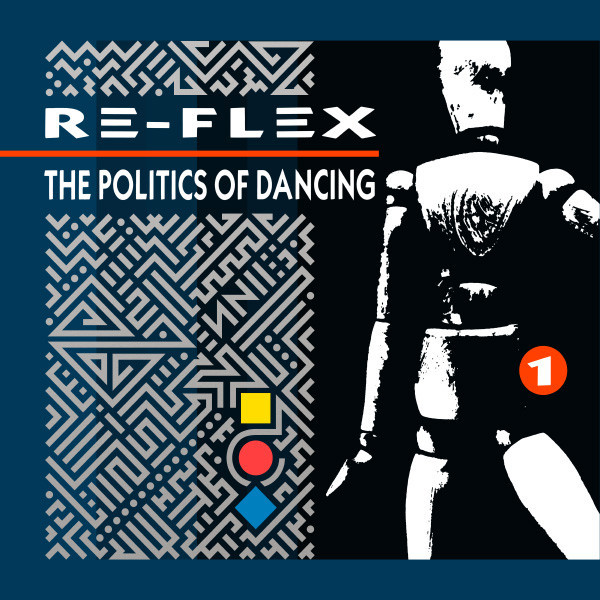
    • The Politics of Dancing – Re-Flex

    CHART POSITION: #53 in the US

    SINGLE/MY FAVORITE TRACK: “The Politics of Dancing”

    FUN FACT: There were, inexplicably, five more singles released from The Politics of Dancing, but none of them made an impact. Re-Flex’s follow-up album, Humanication, was planned for 1985 but the band parted ways with EMI and it sat on a shelf for 25 years. But if you’re going to be remembered as a one-hit wonder, you could do a lot worse than “The Politics of Dancing”. I was really into the new romantics at the time (Duran Duran and Spandau Ballet, specifically), and synth-pop in general, and Re-Flex fit right into that niche. Anyway, don’t take my word for it. In a sign the single was destined for immortality, “The Politics of Dancing” was featured in a key scene in 2017’s Atomic Blonde, almost thirty-five years after its release.

    • Bark at the Moon – Ozzy Osbourne

    CHART POSITION: #19 in the US, #24 in the UK

    SINGLES: “Bark at the Moon”, “So Tired”

    MY FAVORITE TRACKS: “Bark at the Moon”, “Rock ‘n’ Roll Rebel”, “Centre of Eternity”, “Slow Down”

    FUN FACT: The music video for “Bark at the Moon” features Osbourne as a mad scientist who transforms, Jekyll and Hyde-style, into the werewolf depicted on the album’s cover. The creature makeup was done by seven-time Oscar winner Rick Baker, who also did the makeup for Michael Jackson’s “Thriller” video.

    __________________________________________________________________________________________

    After completing this volume, I compiled a list of my top-tier albums of 1983; the albums I listened to regularly then that have also stood the test of time for me. I landed on a top twelve; I couldn’t narrow it down further (my blog, my rules).

    1. Seven and the Ragged Tiger – Duran Duran
    2. Genesis – Genesis
    3. Murmur – R.E.M.
    4. Madonna – Madonna
    5. Synchronicity – The Police
    6. War – U2
    7. Violent Femmes – Violent Femmes
    8. Touch – Eurythmics
    9. Too Low for Zero – Elton John
    10. Good For Your Soul – Oingo Boingo
    11. She’s So Unusual – Cyndi Lauper
    12. Naked Eyes – Naked Eyes

    Here is the final 1983 playlist. It is absurdly long, but I’m a completist, so here you go:

    Here’s an abbreviated, (roughly) singles-only version of the playlist, for those of you who aren’t completists:

    Radio Free R.E.M.

    Forty years ago today, R.E.M. released their first full-length album, Murmur, and my life would never be the same. Widely regarded as one of the best albums of the 1980s – and one of the greatest debuts of all time – Murmur was a game-changer.

    R.E.M. got their start in 1980 in Athens, Georgia. In January of that year, Michael Stipe met Peter Buck at Wuxtry Records, where Buck was an employee. Both University of Georgia students, the two bonded over a shared love of proto-punk artists like Television and The Velvet Underground. Through a mutual friend, Stipe and Buck met Mike Mills and Bill Berry, who had known each other since high school, and the quartet started rehearsing together in an abandoned church. The newly minted R.E.M. (legend has it that Stipe chose the name out of the dictionary at random) played their first gig on April 5th – the mutual friend’s birthday party.

    Success for R.E.M. came quickly in Athens, and the band began touring all over the south. An R.E.M. show in Chapel Hill, North Carolina, so impressed a record store clerk named Jefferson Holt, he moved to Athens to manage the band. In April, 1981 – just a year after they played their first gig together – R.E.M. recorded their first single, “Radio Free Europe”, followed by an EP called Chronic Town in October of that year.

    I.R.S. Records, impressed with a Chronic Town demo, signed the band in May, 1982. R.E.M. entered the studio on January 6, 1983, to begin recording their debut LP. Included in the sessions was a re-recording of “Radio Free Europe”, which would become Murmur‘s first single. I honestly had never heard the original recording of the song until just now, and it’s remarkable: faster, punkier and far less polished, it demonstrates the raw potential of an extraordinary band in its infancy.

    Original 1981 Recording
    Murmur version

    I heard “Radio Free Europe” on my local college radio station (Ann Arbor’s WCBN FM-88.3), and I was gobsmacked. I bought Murmur as soon as I could, and listened to it until the grooves wore out. The music, with its jangly guitar, melodic basslines, and Stipe’s mumbly vocal style and cryptic lyrics, was unlike anything I’d heard before (or since, if I’m being perfectly honest). It was a refreshing change of pace from the polished pop, bombastic rock and synth-heavy new wave of the time period. For reference, here are the top ten singles on the Billboard Hot 100 from the week Murmur was released:

    1. Billie Jean – Michael Jackson
    2. Come On Eileen – Dexy’s Midnight Runners
    3. Mr. Roboto – Styx
    4. Jeopardy – Greg Kihn Band
    5. Beat It – Michael Jackson
    6. Hungry Like the Wolf – Duran Duran
    7. One on One – Hall and Oates
    8. Separate Ways (Worlds Apart) – Journey
    9. Der Kommissar – After the Fire
    10. Do You Really Want To Hurt Me – Culture Club

    Don’t get me wrong, there are some bangers here – the only song on this list that I actively dislike is “Jeopardy”, but even that yielded this stone-cold classic from Sir Alfred Yankovic, so I can’t hate on it too much.

    The point is, nothing on this – or any other – list sounds quite like R.E.M. They sounded completely fresh, yet utterly timeless. Listening to Murmur again now, I can’t get over how innovative it still feels. And though Murmur didn’t end up being R.E.M.’s best album (I’d argue that title belongs to Automatic for the People, but this band’s discography is an embarrassment of riches), it is their most important album. R.E.M. remains one of my favorite artists, and they are a perfect example of a band that has achieved incredible success while consistently maintaining their authenticity.

    Iconic Pop Culture Siblings

    This post is dedicated to my favorite siblings, Dianne and Barbara.

    Happy National Siblings Day, y’all! In honor of the occasion, here is a selection of iconic pop culture siblings and, as always, a few of my favorites.

    • The March sisters – Little Women

    We’re on a first name basis with the March girls: Meg, Jo, Beth, and Amy. From the beloved 1868 Louisa May Alcott novel to the numerous adaptations, including three Oscar-winning feature films, generations have grown up with the sisters.

    • Monica and Ross Geller – Friends

    The relationship between the Geller siblings provided Friends with some of its funniest moments, but at its core, their relationship was built on mutual love and respect – and the occasional sibling rivalry.

    Fun fact: Monica is Ross’s younger sister but in real life, Courteney Cox is two years older than David Schwimmer.

    • Lindsay and Sam Weir – Freaks and Geeks

    In a refreshingly candid series like Freaks and Geeks, it’s no surprise to find a sibling pair as heartwarming and hilarious as Lindsay and Sam Weir. I’ve professed my undying love for this lovely little one-season wonder before – and I’ll do it again. If you’ve never seen this gem of a show, do yourself a favor and check it out (you can stream it on Hulu and Paramount Plus).

    • The Bennet sisters – Pride and Prejudice

    Another set of iconic pop culture sisters – Jane, Elizabeth, Mary, Kitty, and Lydia Bennet – made their first appearance in Jane Austen’s 1813 literary classic. Notable adaptions include a 1995 BBC production and the beloved 2005 film version for which Keira Knightley received a Best Actress Oscar nomination.

    Fun fact: Bridget Jones’s Diary is one of many loose adaptations of Pride and Prejudice. Colin Firth, who played Mr. Darcy in the 1995 BBC miniseries, also portrayed Mark Darcy in the Bridget Jones trilogy.

    • Lucas and Erica Sinclair – Stranger Things

    On a series full of sibling pairs – Mike and Nancy Wheeler, Will and Jonathan Byers, creators Ross and Matt Duffer – the one that stands out for me is Lucas and Erica Sinclair. Sarcastic and whip smart, Erica is her big brother’s nemesis early on, until the gang recruits her for D & D and, later, monster hunting.

    A typical Lucas/Erica exchange, from the season three premiere
    • Elliott, Michael, and Gertie – E.T. the Extra-Terrestrial

    The magic of E.T. isn’t just the special effects; it’s the combination of writing, directing, casting, and acting that gave us one of the most believable families in cinema history. The three siblings share an awfully big secret – there’s an alien living in their bedroom closet – but their relationship is grounded in relatable sibling dynamics.

    Fun fact: Among the actresses who auditioned for the role of Gertie were Juliette Lewis and Sarah Michelle Gellar. I love them both, but I can’t imagine anyone but Drew Barrymore in the role.

    The cast had an adorable reunion last year on Barrymore’s talk show, in honor of the film’s 40th anniversary
    • HAIM

    Este, Danielle, and Alana Haim are multi-talented songwriters, vocalists, instrumentalists, and all-around badasses (Alana also made a splash – and earned BAFTA and Golden Globe nominations – for her role in Paul Thomas Anderson’s Licorice Pizza). HAIM is one of my favorite musical artists of the past ten years, just pure pop perfection.

    I’ve watched this at least a dozen times, and I’ll never be over how fucking awesome it is
    • The Brothers Gibb

    The Gibbs – Barry, twins Robin and Maurice, and baby brother Andy – have been serenading audiences since the 1950s, when the three eldest brothers formed their first band, the Rattlesnakes. The Bee Gees sold more than 220 million albums and achieved icon status with the release of the Saturday Night Fever soundtrack. Barry, the sole living Gibb brother, is still recording and performing.

    I made this playlist in 2021 to celebrate Barry’s 75th birthday
    • Sparks

    Ron and Russell Mael – better known as Sparks – have been making some of rock’s weirdest music for more than fifty years. The brothers have steadfastly defied categorization, moving from art rock to glam to synth pop – and back again. The duo’s latest single, released in March, is titled “The Girl Is Crying in Her Latte”; the music video features Oscar winner Cate Blanchett.

    “I Predict” was my introduction to Sparks, and the first of their singles to hit the Billboard Hot 100
    Their duet with Go-Go Jane Wiedlin was also a minor hit
    I love this so much
    • Wednesday and Pugsley Addams

    This iconic sibling pair was created by Charles Addams for The New Yorker; they’ve appeared in numerous adaptations since their first appearance in 1938, including a beloved 1960s sitcom, an animated series, a film series, a live musical, and most recently, the Netflix series Wednesday.

    For many, the favorite Wednesday/Pugsley combo is from the 1991 feature film and its sequel (Christina RIcci and Jimmy Workman)
    • Dottie Hinson and Kit Keller – A League of Their Own

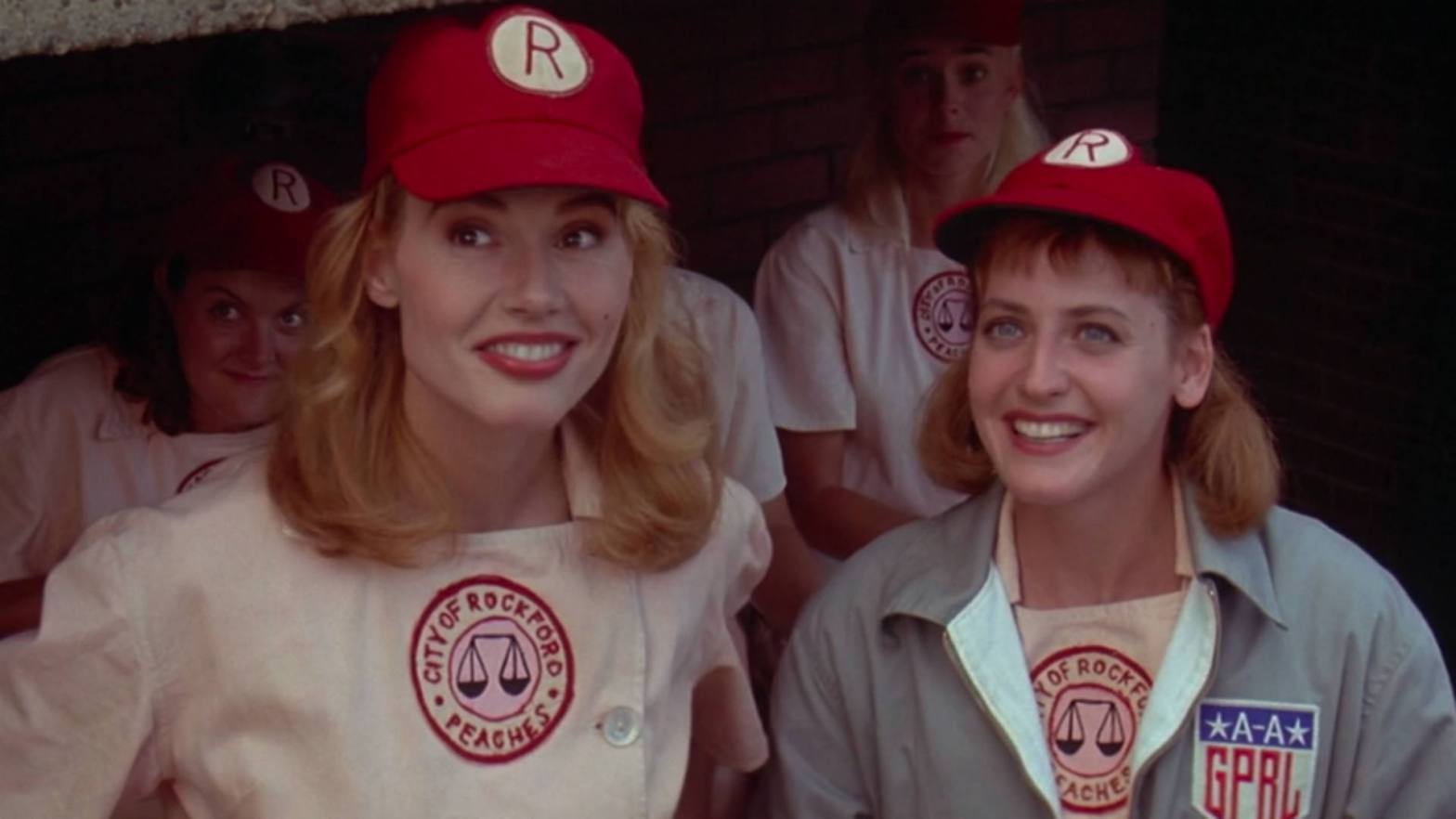
    Yes, A League of Their Own is about the members of the All-American Girls Professional Baseball League. But at its heart, the beloved film is about two sisters: Dottie, the older and worldlier of the two, ready to settle down and have kids with her GI husband, and Kit, her feisty baby sister. I’ve always loved the chemistry between Geena Davis and Lori Petty; the rivalry feels authentic and earned but at the end of the day, their affection for each other shines through.

    Fun fact: A League of Their Own is the most successful baseball movie in history. In fact, it’s made as much at the box office as Field of Dreams and Bull Durham combined.

    • Alex and Maia Shibutani

    Known collectively as the “Shib sibs”, Alex and Maia are eight-time US medalists, two-time Olympians (they placed 9th at the Sochi games and 3rd in Pyeongchang), and three-time World medalists. They are absolute cutie pies, but most importantly, they are amazing skaters. I heart these two.

    • The Pointer Sisters

    June, Ruth, and Anita Pointer are one of the most successful sibling pop vocal groups ever, earning thirteen top-twenty hits in the US and winning three Grammy Awards (sister Bonnie left the group in 1978 to pursue a solo career). The trio reached the height of their success in the early 1980s with the albums So Excited! and Break Out. Anita and Bonnie are no longer with us, but Ruth is still performing as the Pointer Sisters with her daughter Issa and her granddaughter Sadako.

    The best thing about ’80s videos is how they could ironically juxtapose lyrics about sex with literal long jumpers
    • The Brady kids – The Brady Bunch

    No list of pop culture siblings would be complete without the musical Brady children: Greg, Marcia, Peter, Jan, Bobby, and Cindy.

    • Ann and Nancy Wilson

    Ann Wilson was a founding member of Heart; younger sister Nancy joined the band in time for its 1975 debut, Dreamboat Annie. Though they made their best music in the 1970s, they experienced a commercial resurgence in the late ’80s and early ’90s. They formed a side gig, The Lovemongers, to record a blistering remake of Led Zeppelin’s song “The Battle of Evermore” for the soundtrack to the movie Singles, directed by Nancy’s then-husband Cameron Crowe.

    For more on Heart – and other badass women of rock – click here: https://peanut-butter-and-julie.com/2022/12/01/badass-women-of-rock/.

    • The Wonder Twins

    I grew up in the 1970s, the golden age of Saturday morning cartoons, and the various iterations of the Super Friends/Justice League hour was one of my favorites. I particularly loved the shape-shifting superheroes-in-training Zan and Jayna, AKA the Wonder Twins. The twins’ powers were hilariously specific: Zan could only transform into some form of water and Jayna could only become an animal. When they fist-bumped to activate their powers, I couldn’t wait to hear what weird combo it would be.

    Fun fact: Zan and Jayna’s personalities were inspired by another iconic sibling pair, Donny and Marie Osmond.

    • The Von Trapp kids – The Sound of Music

    And finally, from my all-time favorite movie musical, the Von Trapp children: Liesl, Friedrich, Louisa, Kurt, Brigitta, Marta, and Gretl. Nothing else needs to be said:

    I had intended this post to be longer, but I ran out of time and had to make some cuts (the Cusacks, A Wrinkle in Time‘s Meg and Charles Wallace Murry, the Coen brothers, and the Sanderson sisters from Disney’s Hocus Pocus, among others). Perhaps I’ll do a volume two at some point. In the meantime, I’d love to hear from y’all: who are YOUR favorite pop culture siblings?

    Quick Hits: April 5

    • The other night, hubby and I finished watching a PBS docuseries titled The U.S. and the Holocaust. Directed by Ken Burns, Lynn Novick, and Sarah Botstein, the series takes an unflinching look at the human toll of the Nazis’ “Final Solution” and how the United States, desperate to maintain neutrality in the early years of WWII, failed to do anything to help the millions of European Jews our government knew were in peril. The U.S. and the Holocaust makes excellent use of voiceover, not only the narration by Burns’ longtime collaborator Peter Coyote, but guest stars including Meryl Streep (who provides the voice for Eleanor Roosevelt), Paul Giamatti, Joe Morton, and Bradley Whitford. The series also incorporates stunning archival footage and interviews with Holocaust survivors such as Eva (Geiringer) Schloss, a childhood friend of Anne Frank’s. The U.S. and the Holocaust is not an easy watch, nor should it be. The series ends by convincingly connecting the dots between Nazi Germany and a recent rise in fascism and antisemitism here in the U.S. If you have access to PBS’s catalog, I highly recommend this series, which holds a 100% rating and an audience score of 83% on Rotten Tomatoes.
    Obviously, this series has a content warning for antisemitism, genocide, war, and other atrocities
    • I also just finished watching a Showtime true crime docuseries called Buried, which covers a case I was unfamiliar with. Twenty years after her best friend Susan Nason was murdered, Eileen Franklin suddenly remembered what her conscious mind had tucked away – that her father had committed the crime. The controversial case was the first instance of a recovered memory being used as evidence in a criminal prosecution. Buried is an absolutely fascinating look at generational trauma and the power of memory.
    • A Place in the Sun, directed by George Stevens and starring Montgomery Clift and Elizabeth Taylor, premiered at the Cannes Film Festival on this day in 1951. Based on the 1925 Theodore Dreiser novel An American Tragedy – and loosely based on the real-life 1906 murder of Grace Brown – A Place in the Sun went on to win six Academy Awards, including Best Director, as well as the first ever Golden Globe for Best Motion Picture – Drama.
    • Japanese electronic music pioneer and Oscar-winning film composer Ryuichi Sakamoto has died at the age of 71. His BAFTA-winning score for Merry Christmas, Mr. Lawrence is a personal favorite of mine; he earned his Oscar four years later – along with a Golden Globe and a Grammy – for Bernardo Bertolucci’s The Last Emperor. Among the other films Sakamoto scored are The Sheltering Sky, Little Buddha, Snake Eyes, and The Revenant. He also composed music for the 1992 Barcelona Summer Olympics.
    One of Sakamoto’s most popular – and beautiful – tracks, “Bibo no Aozora”, plays over the final scene in 2006’s Babel
    • On this day in 1965, the 37th Academy Awards were held at the Santa Monica Civic Auditorium. It was the only time in Oscar history that three films were each nominated for at least twelve awards (Mary Poppins with 13, My Fair Lady and Becket with 12). My Fair Lady was the night’s big winner, with eight awards, but the highlight was Julie Andrews – who had originated the role of Eliza Doolittle on Broadway but was passed over for the film adaptation in favor of established star Audrey Hepburn – taking home the Best Actress prize for her debut, Mary Poppins (Hepburn, whose singing was dubbed by Marti Nixon without her knowledge, wasn’t even nominated).
    ” I know you Americans are famous for your hospitality, but this is really ridiculous”
    • Hulu’s Tiny Beautiful Things, based on the book by Cheryl Strayed, premieres this Friday. The glorious Kathryn Hahn stars as Clare, an advice columnist whose personal life is falling apart. Emmy winner Merritt Wever co-stars as Clare’s mom in flashbacks. I haven’t read the source material, but the series is getting fantastic reviews and honestly? I’d watch Kathryn Hahn in literally anything. I’m in.
    • Also coming soon (April 14th) is Apple TV’s The Last Thing He Told Me, which is based on the novel of the same name by Laura Dave and stars Jennifer Garner as a woman unraveling the mystery of her husband’s disappearance. The supporting cast includes Mare of Easttown‘s lovely Angourie Rice, Aisha Tyler, and Nikolaj Coster-Waldau.
    • Also arriving on the 14th is Universal’s Renfield, which puts Dracula’s (Nicholas Cage) long-suffering servant, played by Nicholas Hoult, front and center. Based on this gruesome, hilarious trailer, this flick is going to be entertaining as hell.
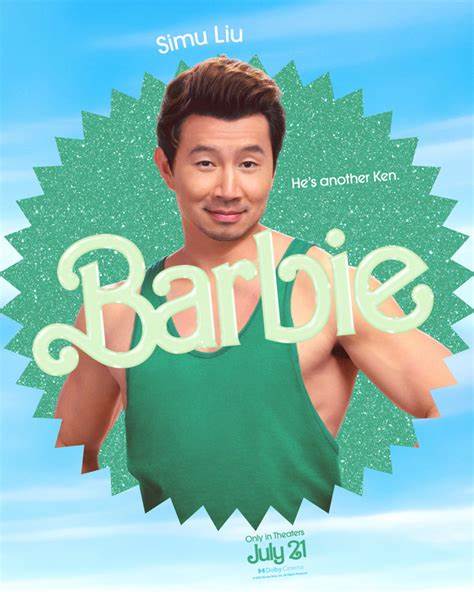
    • The second teaser and additional promotional materials have been released for the upcoming theatrical release, Barbie. Written by romantic partners Greta Gerwig and Noah Baumbach, and directed by Gerwig, the film stars Margot Robbie as the iconic doll and Ryan Gosling as Ken, as well as a tremendous supporting cast that includes Issa Rae, Nicola Coughlan, Kate McKinnon, Simon Liu, Michael Cera, and many more (oh, and Helen Mirren narrates!). They can just take my money now because I will be the first in line for this.
    • And finally, Disney+ has released the first teaser for The Muppets Mayhem, a series that follows the iconic Muppets house band, Dr. Teeth and the Electric Mayhem, as they attempt to record their first album. I actually cancelled my Disney+ subscription a while back, but I’ll probably need to re-up for this one.

    In Celebration of Drag

    For Danny, with all my love. ❤️🧡💛💚💙💜

    ***** CONTENT WARNING: THIS POST CONTAINS REFERENCES TO HOMOPHOBIA, TRANSPHOBIA, PEDOPHILIA, MENTAL HEALTH ISSUES, SUICIDE, GUN VIOLENCE, AND HOMELESSNESS *****

    Drag is under fire these days, mainly from far-right radicals with neither a sense of humor nor a basic understanding of history. The narrative – that they’re protecting children from LGBTQ+ “groomers” – is absolute bullshit, and they know it (not that these people care about statistics, but the vast majority of pedophiles are cisgender, heterosexual men). The question that keeps getting asked is, “How will we explain drag to the children?” The simple fact is we have all been exposed to drag, usually from a very young age. Animated characters such as Bugs Bunny, Mulan, Robin Hood‘s Little John, The Lion King‘s Timon, and SpongeBob SquarePants have been dressing in drag for decades.

    So, if most of us were exposed to drag from a young age and didn’t need it explained, what are these people protesting? It’s actually quite simple; they’re protesting queerness. Because these people fetishize LGBTQ+ folks, they can’t picture them in a non-sexual scenario. The conclusion is drawn that a drag queen reading a book to children must be a lascivious act. Obviously, that couldn’t be further from the truth; these events are wholesome AF, and your kid is far safer there than alone with the wrong teacher, priest, Boy Scout leader, or family member. In fact, the only people I’d want to shield my kid from are the protesting bigots. I’m not a parent – I’m not getting into it here, but if you’re interested in the whole story: https://peanut-butter-and-julie.com/2021/05/05/the-baroness-of-barrenness/ (CW for infertility) – but if I had a child who asked me about a drag performer, I’d say something like, “Sometimes adults play dress-up, too.”
    The right – emboldened by T*ump and fueled by conspiracy theories – is chipping away at LGBTQ+ rights, passing laws that criminalize LGBTQ+ folks for existing in public spaces. TERFs like She Who Must Not Be Named spew their transphobic hate all over social media. These people actively do harm and don’t even try to pretend otherwise. And they’re doing it all “for the children,” which is absolutely laughable. If these people really cared about children, they’d work to improve access to school lunches and sex education and health care, or maybe do something – ANYTHING – to make it a little harder for people to commit mass shootings. And if all this makes me woke, then fuck yes, because woke is an adjective meaning “alert to racial prejudice and discrimination.” I’ll never get over how many people side with prejudice and discrimination.

    Teaching children tolerance should not be controversial, but here we are. Children are far more open-minded than many adults give them credit for. Children aren’t born with hate; they learn it. No one is trying to turn kids gay (the gay agenda, as far as I can tell, is survival, equal rights, and maybe brunch if there’s time). For kids questioning their sexual orientation or gender identity, for those enduring bigotry or bullying or abuse, and for those who just feel different and aren’t really sure why, finding a role model – someone who lets them know that it’s okay to be themselves – can be lifesaving. Gender-affirming care can be lifesaving. LGBTQ+ kids have higher suicide rates and incidences of mental health issues. They’re more likely to experience homelessness, bullying, and violence. Many are abused and disowned by their families. It will be worth it if these drag story hours save even one young life. Plus, they look like a blast.

    The history of drag in pop culture dates back to ancient Greek and Roman times. Many societies banned women from appearing on stage, so men played female roles. Instances of drag appear in mythology, folklore, literature, and opera. Women have dressed in drag for centuries to enter male-dominated spaces such as the labor force and the battlefield.

    Drag in cinema dates back to the 1910s, when motion pictures were in their infancy. Silent film artists such as Charlie Chaplin and Stan Laurel, who honed their craft in the English music halls of the late 19th century (more on those later), often dressed in drag for comedic effect. Bugs Bunny, who debuted in 1939, often dressed in drag to confound opponents like Elmer Fudd. In 1959, drag was a key plot point in what many consider the greatest American comedy of all time, Some Like It Hot.

    After the end of the Hays Code era (ICYMI: https://peanut-butter-and-julie.com/2021/04/01/the-hays-code/, CW for SA and racism), drag in film went mainstream, with beloved movies like Rocky Horror Picture Show, Tootsie, Mrs. Doubtfire, and The Birdcage and pop culture icons like RuPaul, Dame Edna (Barry Humphries), and Divine. During the same period, live drag shows also became increasingly popular. Musicians such as David Bowie, Annie Lennox, Boy George, and Prince dabbled in androgyny. Today, drag is everywhere: Pride celebrations, reality competitions like RuPaul’s Drag Race, Tyler Perry’s blockbuster Madea franchise, and yes, even children’s story hours.

    So, in celebration of drag in all its forms, here is a timeline of drag in popular culture and, as always, a few of my personal favorites.

    • Ancient Greece and Rome

    In ancient Western societies, women were not allowed to perform onstage, so female roles were, by necessity, portrayed by men. In Greece, men and boys were required to dress in drag for certain religious ceremonies.

    • Mummers’ play

    Mummers’ plays are folk plays that originated in the British Isles, with troupes of traditionally all-male performers. The written history of Mummers’ plays is sparse, but it’s believed to date back at least to the 13th century. The tradition is still upheld, with variations of Mummers’ plays performed for holidays like Christmas, Easter, and Plough Day, an English holiday celebrating the beginning of the agricultural year.

    • Shakespeare

    In the English Renaissance Theater, women were still forbidden to appear onstage, so Shakespearean heroines were played by men. Shakespeare also used drag as a plot device, most notably in Twelfth Night (heroine Viola impersonates a man and winds up in a love triangle).

    FUN FACT: English laws against women appearing on stage began to relax during the reign of Charles II, who took the throne in 1660, almost fifty years after Shakespeare died.

    • Music Halls

    Another English tradition, music hall entertainment, was the direct ancestor of vaudeville. Music halls were Victorian-era variety shows featuring a mix of songs, comedy, and specialty acts like magicians, ventriloquists, and both male and female drag artists.

    • Silent film

    In the early days of film, comedians such as Charlie Chaplin and Stan Laurel, who came to the US in 1910 as part of Fred Karno’s comedy troupe, often dressed in drag in the English music hall style. Later comedians such as the Three Stooges, Milton Berle, and Flip Wilson carried on that tradition.

    • Ball Culture

    The Ballroom scene originated in the late 19th century when LGBTQ+ folks began to organize drag shows in defiance of anti-drag laws. In the 1920s, tired of the racism and discrimination at many of these events, black and Latino drag queens started organizing their own underground balls in New York City, Washington, D.C., Baltimore, and Philadelphia. In the 1980s, ball culture inspired a dance style called Vogue, which gained mainstream notoriety in 1990 with Madonna’s #1 smash hit single of the same name and the award-winning documentary feature Paris Is Burning.

    FUN FACT: The origin of the word “drag” is disputed, but one theory suggests it is derived from the term “grand rag,” a historical slang term for a “masquerade ball.”

    The video for “Vogue”, directed by David Fincher, won three MTV Video Music Awards but lost Video of the Year to Sinead O’Connor’s “Nothing Compares 2 U” (Fincher took home the Best Director prize, though)
    One more, because this is too perfect not to share
    • Bugs Bunny

    One of the ultimate drag icons, Bugs Bunny has appeared in drag more than forty times. Other Looney Tunes characters to dress in drag are Wile E. Coyote, Porky Pig, and Daffy Duck. Since the ascendence of Bugs, countless animated characters – including Fred Flintstone, SpongeBob SquarePants, and many a Disney sidekick – have appeared in drag, delighting children and adults alike. Drag is also a common plot element in Japanese anime.

    • Some Like It Hot

    Because of its depiction of cross-dressing, Some Like It Hot was released without the approval of the Motion Picture Production Code (AKA the Hays Code). Despite that lack of support, the film was a critical and commercial success, and a six-time Oscar nominee (inexplicably, it was not nominated for Best Picture). Some Like It Hot‘s success was a key step in the relaxing of standards in the 1960s and the ultimate abolition of the Code.

    • The Rocky Horror Picture Show

    Going to a Rocky Horror midnight show was a Gen-X rite of passage. And Tim Curry dressed in drag as Dr. Frank-N-Furter – “the sweet transvestite from transsexual Transylvania” – also provided many a sexual awakening. Rocky Horror was one of the first notable cinematic instances of queer drag, making it a landmark film for LGBTQ+ visibility; the earliest midnight screening attendees were queer folks celebrating their newfound representation.

    • Torch Song Trilogy / La Cage aux Folles / The Birdcage

    Beginning with 1982’s Torch Song Trilogy, Tony-winning actor and playwright Harvey Fierstein helped usher in an era of mainstream media depictions of drag. In the three-act play, Fierstein plays torch singer and drag queen Arnold Beckoff. Torch Song Trilogy was a watershed moment in LGBTQ+ history; its frank representations of gay marriage and adoption were unusual for the time. Two years later, Fierstein wrote the book for La Cage aux Folles, a musical adaptation of the 1973 French play of the same name, about a gay couple forced to play it straight when their son invites his fiancée’s ultra-conservative parents to dinner. If that plot sounds familiar, it’s because La Cage aux Folles was also the basis for 1996’s The Birdcage.

    • Tootsie

    In some respects, Tootsie has not aged well. Let’s be honest, Michael Dorsey is an asshole, and it enrages adult me that he ends up with Julie despite his lies and manipulations (she deserves so much better). But certain scenes are still comedy gold, like when Michael, dressed as Dorothy, meets his agent (Sydney Pollack) at the Russian Tea Room to test his new disguise. Tootsie was a critical and commercial smash, earning more than any 1982 movie that wasn’t E.T. and garnering ten Oscar nominations (and winning one, Best Supporting Actress for Jessica Lange).

    • Hairspray

    The Hairspray franchise began in 1988 with a film by John Waters featuring his muse (and drag icon) Divine as housewife Edna Turnblad. In 2002, the film was adapted into a Broadway musical, which co-starred Harvey Fierstein in a Tony-winning performance (the show won eight Tonys in all, including Best Musical). John Travolta took over as Edna in the 2007 musical feature, but Fierstein reprised the iconic role for a 2016 live performance on NBC.

    OG Edna Turnblad Divine
    • RuPaul

    RuPaul Andre Charles, known simply as RuPaul, burst onto the national scene in 1993 with the album Supermodel of the World and its hit single, “Supermodel (You Better Work).” Modeling contracts, more recordings, and a VH1 talk show quickly followed. In 2008, RuPaul launched a reality competition franchise with RuPaul’s Drag Race. Arguably the most commercially successful drag queen of all time, RuPaul is the winner of multiple awards, including a Tony, twelve Emmys, and a GLAAD Vito Russo Award.

    RuPaul has won twelve Emmy Awards for the wildly entertaining – and wildly popular – RuPaul’s Drag Race
    • Mrs. Doubtfire

    In 1993, Robin Williams brought equal amounts of humor and heart to his dual role of Daniel Hillard/Euphegenia Doubtfire. In the process, Williams won a Golden Globe for Best Actor in a Motion Picture – Musical or Comedy and America’s collective heart. In one of my favorite scenes, Daniel transforms into Mrs. Doubtfire with the help of his makeup artist brother (Harvey Fierstein, AGAIN!).
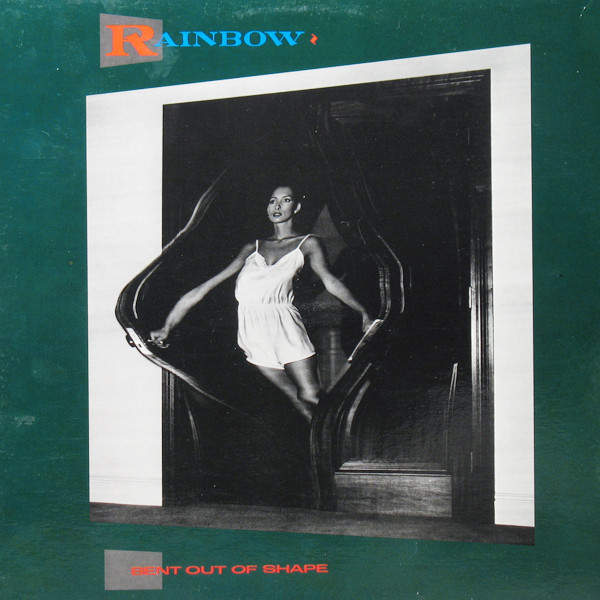
    Williams’ acceptance speech – in which he channels both Euphegenia Doubtfire AND Harvey Fierstein – showcases his power to make you laugh through your tears
    • Adventures of Priscilla, Queen of the Desert

    A personal favorite, Adventures of Priscilla, Queen of the Desert is a decidedly Australian film starring Terence Stamp in an Oscar-worthy performance as Bernadette, a trans woman traveling cross-country with two drag queens (Guy Pearce and Hugo Weaving) in a dilapidated old bus they christen Priscilla. Come for the Oscar-winning costume design by Lizzy Gardiner and Tim Chappel and the killer soundtrack; stay for Stamp’s gorgeous, BAFTA- and Golden Globe-nominated performance.

    • Madea

    Mable Earlene Simmons, AKA Madea, is filmmaker Tyler Perry’s ode to the strong-willed, street-smart women in his life. In Perry’s words, Madea is “exactly the PG version of my mother and my aunt, and I loved having an opportunity to pay homage to them. She would beat the hell out of you but make sure the ambulance got there in time to make sure they could set your arm back.” Madea, the most prolific drag queen of the 21st century, has appeared in eleven plays, thirteen films, a handful of series, and a 2006 book, Don’t Make a Black Woman Take Off Her Earrings.

    More depictions of drag in pop culture:

    2005’s Kinky Boots, the basis for the hit musical (that’s Chiwetel Ejiofor as Lola, the role that would later earn Billy Porter a Tony)
    2006’s She’s the Man, another adaptation of Shakespeare’s Twelfth Night

    The Super Bowl Lead-Out

    IT’S SUPER BOWL SUNDAY!! Time to stuff your face, drink some beer, and watch the Kansas City Chiefs face off against the Philadelphia Eagles. And when the game is over, and the NFL champions have been crowned, you can stick around and watch Gordon Ramsey in the season premiere of Next Level Chef, this year’s Super Bowl lead-out program.

    The history of the Super Bowl lead-out program dates back to before the championship game was even CALLED the Super Bowl. Did you know that Super Bowl I was referred to as the AFL and NFL World Championship Game? Or that it actually aired on two networks? NBC and CBS held the exclusive rights to broadcast AFL and NFL games, respectively, and the game was only referred to as the Super Bowl retroactively (in fact, the moniker wasn’t adopted until 1969). On January 15, 1967, after the Green Bay Packers finished spanking the Chiefs, both networks went with family-friendly fare for the post-game program: CBS aired an episode of Lassie titled “Lassie’s Litter Bit”, and NBC aired something called “Willie and the Yank: The Mosby Raiders” for Walt Disney’s Wonderful World of Color. The two networks combined received a 59% share that night, meaning more than half of American television sets were tuned in.

    For the first eighteen years of its existence, the Super Bowl aired exclusively on NBC and CBS, and the two networks continued to use the lead-out for G-rated content: GE College Bowl, 60 Minutes, golf tournaments, and more episodes of Lassie. In 1982, the NFL renegotiated its deal with the networks, and ABC got in on the action with Super Bowl XIX. The network used the coveted post-game time slot to air the pilot of MacGruder and Loud, a series that lasted one season. I don’t remember it, nor do I remember The Last Precinct, which aired the following year after NBC’s coverage of Super Bowl XX. In fact, the lead-out slot is littered with the corpses of series that didn’t make it to season two.

    In more recent years, the networks have utilized the lead-out slot to air established properties: special episodes of popular series (The Simpsons, House, and The Blacklist, to name a few) or season premieres of highly rated reality shows like Survivor and The Voice. Last year, NBC returned us to the Winter Olympics (fun fact: under the new contract that takes effect in 2024, NBC will air the Super Bowl exclusively in Winter Olympics years, so expect that to be a regular occurrence). These days, the Super Bowl lead-out tends to receive lower ratings, which isn’t all that surprising. With hundreds of cable channels and countless streaming options, more and more people are tuning out as soon as the game is over. Each year, the ratings dwindle a little more, and the networks put less work into making the time slot a special event. That’s why reality competition programming – which is far cheaper to produce than a scripted series – has become a common lead-out; something like Next Level Chef gives Fox a much bigger ratings bang for their buck.
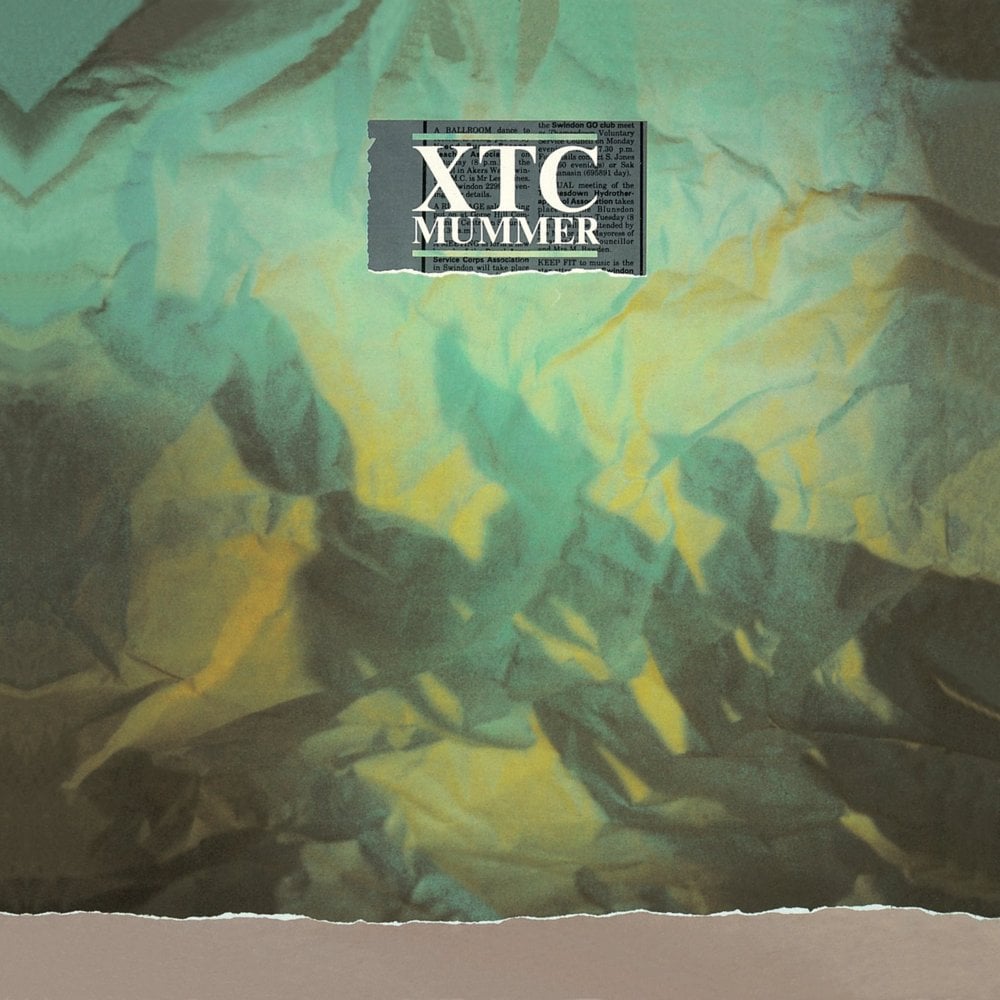
    So, in honor of Super Bowl Sunday, here are some notable Super Bowl lead-outs – and a couple of my personal favorites.

    • Friends – “The One After the Super Bowl” (Super Bowl XXX, January 28, 1996)

    If you’re wondering, “What’s the highest-rated post-Super Bowl episode of all time?”, wonder no more. It’s Friends‘ imaginatively titled “The One After the Super Bowl”, and it’s not even close. After watching Dallas beat Pittsburgh by ten, 46% of households – almost 53 million people – tuned in for this one-hour episode of the Gen X sitcom. Not only was Friends (then in its second season) a ratings smash, but one of its actors (Matthew Perry) was dating the biggest movie star on the planet, Julia Roberts. Roberts guest starred on this episode, along with Brooke Shields, Chris Isaak, Jean-Claude Van Damme, Fred Willard, and Dan Castellaneta.

    Like a lot of Friends episodes, this one hasn’t aged particularly well. Brooke Shields is a scene-stealer, but the stalker storyline, which pokes fun at the character’s obvious mental illness, just feels icky. And Monica and Rachel fighting over JCVD is just *eye rolls*. My favorite storyline is Phoebe singing for the kids at the library; Lisa Kudrow’s chemistry with guest star Isaak is adorable (“Are you gonna kiss me?” “Thinkin’ about it”) and this scene cracks me up every time.

    Fun fact: Brooke Shields, who was best known at the time for romantic dramas like The Blue Lagoon and Endless Love, earned rave reviews for “The One After the Super Bowl”. The gig helped Shields land her own series, Suddenly Susan, for which she received two Golden Globe nominations.

    • Alias – “Phase One” (Super Bowl XXXVII, January 26, 2003)

    Few shows have pushed the reset button as hard as this spy thriller did on Super Bowl Sunday, 2003, midway through its second season. After a cold open that gives the show an excuse to show off Jennifer Garner’s ridonkulous body (not to mention her badassery), Sydney, Vaughn, and the CIA are finally able to infiltrate SD-6 and shut it down. Sydney and Vaughn share their long-awaited first kiss, and Sydney deals with the fallout of having had to lie to her SD-6 partner Marcus. And in a shocking twist, the episode ends with the murder of Sydney’s BFF Francie – and the installation of Francie’s “double” Allison into Sydney’s life. “Phase One” was the highest-rated episode of Alias; unfortunately, it was also one of the lowest-rated Super Bowl lead-outs ever, and because the episode didn’t begin until after 11 pm EST, it wasn’t in the coveted prime time bracket. It’s too bad, because “Phase One’ could have earned Alias a lot of new fans.

    “Phase One” set the stage for one of my favorite fight scenes ever (“I just remembered, Francie doesn’t like coffee ice cream”)
    • Homicide: Life on the Street – “Gone for Goode” / Pilot (Super Bowl XXVII, January 31, 1993)

    One of the best network procedurals of all time began as the Super Bowl XXVII lead-out program thirty years ago. Academy Award nominee Paul Attanasio created the series, based on David Simon’s book Homicide: A Year on the Killing Streets. The cast (all hail Andre Braugher!) is sublime. “Gone for Goode”, though a ratings disappointment for NBC, earned Oscar winner Barry Levinson an Emmy for Outstanding Directing for a Drama Series.

    Fun fact #1: Richard Belzer’s Law & Order: SVU character John Munch was created for Homicide. After the series ended, Munch moved from Baltimore to New York City, just in time for the series premiere of SVU.

    Fun fact #2: David Simon, then a journalist for The Baltimore Sun, spent a year (1988) with the homicide unit at the Baltimore PD before writing the Edgar Award winning Homicide: A Year on the Killing Streets. The cases he wrote about served as inspiration not only for Homicide: Life on the Street, but for Simon’s later series, The Wire, as well.

    • The A-Team – “Children of Jamestown” (Super Bowl XVII, January 30, 1983)

    The A-Team – about a Special Forces unit convicted of a crime they didn’t commit who escape prison and become a team of mercenaries – kicked off with a two-hour pilot episode the week before and aired its first regular episode after Super Bowl XVII. Starring George Peppard, Dirk Benedict, Dwight Schultz, and Mr. T, The A-Team was a formulaic, cartoonishly violent series – and viewers couldn’t get enough. The series spawned a franchise that includes comic books, video games, and a (terrible) 2011 film adaptation.

    Fun fact: NBC did not have high expectations for The A-Team, but one person predicted from the beginning that the show would be a hit, and that was star George Peppard.

    • The Wonder Years – Pilot (Super Bowl XXII, January 31, 1988)

    After Washington routed Denver 42-10, ABC aired the pilot for its new coming-of-age dramedy, The Wonder Years. Starring Fred Savage as ’60s suburban kid Kevin Arnold, with voiceover narration by the criminally underrated Daniel Stern as a middle-aged Kevin, The Wonder Years was an instant hit. For its abbreviated (six episode) first season, The Wonder Years won the Emmy Award for Outstanding Comedy Series; the following year, thirteen-year-old Savage became the youngest-ever nominee for Outstanding Lead Actor in a Comedy alongside legends like Ted Danson, Michael J. Fox, John Goodman, and eventual winner Richard Mulligan. Hubby and I recently binged the entire series on Hulu, and I’m pleased to say it holds up pretty well.

    Fun fact: The Wonder Years was the inspiration for a 2021 Disney+ series of the same name starring Dulé Hill. That series was renewed for a second season, which will air sometime in 2023.

    • The X-Files – “Leonard Betts” (Super Bowl XXXI, January 26, 1997)

    After years on the sidelines, Fox made the most of its first Super Bowl outing with this outstanding episode of its hit sci-fi series, The X-Files. Paul McCrane stars as the titular character, a cancer-eating mutant with the powers of regeneration. It’s also the episode where viewers learned of Scully’s cancer diagnosis (it’s a pretty important plot point). Almost 30 million viewers tuned in for “Leonard Betts”, making it the most-watched episode of the series’ eleven season run.

    “I’m sorry, but you’ve got something I need” <shivers>
    • Survivor: The Australian Outback – “Stranded” / Survivor: All-Stars – “They’re Back!”

    The inaugural season of Survivor was a runaway ratings success in the summer of 2000, so naturally CBS rushed a second season into production as soon as possible. The season two premiere aired after Super Bowl XXXV, more than 43 million Americans tuned in, and a franchise was born. Three years later, Survivor‘s first all-star season was the lead-out for Super Bowl XXXVIII, and 33 million watched. Twenty-two years later, Survivor is still on the air (season 44 will premiere on March 1), a testament to the franchise’s staying power.

    • 60 Minutes (Super Bowl XXVI, January 26, 1992)

    CBS initially planned to air its news magazine series, 48 Hours, after Super Bowl XXVI. But at the last minute, this abbreviated episode of 60 Minutes was added to the schedule to address presidential nominee Bill Clinton’s relationship with Gennifer Flowers. Flowers, who had sold her story to a tabloid, claimed that she and Clinton carried on a long-term affair, a claim Clinton initially denied (spoiler alert: he lied). This interview is best remembered for Hillary Clinton’s statement that “I’m not sittin’ here, some little woman, standing by my man like Tammy Wynette.” Wynette took Clinton to task for her remarks, but the two later made up.

    • Criminal Minds – “The Big Game” (Super Bowl XLI, February 4, 2007)

    For its time in the post-Super Bowl spotlight, Criminal Minds wrote the game into the plot (a couple is murdered after hosting a party) AND gave us a cliffhanger (Reid is kidnapped by the killer). “The Big Game” also introduced us to one of the show’s most memorable unsubs, James Van Der Beek’s Tobias Hankel. The storyline wrapped up three nights later with the episode “Revelations”, and Van Der Beek proved he was much more than Dawson’s Creek.

    • Malcolm in the Middle – “Company Picnic” (Super Bowl XXXVI, February 3, 2002)

    This dysfunctional family sitcom was in its third season when it received the coveted post-Super Bowl time slot. The episode, titled “Company Picnic”, gives Bryan Cranston the opportunity to show off his slapstick skills. Guest stars include Christina Ricci, Bradley Whitford (then-husband of series star Jane Kaczmarek), Patrick Warburton, Stephen Root, and NFL legends Terry Bradshaw and Howie Long.

    Malcolm in the Middle has one of my favorite theme songs of all time, courtesy of art rock/power pop duo They Might Be Giants

    Fun fact: When Vince Gilligan was casting Breaking Bad, AMC – who knew Bryan Cranston only as Malcolm in the Middle‘s Hal – were skeptical that Cranston was right for the role of Walter White. AMC’s choice for the role was either John Cusack or Matthew Broderick. Thankfully, Gilligan (who had worked with Cranston on an episode of The X-Files called “Drive”) stuck to his guns, and Cranston went on to win a whopping four Emmys for Outstanding Lead Actor in a Drama Series.

    • The Office – “Stress Relief” (Super Bowl XLIII, February 1, 2009)

    I’ve saved the best for last. “Stress Relief” is the gold standard of Super Bowl lead-outs. First, there’s this masterpiece of a cold open, The Office at its chaotic best:

    Then there’s this:

    Michael confusing “Stayin’ Alive” with “I Will Survive” is perfection

    I rest my case.

    Fun fact: Jeffrey Blitz won an Emmy for Outstanding Directing for a Comedy Series for “Stress Relief”. The episode was also nominated for Outstanding Picture Editing for a Comedy Series but lost to 30 Rock.