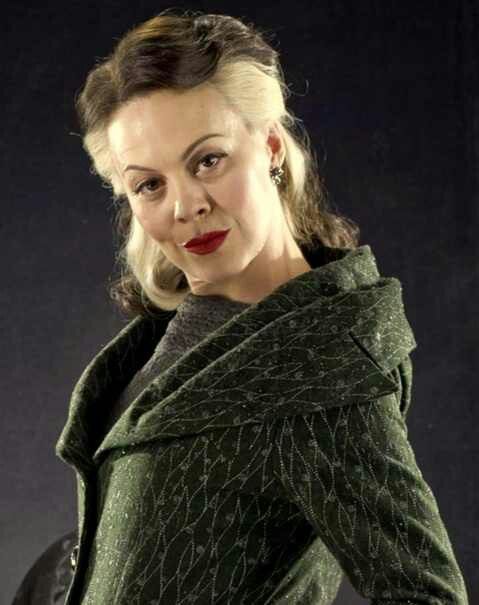
Helen McCrory died Friday at the age of 52, after a long battle with cancer. Perhaps best known for playing Narcissa Malfoy in the Harry Potter series, she was a formidable theater actress in productions like Macbeth, TwelfthNight, As You Like It and UncleVanya. She also portrayed Clair Dowar in Skyfall and Aunt Polly in Peaky Blinders. She was married to actor Damian Lewis, beloved in my house for his role in Band of Brothers, my husband’s very favorite thing ever. McCrory was originally cast for Harry Potter and the Order of the Phoenix, as Bellatrix Lestrange, but was forced to pull out of the project due to pregnancy. She finally made her way into the franchise a few years later, playing Bellatrix’s sister Narcissa.
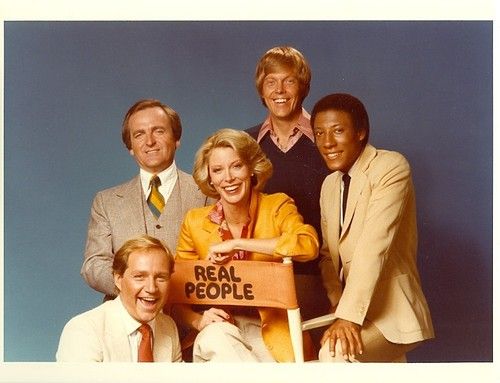
On this day in 1979, Real People premiered on NBC. The show featured a panel of hosts who introduced segments spotlighting non-celebrity folks who had unique occupations or hobbies. The show was a rare hit for NBC at a time when they were consistently third-place in the ratings (this was before FOX was even a thing, so third-place was last-place). The show spawned a bevy of imitators, the most popular of which was ABC’s That’s Incredible! Fun fact: Real People is responsible for giving Richard Simmons his big break in mass media. Thanks, RealPeople!
Today is Hayley Mills’ 75th birthday. Best known for Disney movies like Pollyanna and The Parent Trap, Mills also starred in the Disney Channel television show Good Morning, Miss Bliss, the rights to which were acquired by NBC; the series was reformatted and retitled Saved by the Bell. Mills is also a stage actress, appearing in productions like Peter Pan and The King and I. The Parent Trap was a favorite of mine growing up, and though the Lindsay Lohan version is charming, I still prefer the Hayley Mills version. And as a side note, I just now figured out that Brian Keith is a hottie in this movie.
*fans self*
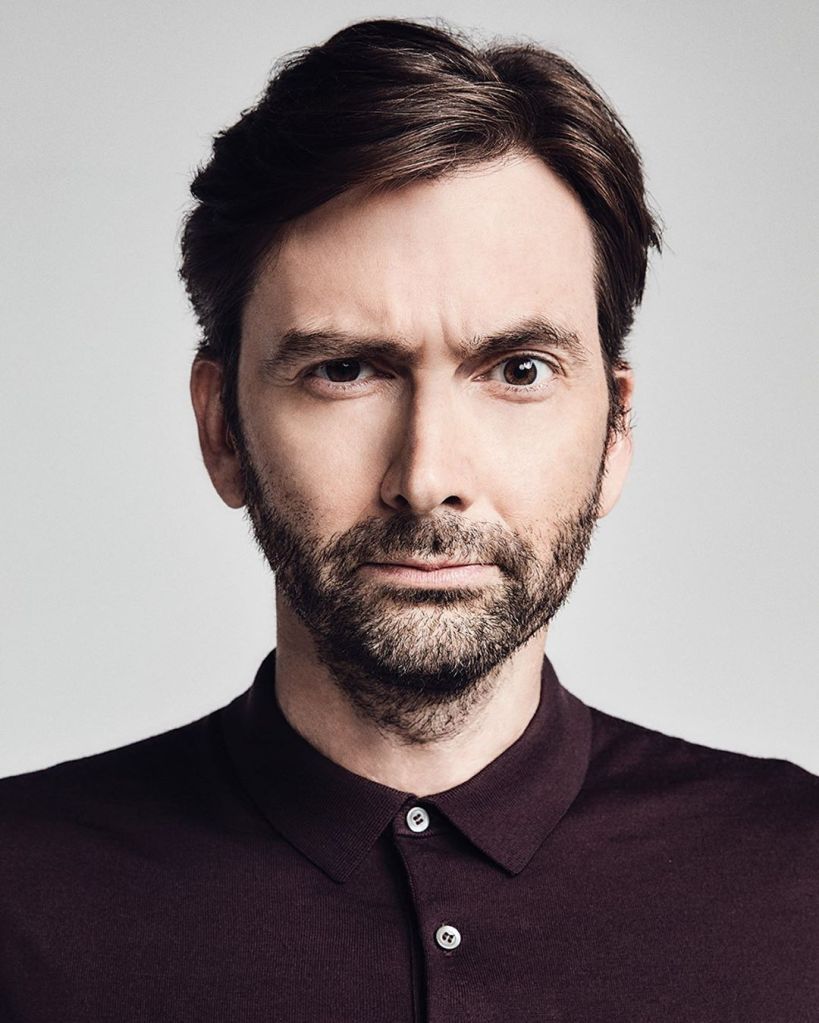
Hilarious, charming, beloved Scottish actor David Tennant turns 50 today! Best known as the Tenth Doctor Who (full disclosure: I am not a Doctor Who fan), Tennant has also appeared in series like Broadchurch, Jessica Jones, Des and Good Omens, and films like Fright Night (2011). He also voices Scrooge McDuck, a fact that makes me absurdly happy. Tennant will star as Phileas Fogg in a BBC version of Jules Verne’s Around the World in 80 Days, and I am 100% here for that casting.
First look as Phileas Fogg
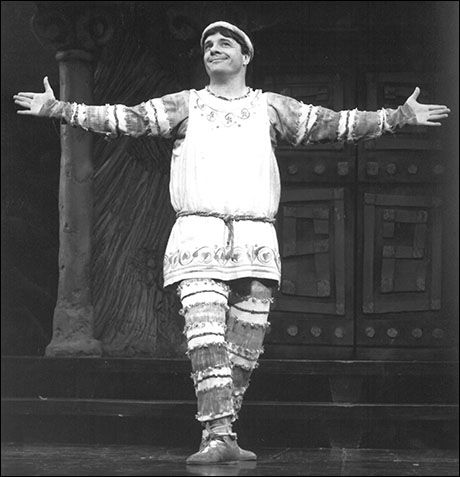
On this day in 1996, the revival of A Funny Thing Happened on the Way to the Forum opened at the St James Theater in New York City. Starring the fabulous Nathan Lane (who won his first of three Tony Awards for his performance), the Sondheim farce ran for 715 performances. A cast recording of this show doesn’t seem to exist on Spotify (you can buy the CD, if you still listen to music that way), but here is the Original Cast Recording, featuring the iconic, also-Tony-winning Zero Mostel.
And finally, the 93rd Academy Awards will air next Sunday. Stay tuned to Peanut Butter and Julie this week for my coverage of this year’s nominees and highlights from past telecasts.
Initially published in 2021, this post has been edited for clarity.
CW: mentions of COVID-19
I’ve always loathed the term “guilty pleasure”. If I enjoy watching/listening to/reading something – and it doesn’t harm anyone else – why should I feel guilty for enjoying it? In the past year, with COVID-19 forcing us to stay at home, entertainment has become an even more critical component of our lives. Some of the media I’ve consumed lately is excellent; my husband and I recently started watching Fargo, and it’s one of the best shows I’ve ever seen. We also thoroughly enjoyed the exceptional Netflix limited series The Queen’s Gambit. But “excellent” isn’t necessarily a prerequisite for enjoying a piece of media. Here are some of my favorite not-so-guilty pleasures.
Xanadu
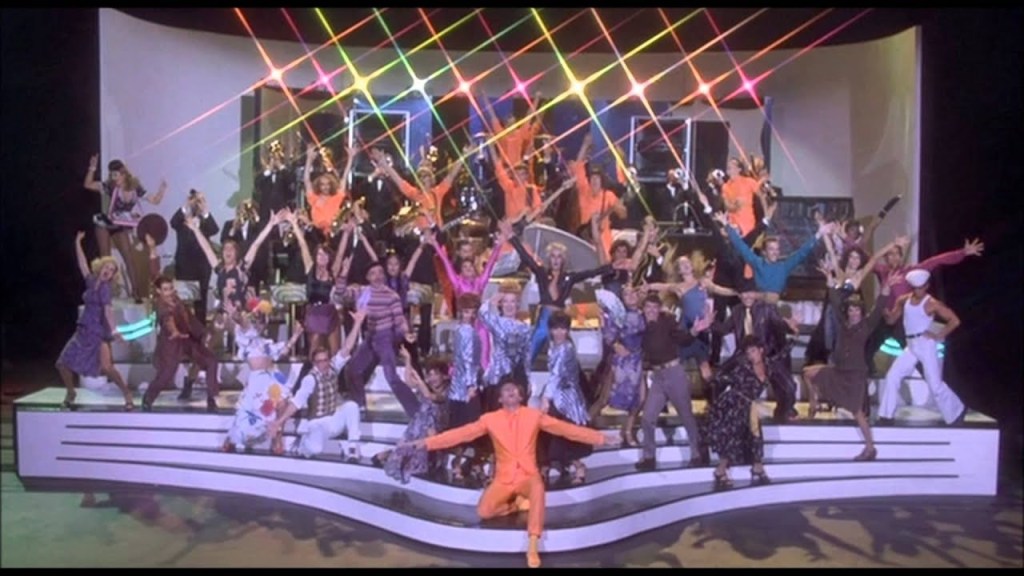
Growing up in the ’70s, I fell HARD for Olivia Newton-John. She looked like an angel, and she had the voice of one, too. I saw Grease in the theater and loved it, wore out the grooves on the double-album soundtrack (and broke my foot to it, too). So when Xanadu was released, I was 100% the target demographic. Xanadu is a terrible movie, and I adore every moment of it. The plot is preposterous: Newton-John plays Greek muse Kira, who is sent to earth to inspire down-on-his-luck artist Sonny (played by Michael Beck). Sonny, aided by big band leader Danny McGuire (Gene Kelly, in his final film role), decides to open a nightclub named Xanadu. Sonny and Kira naturally fall in love, which is complicated when one of the lovers is, you know, immortal. In the end, the plot is just an excuse to put together a series of gloriously over-the-top musical numbers, set to music from Electric Light Orchestra and Olivia herself (the vastly underrated The Tubes also make an appearance). Xanadu is the height of cheestastic cinema, and I couldn’t love it more.
Why yes, that IS a 67-year-old Gene Kelly on fucking roller skates, why do you ask?
America’s Next Top Model
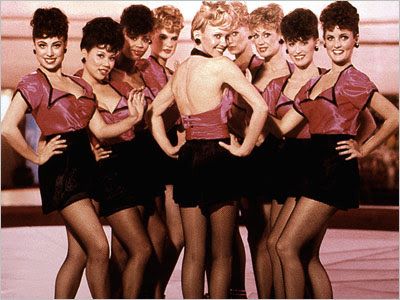
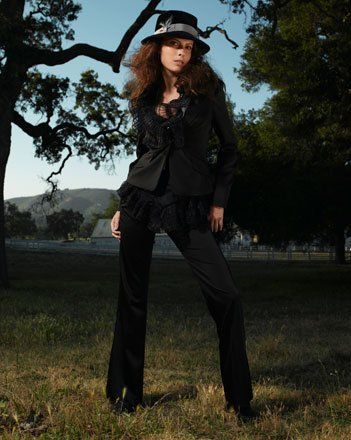
People often speak of reality television derisively, but like every genre, there is a vast difference in quality from show to show. Series like Survivor, Top Chef, and Project Runway have won Emmys and other awards, and have ranked with the best of television over the past two decades. Then, there’s ANTM. Ostensibly a competition to find, well, America’s next top model, ANTM is really just an excuse to put a bunch of young women together and hope for some drama. The young women ALWAYS deliver (and if they don’t, host Tyra Banks will create some). The truth is, I enjoy the show for the actual modeling, not the gossip and backstabbing. I love the creativity of the photo shoots, like when the models each had to represent one of the seven deadly sins:
Kahlen, the model interpreting wrath (center), found out just before the shoot that a close friend had died. She channeled all her grief into her shoot and came away with the judges’ favorite photo of the week.
Or when they portrayed different types of dolls:
Or when they were circus freaks:
The point is, I’m willing to wade through the drama to get to the artistic segments. But if you watch ANTM (or any other show) just for the drama, you’ll get no judgment from me.
FUN FACT: Cycle 5 contestant Kyle Kavanaugh is from my relatively small Midwestern city, and she literally worked at my hometown Dairy Queen. That’s about as wholesome as it gets.
Stephanie Plum series by Janet Evanovich
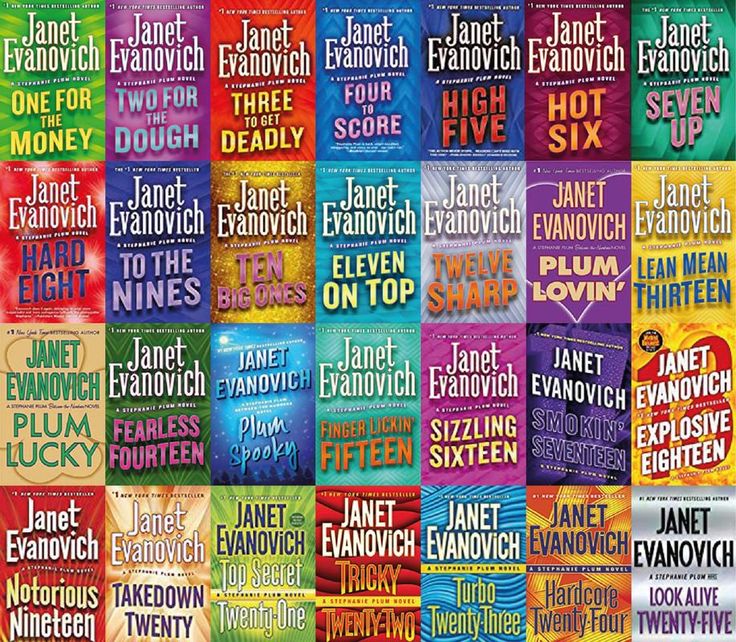
We all have our literary guilty pleasures: perhaps yours is the romantic melodrama of Nicholas Sparks, or bodice rippers, or even cocaine-era Stephen King (seriously, The Tommyknockers is batshit insane). Whatever your tastes are, there’s something out there to satisfy them. One of my indulgences is the Stephanie Plum series. Stephanie is, to put it bluntly, a hot mess. At the beginning of the first novel in the series, One for the Money, Stephanie is out of work and has resorted to selling off her belongings to pay the bills. She convinces her cousin Vinny to give her a job at his bail bond business, thinking she’d be a filing clerk, but the only position available is as a bounty hunter. Each book follows the exact same formula: Stephanie gets a case, she screws it up several times before she finally gets it right, and she spends the rest of her time wavering between the two gorgeous men in her life, fellow bounty hunter Ranger and cop (and her high school boyfriend) Joe Morelli. It’s utterly ludicrous, and I love it.
Twister
It’s not that Twister is a BAD movie, it’s just that I love it all out of proportion to its quality. Cinematographer Jan de Bont’s work on films like Die Hard helped him make the leap to directing. Speed, de Bont’s directorial debut, was so wildly successful that he basically received studio carte blanche for his follow-up feature, 1996’s Twister. A $92 million budget allowed de Bont to utilize the most cutting-edge special effects and sound techniques. And that cast! In spite of being hamstrung by a clichéd premise and corny dialogue, the actors are more than game, particularly the members of the supporting cast – Lois Smith elevates everything she’s in, Alan Ruck is a god damn delight as Rabbit (“Rabbit is good, Rabbit is wise”) and the magnificent Philip Seymour Hoffman chews every bit of scenery as storm chaser Dusty.
The Brady Bunch
The Brady Bunch was a Gen-X rite of passage. An idyllic world where an architect can comfortably support a family of nine (let’s face it, Alice was a member of the family) and every problem can be solved before the final commercial break, the Brady family’s existence seemed far removed from the strife of the real world. Never were race riots mentioned in the Brady home, or the seemingly endless war in Vietnam. Once in a while, a Brady child dabbled in naughtiness (Greg smoked! Cindy’s a tattletale!), but they always saw the error of their ways by episode’s end. It was an endearingly naïve world, and we gobbled it up. The Brady Bunch was one of the first series I watched in syndication, years before cable networks like Nickelodeon and Ion Television existed. By the time I was in college, TBS was airing the show each weekday at 4:05 and 4:35, and my roommate and I would make a game out of who could guess which episode it was faster.
Yacht rock
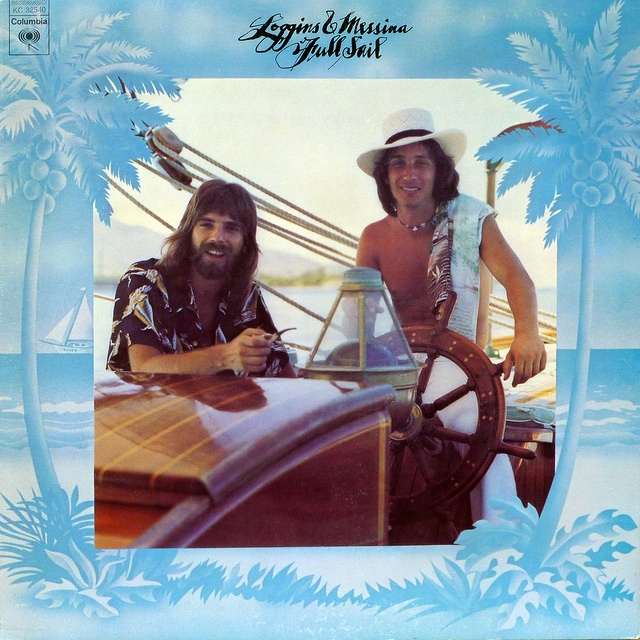
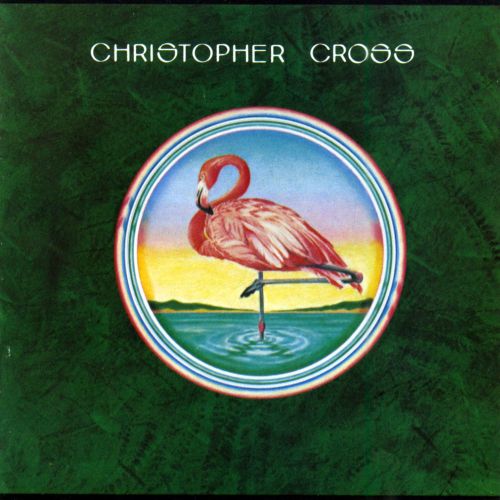
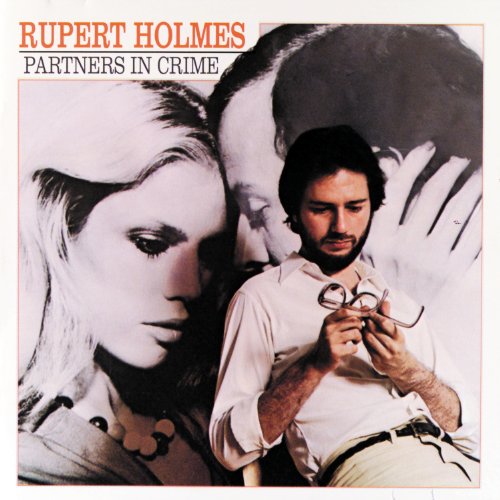
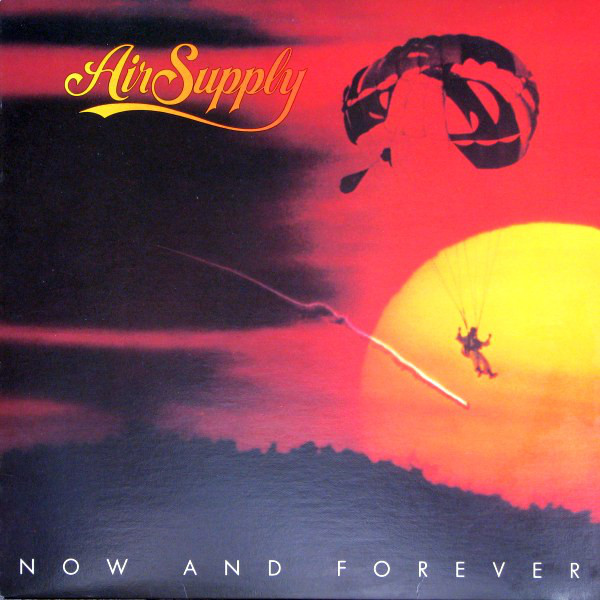
It wasn’t called yacht rock at the time; it was Adult-Oriented Rock (AOR). This style of soft rock music was absolutely inescapable from the mid-’70s to the early ’80s, and why would you want to escape it? The term “yacht rock”, intended pejoratively, was coined in 2005 for an online video series of the same name; the term is derived from the idea of the stereotypical yuppie yacht owner listening to smooth rock while sailing. Typified by artists like Loggins &Messina (and later solo Loggins), Seals & Crofts, and Christopher Cross, yacht rock is as easy as listening gets, and I adore it.
By the way, Spotify seems a little confused about what constitutes “yacht rock”; no, Rockwell is not yacht rock, nor are Tears for Fears, Joe Walsh, or The Police. This playlist I created with my bestie gets a lot closer to the essence of the genre: breezy, cheesy, easy listening.
Flashdance, Footloose, Girls Just Want to Have Fun
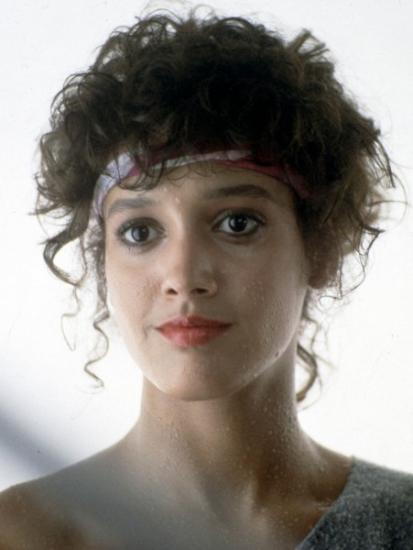
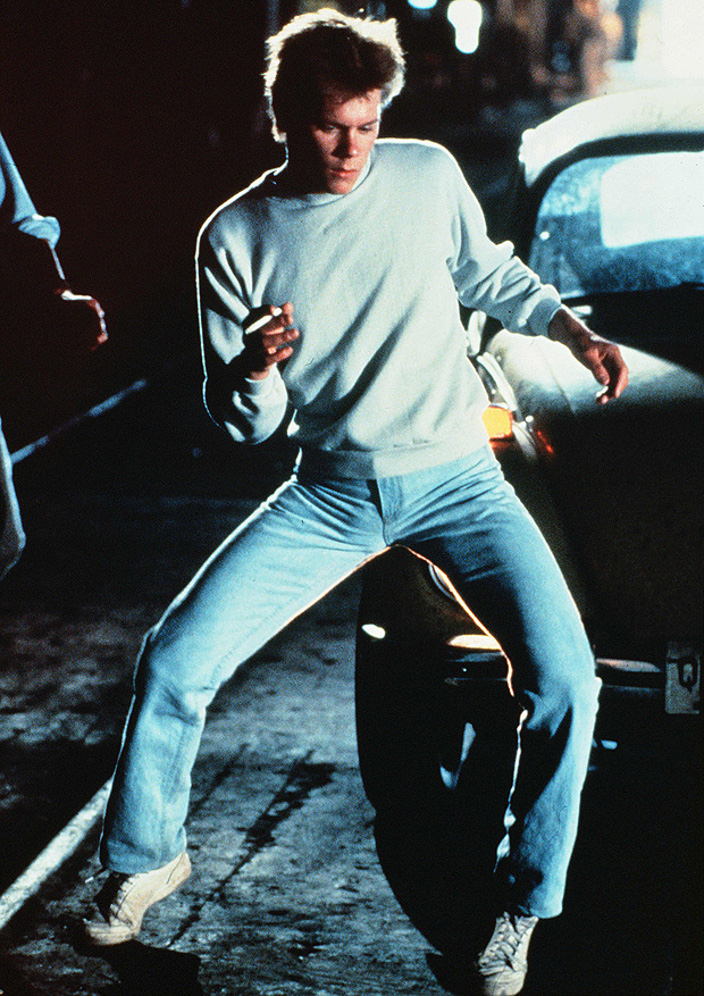
The 1980s certainly didn’t have a monopoly on cheesy romantic-musicals, but it sure was a fun time for them (see also: the first entry on this list), and Flashdance, Footloose, and Girls Just Want to Have Fun are three of my favorites. Released in three consecutive years (1983 to 1985), these films have one primary thing in common – all three have main characters who just want to dance! Flashdance’s Alex Owens (Jennifer Beals) is a welder by day and an exotic dancer by night, but what she really wants to be is a ballerina; she’s just too scared to audition. In Footloose, Kevin Bacon plays Ren McCormack, who has just moved to the small town of Bomont, Utah, with his newly single mom, and is appalled to find out that dancing is outlawed in the town. And in Girls Just Want to Have Fun, Bacon’s Footloose co-star Sarah Jessica Parker plays Janey, who wants to be a regular on Dance TV (for those of you who were around in the 1980s, think the Solid Gold dancers), but must defy her retired Army dad to get to the competition (with a little help from her friend Lynne, played by a preposterously young Helen Hunt).
One of the ways MTV impacted the larger culture was in how movies were made; musical montages, where wordless sequences were set to pop music, became de rigueur, and these three films helped popularize that trend. None of them is what you would call a great film (though Footloose comes closest, in part due to the presence of the sublime Dianne Wiest and John Lithgow), but they all bring me joy.
This sequence was added to the film because the late, great Chris Penn legitimately didn’t know how to dance
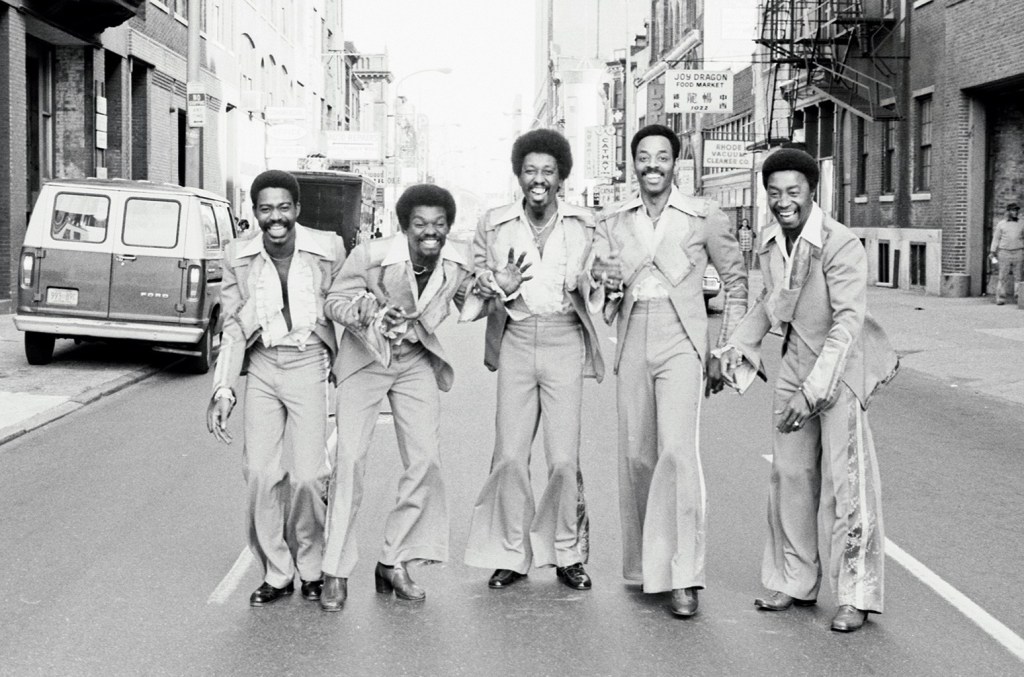
I will never apologize for my love of disco music, and if you think I should, you’re on the wrong blog. I grew up going to roller skating rinks, and disco was a ’70s roller-rink staple. Disco was one of the rare genres not ruled by straight white men, and that diversity meant music fans could love anyone from ABBA to S.O.S. Band, from Brothers Johnson to Sister Sledge.
Even The Rolling Stones got in on the disco act in the late 70s. Listen to this and tell me it isn’t 100% a disco song:
“Miss You” aside, one of the beautiful things about disco was its inclusivity: it was a place where LGBTQ+ folks and black women were welcomed, and the popular songs tended to be anthemic, songs of empowerment. Of course, a lot of disco songs were just about getting down, and that’s okay, too. There’s a place in this world for both types of music. So whether you want to say “fuck you” to the establishment or shake your booty all night long (or, ideally, both), disco has the perfect song for you.
The chorus of “Le Freak” was originally “fuck off”, not “freak out”. CHIC wrote the song after they were denied entry to Studio 54 on New Year’s Eve 1977 (apparently, Grace Jones forgot to have them added to the guest list). Knowing they could never say “Fuck off” on the radio, Nile Rodgers changed the lyric to “freak off” before finally settling on “freak out”.
Stay tuned for volume 2 of this post in the coming weeks.
Yesterday was the forty-fifth anniversary of the release of All the President’s Men, one of the best movies ever made about American politics and a personal favorite of mine. I read a blurb on Twitter about the film’s use of a split diopter lens, and while I know a good deal about how movies are made, this was terminology I was not familiar with. A quick Google search led me to this A.V. Club article that includes a clip of the scene in question. This is pure film geekery and I am here for it.
If you, like me, love learning about the behind-the-scenes efforts that go into filmmaking, check out Insider’s YouTube channel. Here is a recent clip about the evolution of car chase scenes:
Today is David Harbour’s 46th birthday, so I’m just going to leave this here…
Speaking of which, let’s check in on Stranger Things 4: it’s been almost two years since season 3 dropped on July 4, 2019. Filming on season 4 was interrupted last spring by the pandemic, and resumed in October. All indications are that the cameras are still rolling in Atlanta, and we’ve gotten some carefully curated set photos to obsess over. In all likelihood, we won’t see season 4 until the end of the year; perhaps it will be my Christmas present?
Legendary rapper and actor DMX (born Earl Simmons) died yesterday at the age of fifty. A week earlier, he had suffered a heart attack brought on by an apparent drug overdose, and had spent the week on life support.
Today I learned that the role of Josh Baskin in Big was originally supposed to be played by…Robert DeNiro????
This post was originally published in 2021; it has been edited for content and clarity.
It’s April 8, which means it’s Rex Manning day! What the heck is Rex Manning day? I’m glad you asked!
Liv Tyler and Renee Zellweger in Empire Records
Empire Records was released in 1995, and it tanked. Critics hated it, and moviegoers went to see Se7en instead. Empire made just $303,841 at the box office. But, in the grand tradition of cult classics, the film found its audience on home video. Is it a great movie? Not particularly, but it really doesn’t matter. Empire boasts a killer soundtrack, an endlessly quotable script and a likeable, absurdly attractive cast, and it’s a movie that I love.
From November 1992 to June 1994, I worked for a retail record store chain. It felt like longer than that, because it was a pivotal time in my life. Post-college, I was feeling aimless. My original plan to go to law school had been set aside, I was still living at home, and I was waiting tables at a restaurant. For some reason I never understood, my boss there didn’t like me, and she had cut my hours to almost nothing. Just before Thanksgiving, I decided I needed a change. Remembering the Christmas break I spent working at the record store, and thinking they’d probably at least need temporary seasonal help, I put in an application. By the next day, I’d been hired, and I told the restaurant to fuck all the way off.
Being an enormous, enthusiastic music fan – with an encyclopedic knowledge of it – I had a knack for selling records, and my manager kept me on after the holiday season was over. One Tuesday evening – March 12, 1993, to be precise – my life changed forever; I just didn’t know it at the time. That night, I was working at the store when two young women came in. I greeted them and asked if I could help them find anything, but it turned out they were employees from another store; they were in town for a Henry Rollins show and had some extra time, so they just wanted to look around. We chatted for maybe 5 minutes, but I needed to get back to work – Tuesdays are new release days, and I only had one associate working with me that evening – so I went about assisting other customers. It was a fairly ordinary interaction, and I honestly didn’t give it another thought until a few months later. It turned out that the woman who came in that night, Lou, was going to be managing a “superstore” in a new location, and she needed an awesome assistant manager. She remembered our interaction and thought of me.
So, how did this ordinary Tuesday night end up changing my life forever? Lou and I only worked together for about six months before I was promoted to manager of my own store, and that was almost thirty years ago. But here’s the thing: Lou ended up becoming my best friend. Oh, and I’ve been married to her brother for eighteen years.
By June of 1994, Lou and I had quit the record store and moved to the Detroit area, where she got a job with a different retail chain, and I went to work for the rental car company where I would spend the next eleven years. But that six months we spent working together, with the shitty hours and the shitty pay and the shitty customers, was such a blast, because we had each other, and we had the music.
So, when Empire Records came out, it was one of those times when I genuinely saw myself reflected in a piece of pop culture. It wasn’t necessarily that I saw myself in any particular character (again, these people are impossibly beautiful), but I appreciated the way the characters interacted with each other, and, most importantly, how much they loved the music.
Seriously, these people are so fucking gorgeous.
Empire Records revolves around a group of young folks who work at an independent record store called (spoiler alert) Empire Records. It’s a “day in the life” type of story, with the run time taking place over the course of about 24 hours. Somehow every single character makes some huge life decision on the exact same day, completely coincidentally! Before the day is out, people will have declared their love for one another, survived a suicide attempt, sung in front of other people for the very first time, and decided to attend school in another state to be near the person they just declared their love for. Oh, and the indie record store will miraculously be saved from a corporate buy-out.
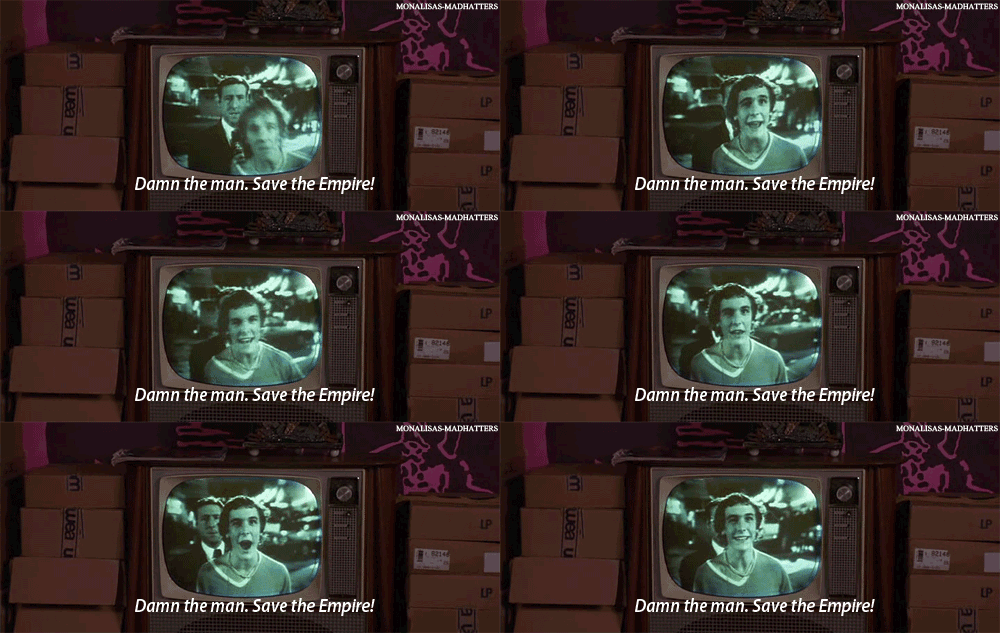
The main event at the store this day, though, is the arrival of pop star Rex Manning for a record signing. Manning’s signature song is “Say No More (Mon Amour)”. Yes, it’s as terrible as you’d imagine. Seriously, you’ve been warned.
The date of Rex Manning’s visit, as you may have guessed by now, is April 8th. Once the film found a cult following on video (and by video, I mean VHS – the first DVD wouldn’t be released until the end of 1996), fans started celebrating the film on that date. Co-star Ethan Embry explained in a tweet why April 8 was chosen as the date:
The reason we picked April 8th as the day to have the powdered/coifed Rex Manning visit Empire is because Kurt was found on the 8th of April, the day the music of the 90s lost its mascot.#RexManningDay
Now, about that soundtrack. A collection of primarily ’90s tunes by popular indie rock artists like Gin Blossoms, Toad the Wet Sprocket and The Cranberries, the soundtrack also features a handful of classic tunes like “Romeo and Juliet” by Dire Straits, “Video Killed the Radio Star” by The Buggles and AC/DC’s “If You Want Blood (You’ve Got It)” (in one of my favorite scenes, Empire’s manager Joe blows off steam by playing his drums along with the song, while the rest of the staff dances in their various corners of the store). The movie ends with everyone on the roof, dancing along to the strains of The The’s magnificent 1983 track “This Is the Day”.
Growing up, my friends and I had access to several authentic independent record stores in the Ann Arbor area, our favorite of which was Schoolkids’ Records. Schoolkids’ was located on E. Liberty Street, next door to the marvelous Michigan Theater. It was the antithesis of the retail chain I would work for later on (the “Town” in Empire Records‘ “Musictown”). My friends and I would scour the racks for rare 12″ singles and imports, then go have snacks at Drake’s Sandwich Shop or catch a movie. Schoolkids’ – and music in general – made my adolescence more tolerable. Sadly, neither Schoolkids’ nor Drake’s is still open. Time marches on, but the memories remain.
As I always do, I will celebrate Rex Manning Day by A) listening to the soundtrack and B) watching the movie. It’s the least I can do to honor a movie that’s brought me so much joy.
You can stream Empire Records on Amazon and Plex. You can listen to the complete soundtrack here:
***** CONTENT WARNING: THIS POST CONTAINS REFERENCES TO SEXUAL ASSAULT, DEATH, RACISM, SLAVERY, MISCEGENATION, AND FIREARMS *****
On this day in 1930, the Motion Picture Production Code went into effect. Also known as the Hays Code, for Will H. Hays (the Motion Pictures Association’s first chairman), the Code was a set of self-imposed censorship guidelines for cinema, and was a response to growing demands from religious and civic groups to improve the content of motion pictures.
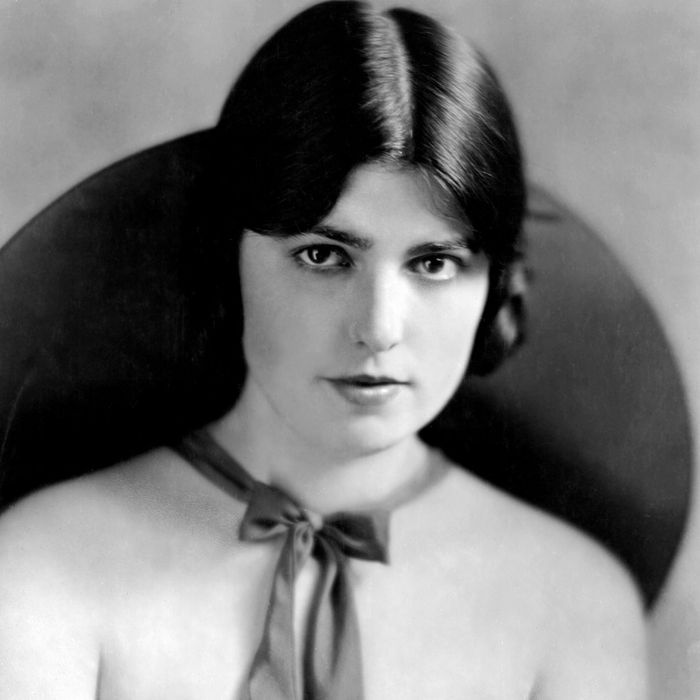
In the 1920s, Hollywood was rocked by a series of scandals, including the 1921 death of actress Virginia Rappe. Rappe died from a ruptured bladder; pioneering comedian Roscoe “Fatty” Arbuckle was accused of violently sexually assaulting Rappe. Supposedly, the trauma from the rape caused her death (there are various theories on why Rappe’s bladder ruptured; among them, that she’d had an abortion or an untreated sexually transmitted disease). Although Arbuckle was subsequently acquitted, the scandal tainted the movie industry. Many felt Hollywood was a hotbed of immorality, and demanded the motion picture industry clean up its act. Enter Will H. Hays.
Roscoe “Fatty” ArbuckleVirginia Rappe
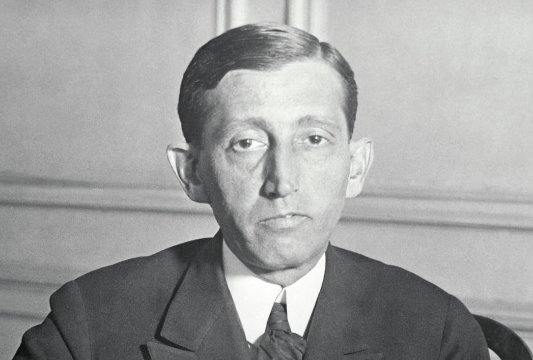
Hays, a former Postmaster General under President Harding and Chairman of the Republican National Committee from 1918-1921, began his tenure as Chairman of the newly founded Motion Picture Association in 1922. His primary objective was to reduce the costs state censors were imposing on movie studios; most states had their own censorship boards at the time, and could demand the studios make any cuts they deemed necessary for a film to be shown in their state. This form of censorship was perfectly legal; the Supreme Court had ruled unanimously in 1915 (Mutual Film Corp. v. Industrial Commission of Ohio) that free speech protections did not extend to motion pictures. In response to the ruling, state censorship boards popped up in many states, demanding various cuts to films, meaning a studio might have to edit several versions of the same film to be shown in different states. This process was obviously very costly, and studios were looking for ways to mitigate those expenses.
Will H. Hays
In 1927, Hays suggested to studio executives that self-censorship might be the best approach, and the execs reluctantly agreed. In a resolution passed on June 29th of that year, the studios established a set of guidelines known as “Don’ts” and “Be Carefuls”. Among the “Don’ts”:
No pointed profanity
No licentious or suggestive nudity
No inference of sex perversion
No white slavery (yes, you read that right – slavery of other races was perfectly acceptable)
No miscegenation
No ridicule of the clergy
And among the “Be Carefuls”:
The use of firearms
Brutality and possible gruesomeness
Sedition
The sale of women, or of a woman selling her virtue
Rape or attempted rape
Man and woman in bed together
Excessive or lustful kissing
Not content with mere guidelines, Catholic groups implored the industry to adopt these standards as code, and, hoping to avoid further government intervention, the studios agreed. On April 1, 1930, the code became the law of Hollywoodland. The code was divided into two parts: the first part was a set of general principles which prohibited a picture from “lowering the moral standards of those who see it” and the second part was a precise list of items that could not be depicted. Much of that list derived from the earlier “Don’ts”.
Initially, the code was not strictly enforced, but that changed in 1934. On June 13th of that year, an amendment to the Code was adopted which established the Production Code Administration (PCA). Hays put Joseph I. Breen, a Catholic layman with experience in public relations, in charge of the PCA. Under Breen, enforcement of the Code became rigid. One notorious instance of censorship under the Code was Casablanca: the film could not contain any reference to Rick and Ilsa having slept together (although it’s clearly implied) and the Code forbade the filmmakers from showing the two consummating their adulterous love for one another, making the film’s famous ending inevitable.
Joseph I. Breen
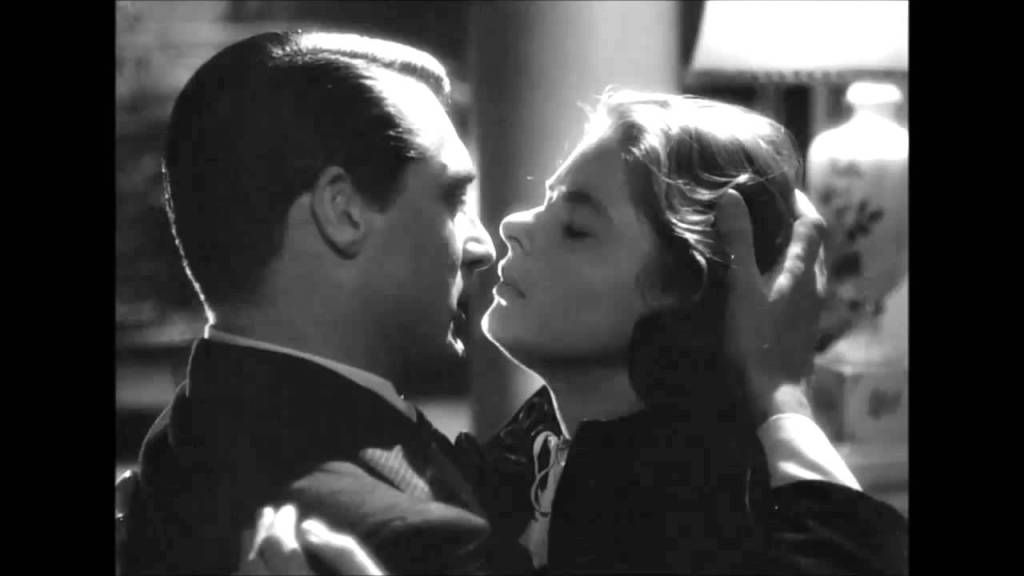
Many film directors balked at the self-imposed censorship necessitated by the Code and found creative ways around its precepts. One such director was Alfred Hitchcock, who found a way around the so-called “Three second rule” (on-screen kisses couldn’t last longer than three seconds) by interrupting a two-and-a-half-minute kiss in 1946’s Notorious between stars Cary Grant and Ingrid Bergman every three seconds.
One film that was significantly altered by the Code was 1951’s A Streetcar Named Desire. Based on Tennessee Williams’ play, the film was not allowed to explicitly state that Blanche’s late husband had been gay, so he was portrayed as “sensitive” – an obvious allusion to his sexual orientation.
In 1952, the Supreme Court unanimously overturned its earlier decision, ruling that motion pictures were entitled to free speech protections (Joseph Burstyn, Inc. v. Wilson), but the Code continued to be enforced throughout the decade. By the late ’50s, competition from television and foreign films allowed for some relaxation of the Code, and film directors continued to push the boundaries. Many films in the ’50s were released without approval from the PCA, including Some Like It Hot and Anatomy of a Murder. Throughout the 1960s, films like Psycho, The Pawnbroker and Who’s Afraid of Virginia Woolf? continued to erode the power of the Code, and in 1968, it was abandoned altogether in favor of the ratings system.
Action movies tend to be the domain of men – actors like Sylvester Stallone, Arnold Schwarzenegger, Bruce Willis, Will Smith and Tom Cruise have prevailed at the box office for decades with their various brands of action movie hero. But here at Peanut Butter and Julie, women rule the day. Here is a list of some of the most badass female characters in action movie history.
Sigourney Weaver (Alien series)
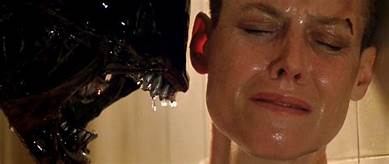
Ellen Ripley is one of the most badass movie characters of any gender. The only survivor of the events of Alien (along with the ship’s cat, Jones), Ripley proceeds to outlast every marine but one in Aliens. After being impregnated by an alien queen embryo in Alien 3, Ripley sacrifices herself, but Sigourney Weaver nevertheless returns for Alien Resurrection as a Ripley clone. There aren’t many line readings more badass than this one:
Linda Hamilton (Terminator series)
Sarah Connor is a reluctant movie hero, pulled unwittingly into the events of the first Terminator film – a cyborg is sent back in time to kill Sarah, whose son John will someday save humanity from the machines. John sends soldier Kyle Reese back too, to protect his mom, who isn’t even pregnant yet (hint hint: Kyle’s the daddy – we may get into the time paradox thing later, but for now just go with it). In the second film, Judgment Day, a buff and badass Sarah, now institutionalized for her (supposedly) paranoid delusions about humanity’s future, is visited by an updated Terminator model, the T-1000, AND the T-800 model from the original film; this time, the T-800 is her ally. Linda Hamilton, who sat out the three previous films in the franchise, returned in 2019 for the sixth film, Dark Fate. She’s sixty-four years old and as badass as ever.
Carrie Fisher and Daisy Ridley (Star Wars)
Princess Leia Organa (Carrie Fisher), member of the Imperial Senate, soldier in the Rebel Alliance and founder and General of the Resistance, is a feminist icon and all-around badass. Leia is anything but the damsel-in-distress sexpot (although she is hot as hell) and she proves you can be “one of the boys” without ever sacrificing your femininity. In the sequel trilogy, Leia’s successor Rey, played by Daisy Ridley, becomes a Jedi apprentice under Leia’s brother Luke and a leading figure in the Resistance movement. Skilled as a fighter, resourceful and brave, Rey is a survivor – and a total badass.
Charlize Theron (Mad Max: Fury Road)
I could have selected any number of Charlize Theron movies for this list – Hancock, Atomic Blonde and The Old Guard come to mind – but for my money, no Theron character is more badass than Imperator Furiosa. Although Max is the title character, the movie undeniably belongs to Furiosa, a war captain who is charged by antagonist Immortan Joe with ferrying oil back to the Citadel using the “war rig”, but instead uses the war rig to smuggle the Five Wives (Joe’s concubines) out of the Citadel. Although Joe sends his war boys after her, Furiosa uses her intelligence (and her mechanical arm) to best them and slay Joe, freeing herself, the Five Wives, Max and all of the Citadel’s citizens in the process. Apparently a stand-alone Furiosa prequel is in the works, with Anya Taylor-Joy in the role.
Scarlett Johansson (Avengers)
Natasha Romanoff, AKA Black Widow, is a Russian spy and expert in hand-to-hand combat who eventually defected to the United States and became a member of S.H.I.E.L.D. The lone woman on the otherwise all-male Avengers team, Romanoff is a very human superhero, using her fighting skills and her wits to defend her team, and doing it all in a badass black leather catsuit. More than ten years after her first appearance in 2010’s Iron Man 2, Black Widow will finally get her own stand-alone movie this year. Fun fact: Emily Blunt was originally tapped to play the role, but she had already committed to Gulliver’s Travels; Scarlett Johansson has more than made the part her own.
Gal Gadot (Wonder Woman)
Gal Gadot’s version of Wonder Woman made her first appearance in 2016’s Batman v Superman: Dawn of Justice. She got her stand-alone film the following year. Wonder Woman is the alias of Diana, the daughter of Queen Hippolyta and Zeus, and an immortal Amazon warrior. She is strong and brave, and she believes in justice and the goodness of humankind. She battles Ares for the future of humanity, and of course she prevails. Gadot is such a badass that she did reshoots for the movie while five months pregnant; they used green screen technology to cover up her baby bump!
Kate Beckinsale (Underworld series)
Kate Beckinsale plays Selene, a Death Dealer (a member of an elite group of vampire assassins) who is determined to destroy the Lycans who murdered her family. She also becomes the protector of a human named Michael, who is a descendant of both the vampires and the Lycans; both groups desire Michael for his unique gene which would allow him to become a vampire-Lycan hybrid. In keeping Michael safe, Selene is estranged from her vampire coven and places herself in the middle of the vampire-Lycan war. And of course, she does it all while wearing a skin-tight black leather suit.
Jennifer Lawrence (Hunger Games series)
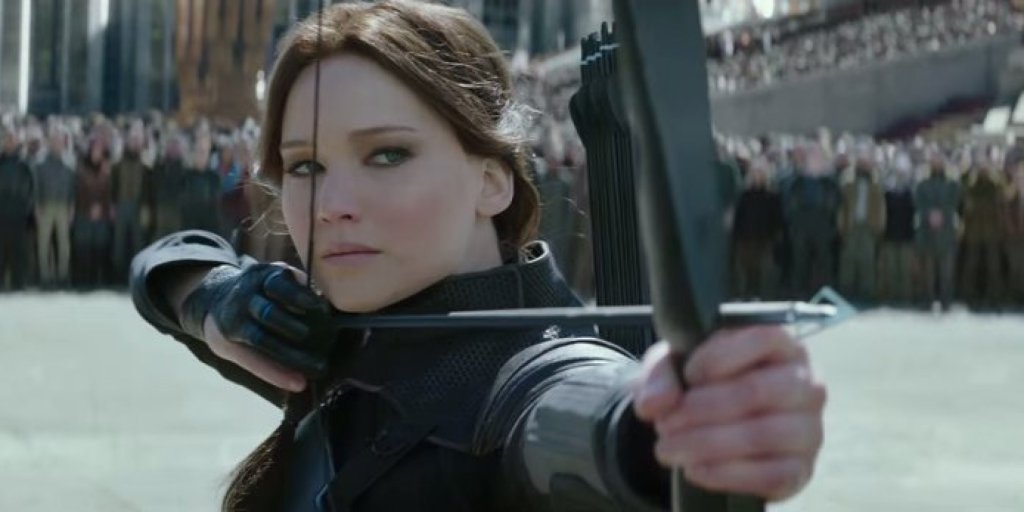
Like a lot of the women on this list, Katniss Everdeen is a survivor and a reluctant hero. Her exceptional archery skills allow Katniss to be the primary provider for her family. She volunteers for the 74th Hunger Games in the first film when her younger sister Prim’s name is drawn for the annual competition. Her subsequent win sparks a rebellion against the Capitol and its fascist President, Coriolanus Snow. By the third film, Katniss has become the symbol of the rebellion, the Mockingjay. Jennifer Lawrence depicts all of Katniss’s conflicting emotions perfectly, and makes Katniss one of the most endearing movie heroines of the 21st century.
Uma Thurman (Kill Bill: Volume 1 and 2)
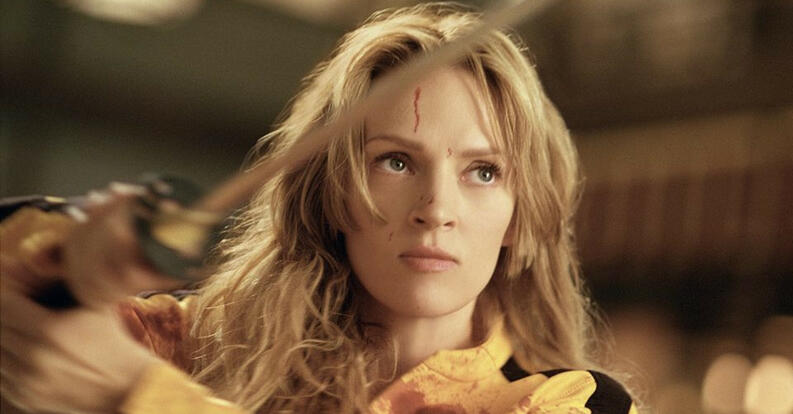
The Bride, as Beatrix Kiddo is known, was shot in the head and left for dead on her wedding day. After awakening from a four year coma, she vows revenge on the people responsible – her former cohorts in the Deadly Viper Assassination Squad and its leader (and her former lover) Bill. Using her sword-fighting skills, martial arts and the infamous Five Point Palm Exploding Heart Technique, the Bride dispatches them one by one, unflinching in her quest for retribution.
Emily Blunt (Edge of Tomorrow)
Sergeant Rita Vrataski of the United Defense Force is charged with training US Major William Cage (Tom Cruise), a PR guy with no combat experience, to be battle-ready in the war against the Mimics, a race of aliens intent on conquering Earth. She has her work cut out for her. Emily Blunt trained for three months prior to shooting, including aerial wire work and Krav Maga, and wore the heavy metal suits required for combat scenes. She even did reshoots while pregnant with her first child. In the process, she stole the show, no easy feat when Cruise is the star.
Noomi Rapace, Rooney Mara and Claire Foy (Millennium series)
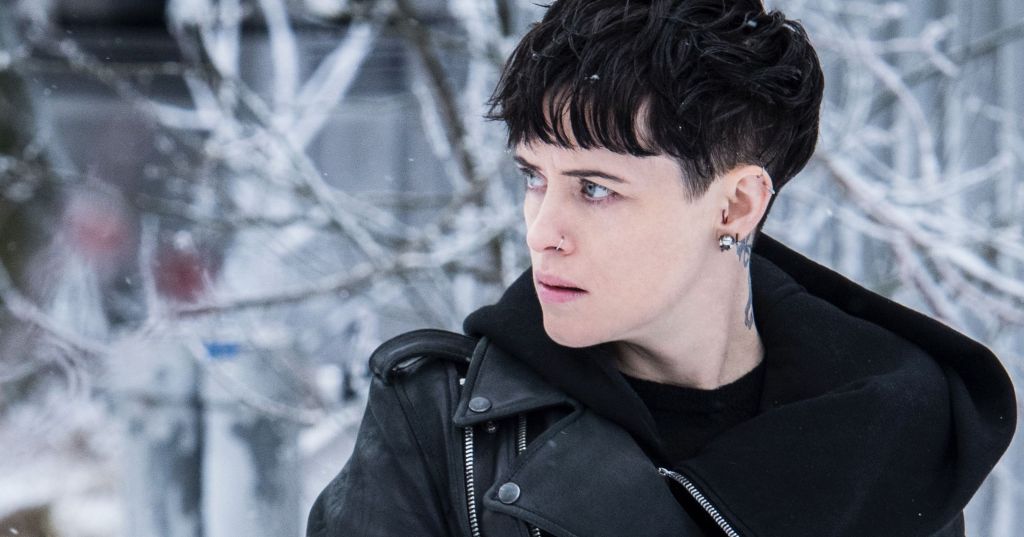
Lisbeth Salander, the androgynous, anti-social, tattooed computer hacker, is one of the most compelling fictional characters of the 21st century. A survivor of both childhood and adult trauma, Salander has her own code of ethics that guide her behavior, and she is fiercely protective of the people in her small social circle. Played by Noomi Rapace in the Swedish series and Rooney Mara in the US version of The Girl with the Dragon Tattoo (sadly, David Fincher’s planned trilogy became a stand-alone movie when the box office receipts fell short of expectations), the character was revived in 2018’s The Girl in the Spider’s Web, in which she was portrayed by The Crown‘s Claire Foy. All three actors conveyed Salander’s badass-ness (Rapace was nominated for a BAFTA and Mara for an Oscar for their performances).
Pam Grier (Jackie Brown)
Jackie Brown (Pam Grier) is a flight attendant who makes ends meet by smuggling money into the US for gun-runner Ordell Robbie (Samuel L. Jackson). She negotiates a deal with Ordell to smuggle enough money for him to retire, but double crosses him by keeping the money for herself. Adapted from Elmore Leonard’s novel Rum Punch, and inspired by the 1970s blaxploitation film Foxy Brown (starring Grier), the film changed Jackie’s ethnicity and last name, but kept her badassery in full.
Michelle Yeoh and Ziyi Zhang (Crouching Tiger, Hidden Dragon)
One of the most honored films of 2000, Crouching Tiger, Hidden Dragon features female warriors struggling to shed the societal expectations placed on them by their gender. The title is a Chinese idiom that refers to people having hidden abilities and talents; it encourages us to look beneath the surface. These women are martial arts masters, strong and fierce, but still feminine. They are a good reminder that women can be whatever they want to be, while still being fully women.
Jodie Foster (Panic Room)
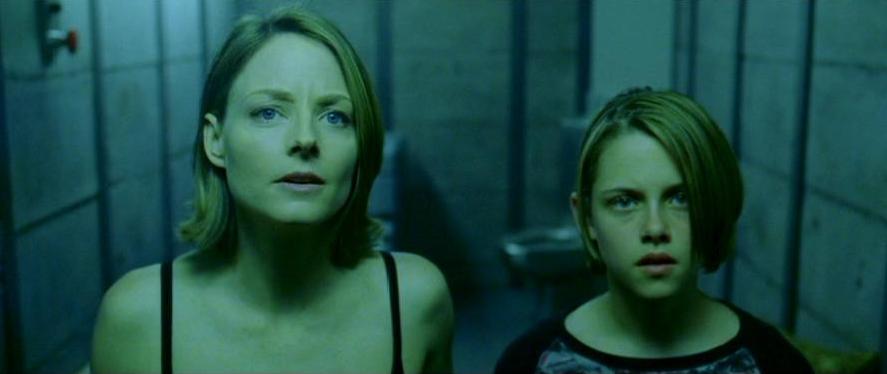
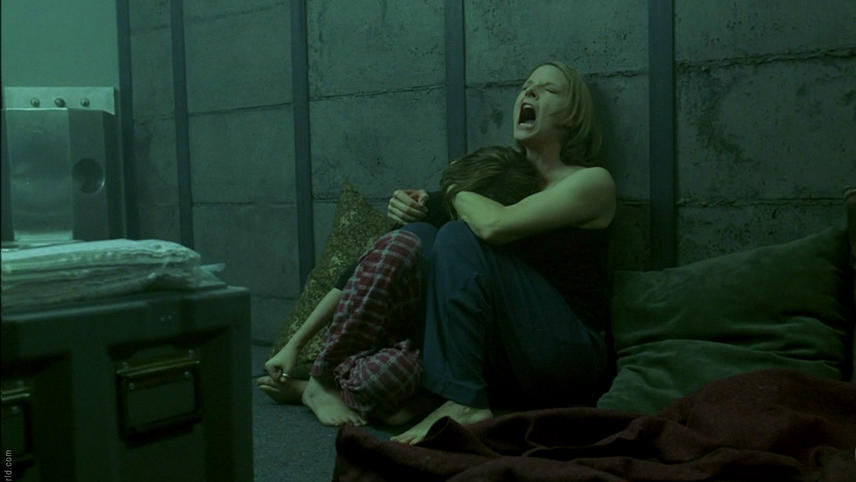
Meg Altman is recently divorced and looking for a home for herself and her daughter Sarah. She finds a beautiful brownstone on the Upper West Side. The house’s previous owner, a reclusive millionaire, installed a panic room and an extensive security system to protect himself from intruders. On Meg and Sarah’s first night in their new home, three men (led by the millionaire’s grandson) break in, looking for the bearer bonds hidden in a safe in the panic room. What they haven’t accounted for is the new occupant’s ferocious determination to protect herself and her child. Nicole Kidman was originally supposed to play a version of Meg that was more helpless, making her an easier mark for the burglars. When Kidman had to drop out due to a knee injury, Meg was rewritten because let’s face it, no one was going to buy Jodie Foster as a defenseless victim.
Franka Potente (Run Lola Run)
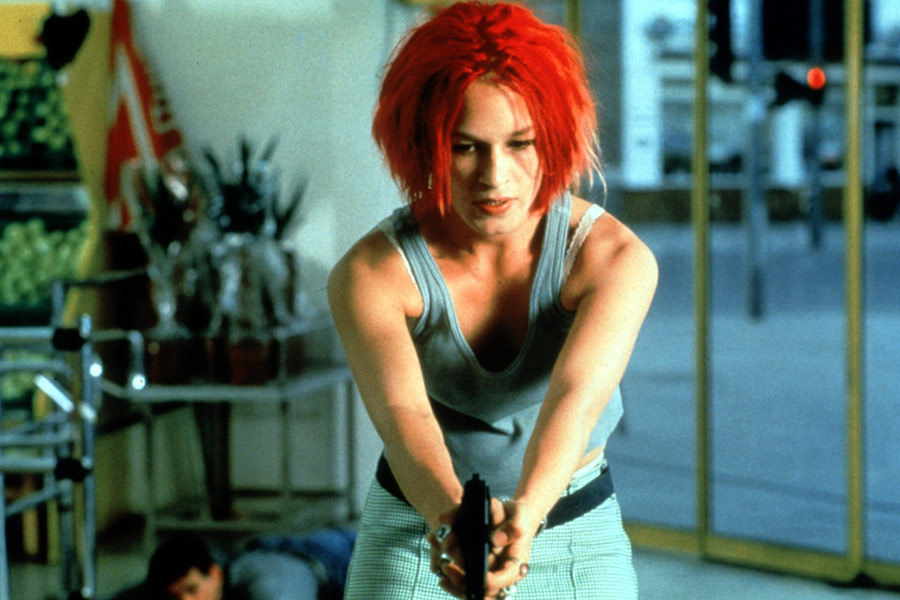
Lola’s boyfriend is a bagman responsible for delivering $100,000 Deutschmarks to his boss. After inadvertently leaving the money on the train, he calls Lola in a panic; he has twenty minutes to come up with the cash or his boss will kill him. The film then replays the next twenty minutes three different times, each time showing how tiny variations in Lola’s interactions with others change the outcome. A pre-Bourne Identity Franka Potente is dazzling – and totally badass – as the flame-haired Lola.
The Queen of Soul would have turned 79 today – happy birthday, Aretha!!
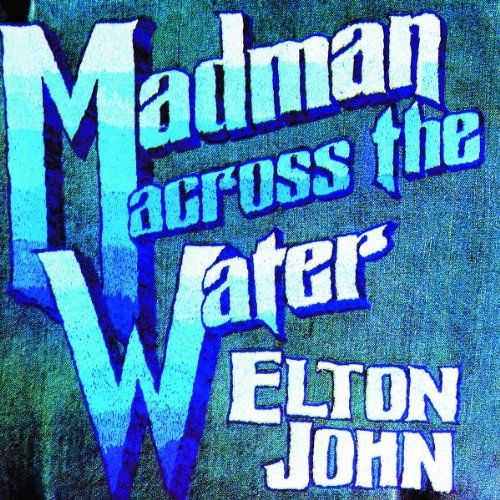
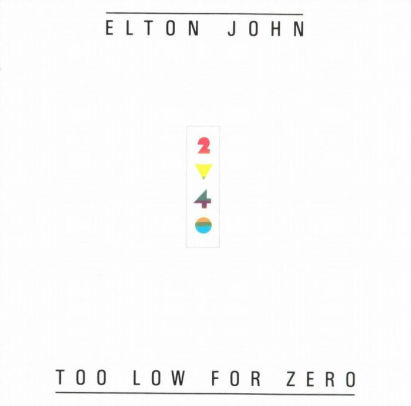
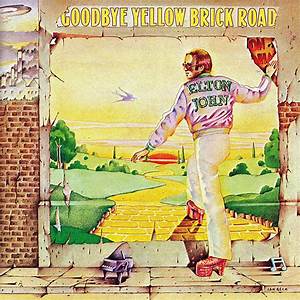
Today is also Elton John’s birthday (he’s 74) – here are my favorite Elton albums:
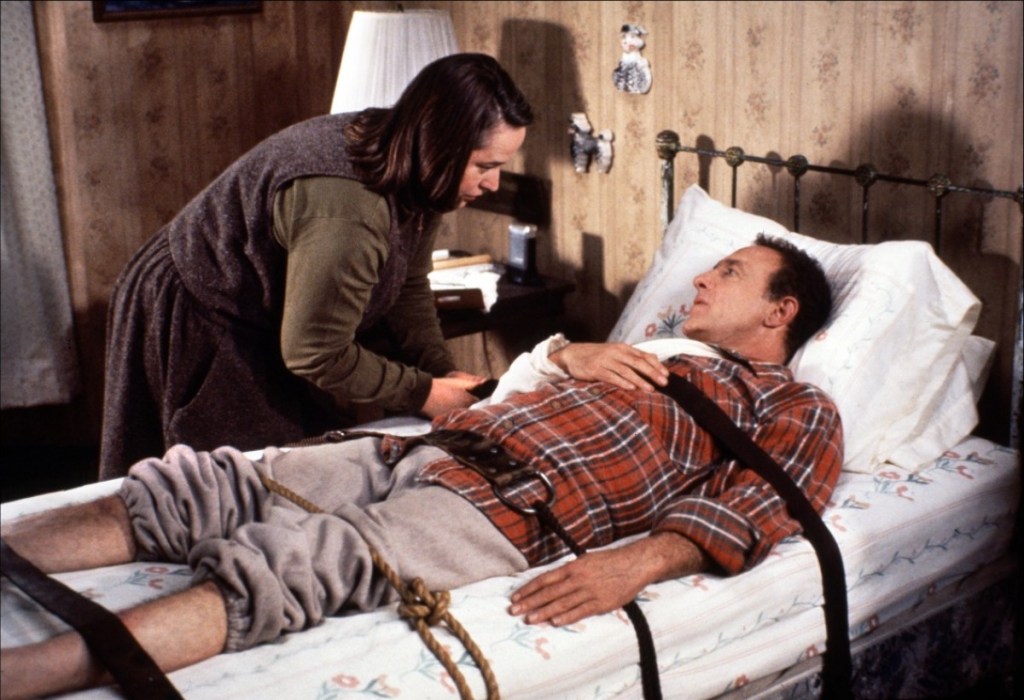
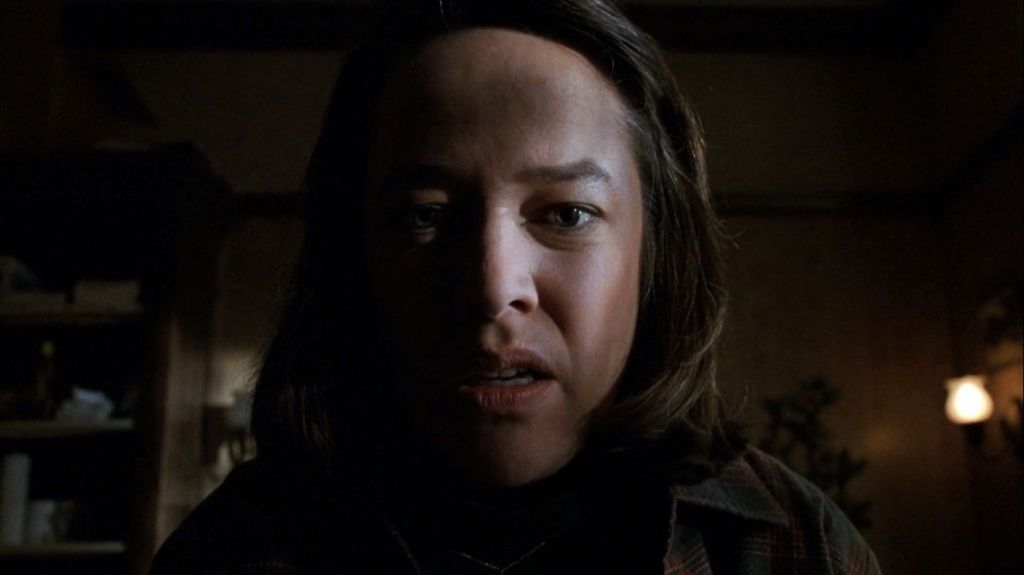
On this day in 1991, Kathy Bates became the rare actor to win an Oscar for a horror film. Her delightfully terrifying turn as Paul Sheldon’s #1 fan, Annie Wilkes, was a performance for the ages, and it made Bates a star. If you haven’t seen the movie, do yourself a favor and watch it – it’s currently streaming on HBO Max.
And on this day in 2001, Julia Roberts won the Best Actress Oscar for her hilarious and heartfelt performance as the title character in Steven Soderbergh’s Erin Brockovich, a favorite of mine.
On this day in 1969, John Lennon and Yoko Ono held their first bed-in for peace at the Hilton Hotel in Amsterdam. They were celebrating their honeymoon AND protesting the war in Vietnam.
Alfred Hitchcock tended to put his leading ladies – the characters AND the actors who played them – through the wringer. “The Master of Suspense” was a consummate filmmaker, but by some accounts, he was verbally (and possibly sexually) abusive to the women he worked with. The torment they endured make their performances all the more impressive. Today, I’ll pay homage to seven of Hitchcock’s most badass leading ladies.
Joan Fontaine – Rebecca and Suspicion
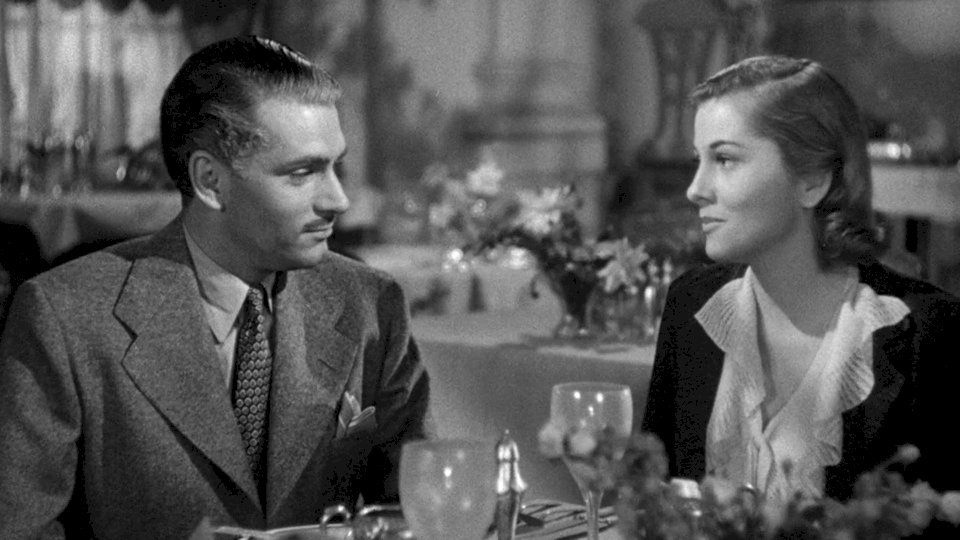
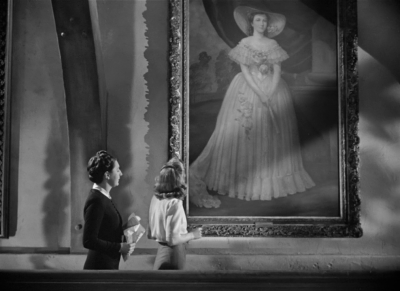
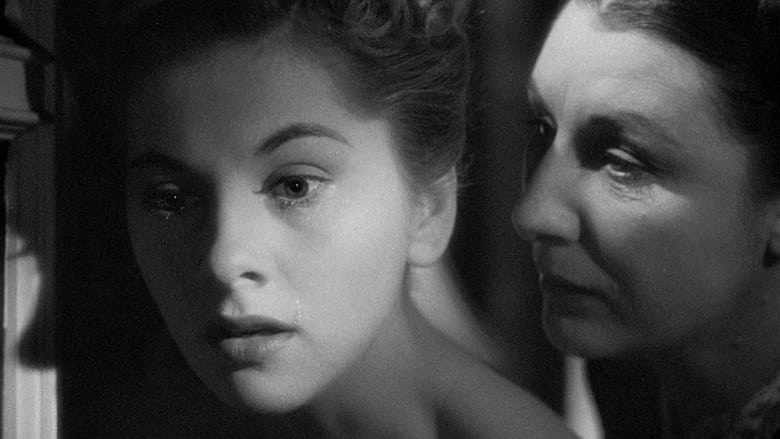
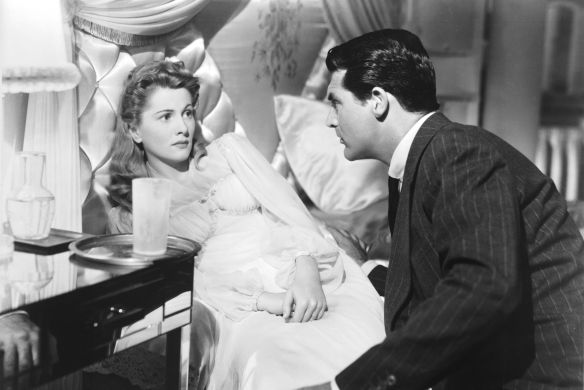
Rebecca was Hitchcock’s first American film, and what a debut it was. Based on Daphne du Maurier’s 1938 novel of the same name, the gothic tale of suspense centers around the psychological torture of the second Mrs. Maxim de Winter, who is haunted by the specter of the first Mrs. de Winter, Rebecca, and tormented by Rebecca’s confidant, housekeeper Mrs. Danvers. The story relies on Mrs. de Winter feeling unworthy of her aristocratic husband (played by Laurence Olivier), to the point of considering suicide, and Joan Fontaine portrays that vulnerability perfectly. For her efforts, Fontaine was nominated for Best Actress at the 13th annual Oscars (and the film itself was nominated for twelve more awards, and won Best Picture), and many felt she should have won (she lost to Ginger Rogers for Kitty Foyle).
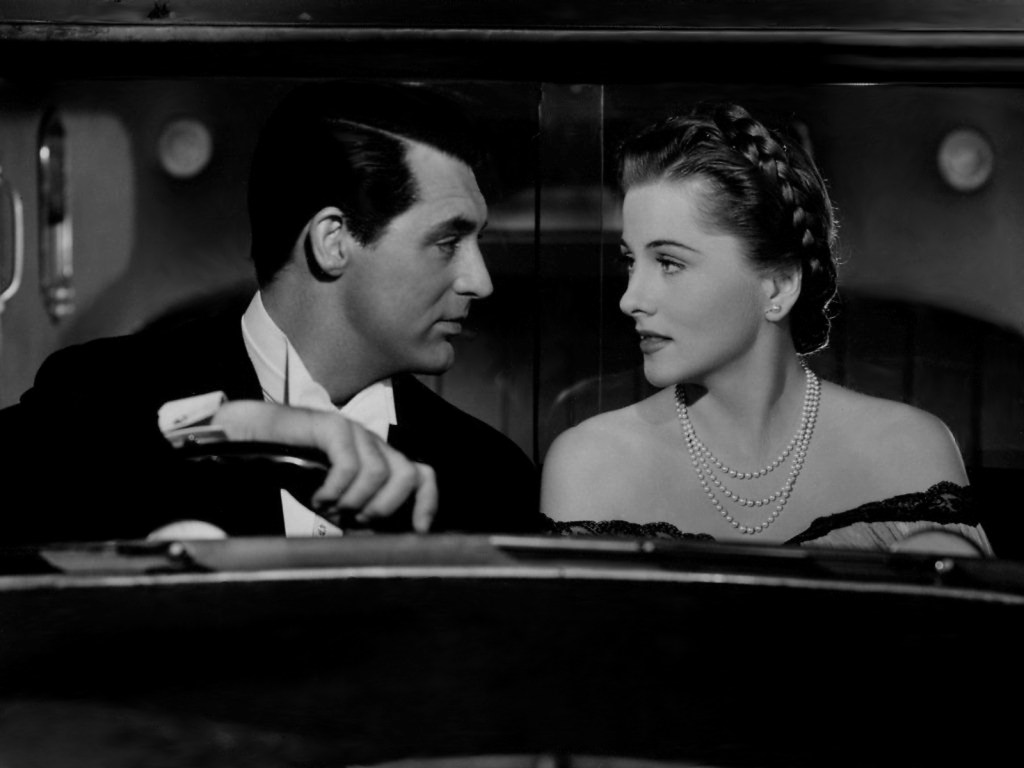
Suspicion, Fontaine’s second collaboration with Hitchcock, was released just a year after Rebecca, and as with that film, the central tension rests with the doubts and insecurities of its female lead. Fontaine plays Lina McLaidlaw, a young woman with wealthy parents who meets a charming, irresponsible playboy named Johnnie Aysgarth (played by Cary Grant, naturally). Johnnie convinces Lina to marry him, but almost immediately, Lina begins to suspect that her new husband’s motives are less than honorable. Once again, Fontaine was nominated for Best Actress, but this time, she won. Hers was the only Oscar-winning performance in a Hitchcock film.
Ingrid Bergman – Spellbound and Notorious
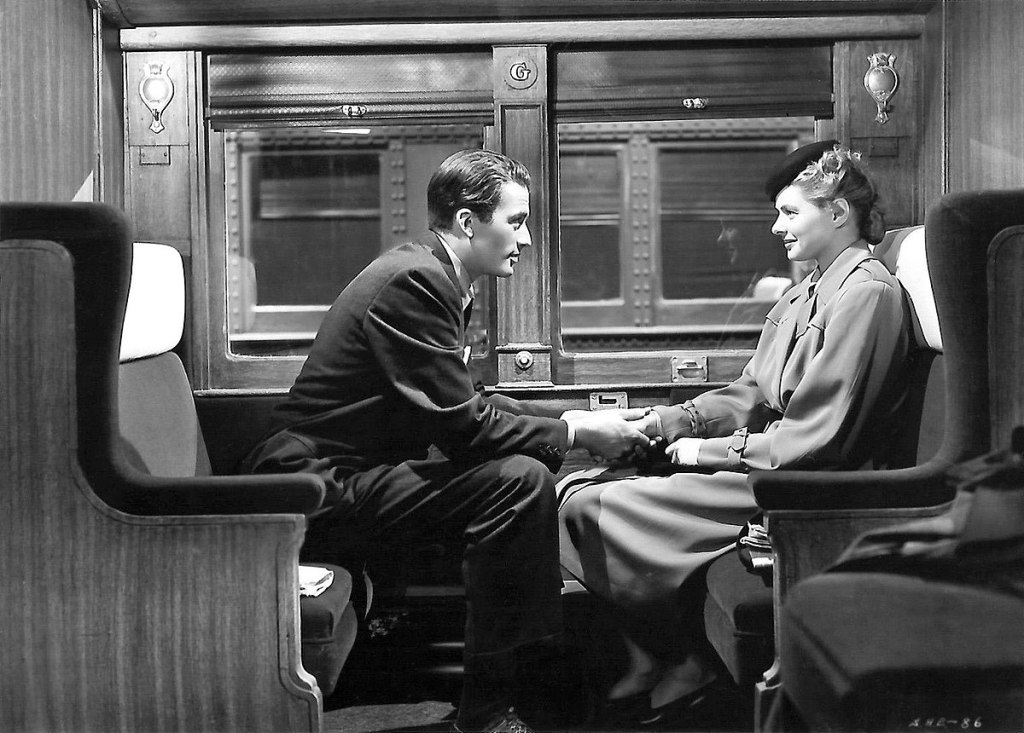
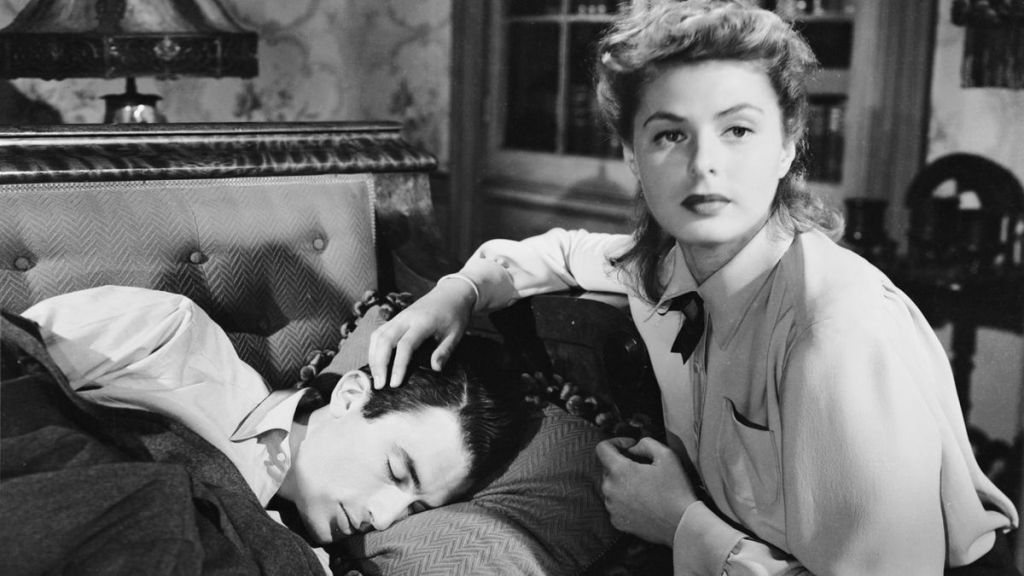
Spellbound, Ingrid Bergman’s first Hitchcock film, is the story of Dr. Constance Petersen, a psychoanalyst who falls in love with Dr. Anthony Edwardes (Gregory Peck), the new director of the mental hospital where she is employed. Since this is a Hitchcock film, Edwardes is not what he seems. It turns out he’s not Edwardes, he’s suffering from amnesia and he may or may not have murdered the real Edwardes. Dr. Petersen uses her psychiatric skills to get to the bottom of both the amnesia and the murder mystery.
In Notorious, Hitchcock and Bergman’s next collaboration, Bergman plays Alicia Huberman, the American daughter of a Nazi spy, who is recruited by US government agent TR Devlin (Cary Grant) to seduce Alex Sebastian (Bergman’s Casablanca co-star Claude Rains), a Nazi friend of her father’s who is currently living in Brazil. The mission is complicated when Alicia and Devlin fall in love. Once again playing on themes of trust (trust withheld, trust too easily given), Hitchcock also succeeds in telling his most passionate love story (even getting around the three-second rule in the Hays Production Code by interrupting a two-and-a half-minute kiss every three seconds).
Grace Kelly – Dial M for Murder, Rear Window and To Catch a Thief
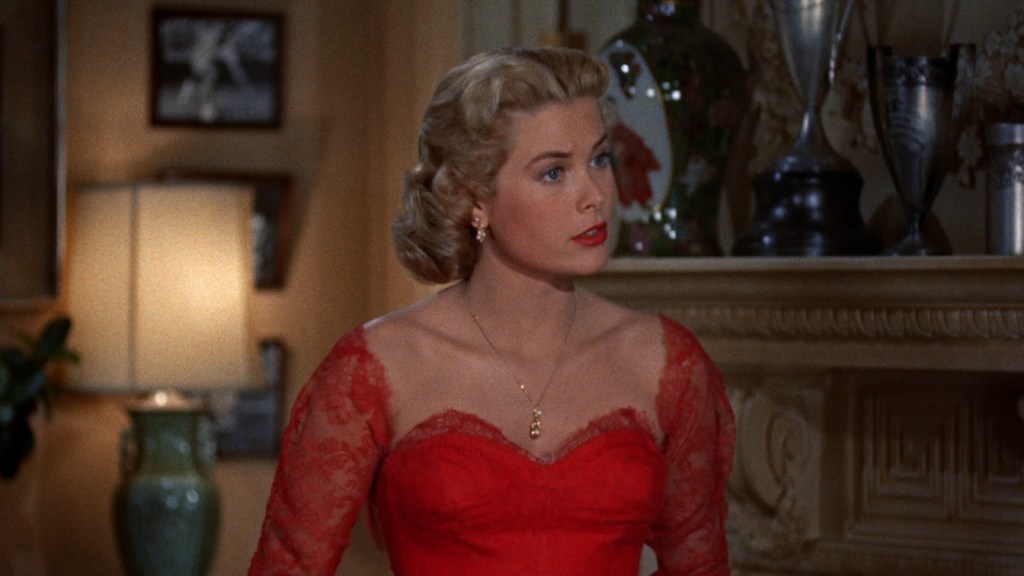
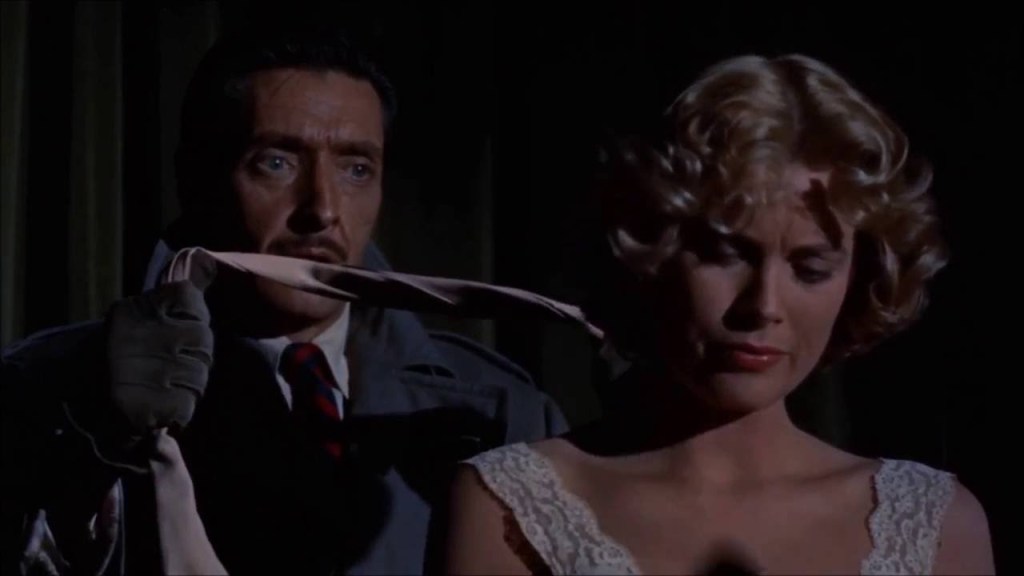
In Dial M for Murder, Grace Kelly’s first of three Hitchcock films, Kelly plays a wealthy socialite named Margot whose husband discovers she has had an affair and arranges to have her murdered. The hit goes awry, the hitman ends up dead and Margot winds up in prison. The assault scene supposedly took five days to film and left Kelly covered in bruises. Hitchcock, enamored of (obsessed with?) Kelly’s combination of “frigidity and lust”, would cast her in his next two films, and would even attempt to coax her out of retirement ten years later to play Marnie; Tippi Hedren would wind up with the role – more on that in a bit.
Kelly’s next collaboration with Hitchcock, Rear Window, is one of Hitch’s best and Kelly is perfect as Lisa Fremont, socialite girlfriend to photographer LB “Jeff” Jeffries (James Stewart), who is laid up in his Greenwich Village apartment with a broken leg. To pass the time, Jeff spies on his neighbors through his courtyard window and becomes obsessed with the notion that one of them has murdered his wife. Initially, Lisa is skeptical, but eventually comes around, even participating in the investigation by climbing up the fire escape and breaking into the neighbor’s apartment. One of my favorite shots in any movie is Lisa pointing to her finger, on which she has placed the missing wife’s wedding ring.
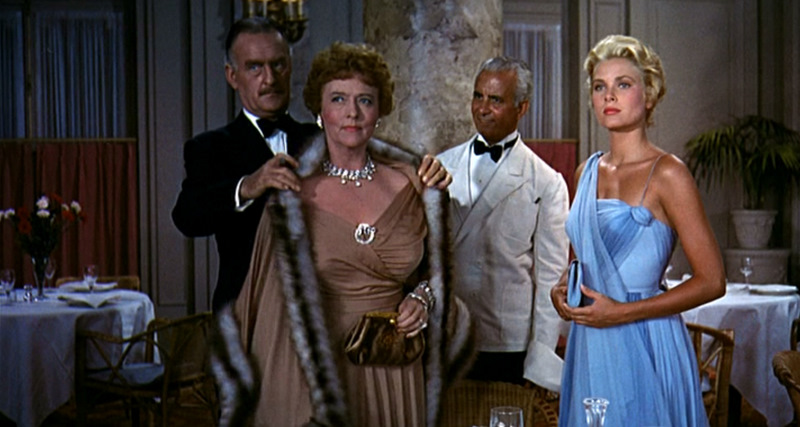
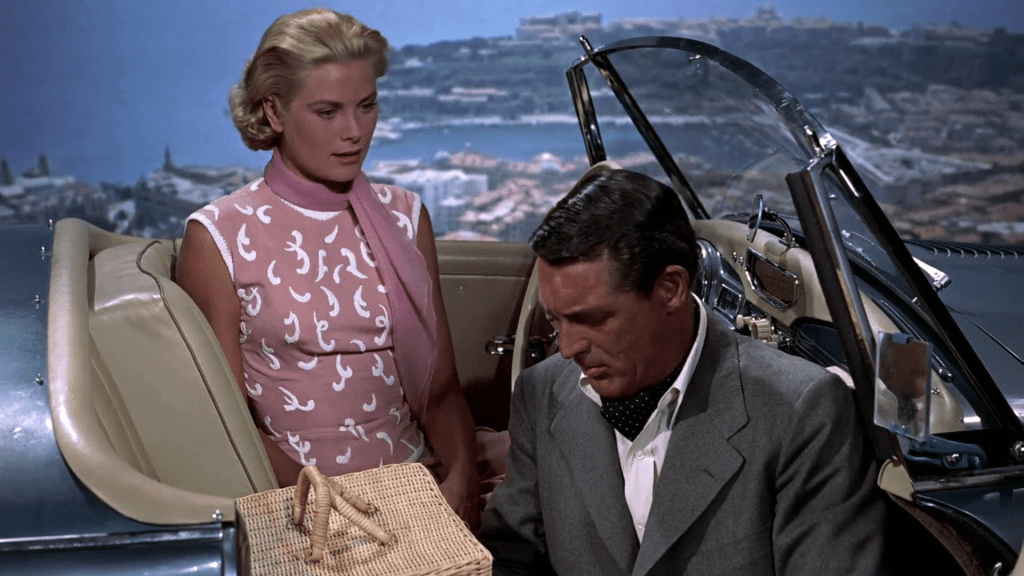
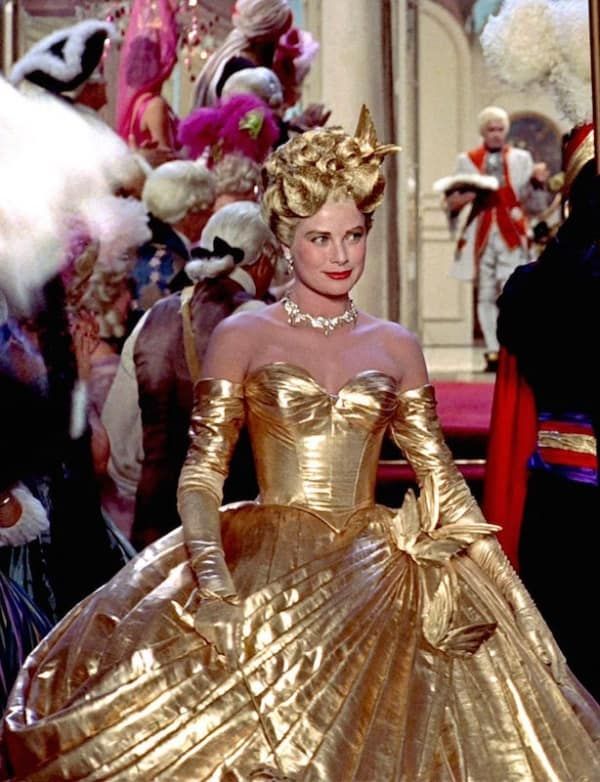
Kelly’s final Hitchcock film, To Catch a Thief, is a more light-hearted romp than Hitchcock’s usual fare. It’s technically a mystery, but one with lower stakes – John Robie, played by Cary Grant, is a former jewel thief lured out of retirement when a copycat burglar puts him in legal jeopardy. Robie teams up with an insurance adjuster, who reluctantly divulges the name of the woman most likely to be the cat burglar’s next target and arranges a meeting with her – and her socialite (seeing a trend here?) daughter Frances, played by Kelly. The plot is merely a pretext to put the two impossibly beautiful stars together, but they both play their roles to perfection. And Kelly, wearing some of the most exquisite costumes Edith Head ever created, never looked more stunning.
Kim Novak – Vertigo
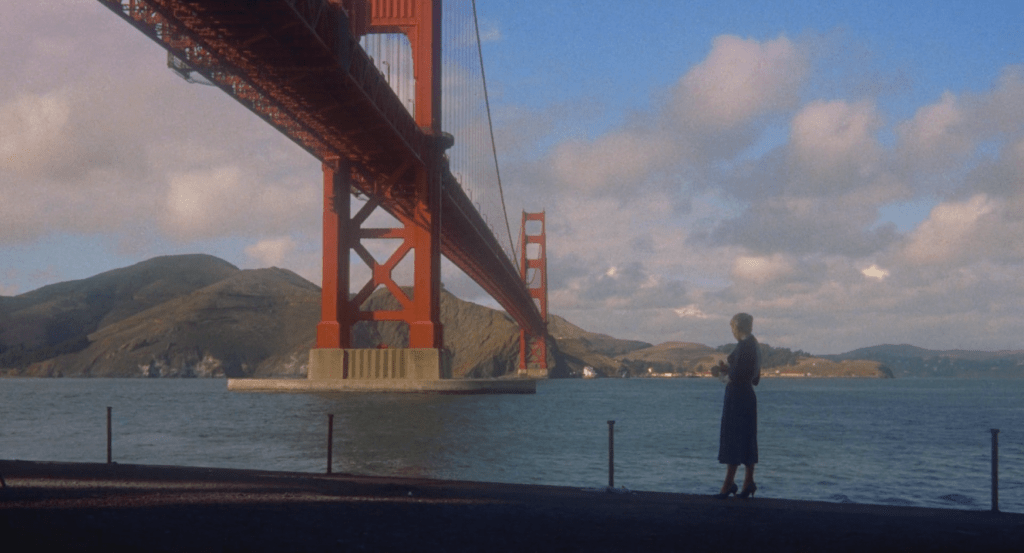
Widely regarded as Hitchcock’s finest work (and one of the best films ever made, period), Vertigo received mixed reviews at the time of its release. A film noir about romantic obsession, Vertigo is the story of John “Scottie” Ferguson (James Stewart), a police detective forced into early retirement when an incident leaves him with a fear of heights and a raging case of, you guessed it, vertigo. An old acquaintance named Gavin Elster hires Scottie as a private investigator to track the movements of his wife Madeleine, played by Kim Novak. In the process of trailing Madeleine, Scottie naturally falls for her. If you haven’t seen the movie, I’ll not spoil it here, but since it’s Hitchcock, things aren’t exactly what they seem. There’s so much genius in this film – from Bernard Herrmann’s iconic score, to Edith Head’s elegant costumes, to the use of the dolly zoom to mimic Scottie’s vertigo – but the audience buy-in depends so much on the captivating, unattainable Madeleine, and Novak plays her to perfection.
Eva Marie Saint – North by Northwest
For his next film, North by Northwest, Hitchcock hired another beautiful blonde, Eva Marie Saint. Saint plays Eve Kendall, who meets Cary Grant’s Roger Thornhill on a train. Thornhill, in a case of mistaken identity, is on the run from thugs who think he’s a spy (he’s actually an advertising exec). And because this is a Hitchcock film, once again the beautiful blonde is not who she says she is. Northby Northwest features some of Hitch’s most iconic set pieces – the UN General Assembly, a crop dusting plane over a cornfield, Mount Rushmore – but those are mere backdrops to Kendall’s icy beauty.
Janet Leigh – Psycho
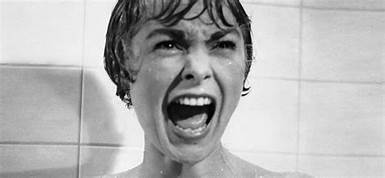
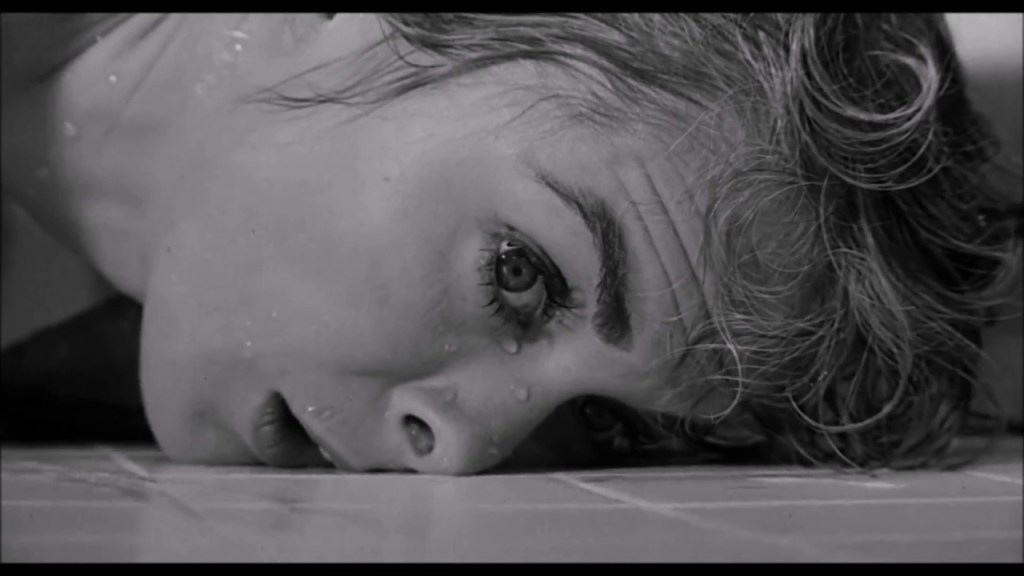
For his next film, 1960’s Psycho, Hitchcock chose another gorgeous blonde, Janet Leigh. The promotional materials – and the fact that Leigh was such a big star – led audiences to believe that her Marion Crane was the film’s protagonist; imagine their shock when she is murdered less than halfway through. Psycho was revolutionary in a lot of ways – showing an unmarried, bra-clad Marion in bed with her lover, for instance, was forbidden by the Hays code, as was the shot of the flushing toilet. And the film’s casual violence, though merely hinted at through quick cuts and clever camera angles, was unthinkable prior to 1960. Filming the shower scene was brutal – it took a full week, and Leigh never voluntarily took another shower in her life. But for her efforts, she was nominated for an Oscar for Best Supporting Actress, and won the Golden Globe in that category.
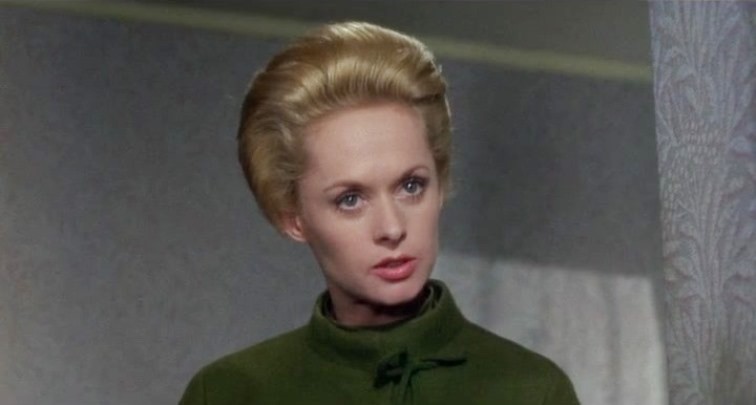
Tippi Hedren – The Birds and Marnie
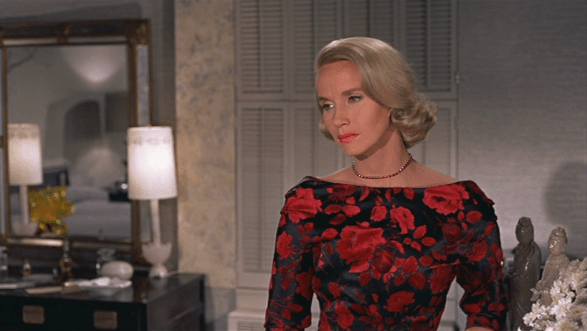
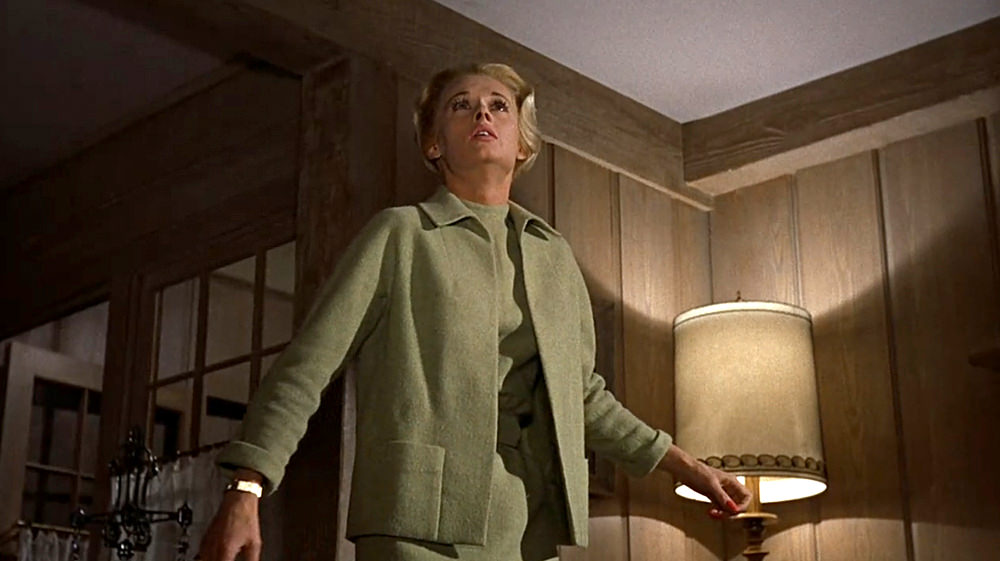
In 1961, Hitchcock saw Tippi Hedren in a diet soda commercial and knew immediately that he wanted to work with her; she certainly was his type – tall, blonde and beautiful. Hedren met with Hitch and agreed to a seven year contract. She made her film debut in Hitchcock’s next effort, 1963’s The Birds. Filming turned out to be an arduous experience for Hedren. In her 2016 memoir, Tippi, Hedren accused Hitchcock of making sexual advances toward her, and when she rebuffed him, he punished her by using live birds instead of mechanical ones for the scene in which her character, Melanie, is attacked. She spent five days filming the scene with live birds being thrown at her and attached to her body with rubber bands. At one point, a bird almost pecked her in the eye. The ordeal left Hedren exhausted and leery of working with Hitchcock again.
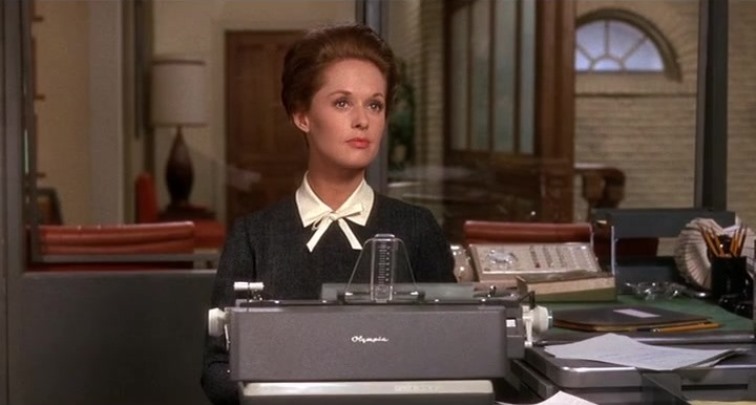
Knowing she couldn’t break her contract with Hitchcock without consequences – and afraid of being blacklisted – Hedren worked with Hitch again on his next film, 1964’s Marnie. A psychological thriller about a damaged woman with suppressed memories of childhood trauma, Marnie turned out to be traumatic for Hedren as well. In her memoir, Hedren states that Hitchcock put her dressing room next to his office, with an adjoining door, so he could walk in whenever he pleased. Hitch “gleefully” wanted to keep the marital rape scene when screenwriter Evan Hunter implored him to excise it. At one point, Hedren alleges that Hitchcock sexually assaulted her. Once filming was complete, Hedren was under contract with Hitchcock for several more years, but she refused to work with him again, and he refused to allow her to work with other directors. Hitchcock promised Hedren, “I’ll ruin your career”, but Hedren was a fighter, saying “He ruined my career but he didn’t ruin my life.”